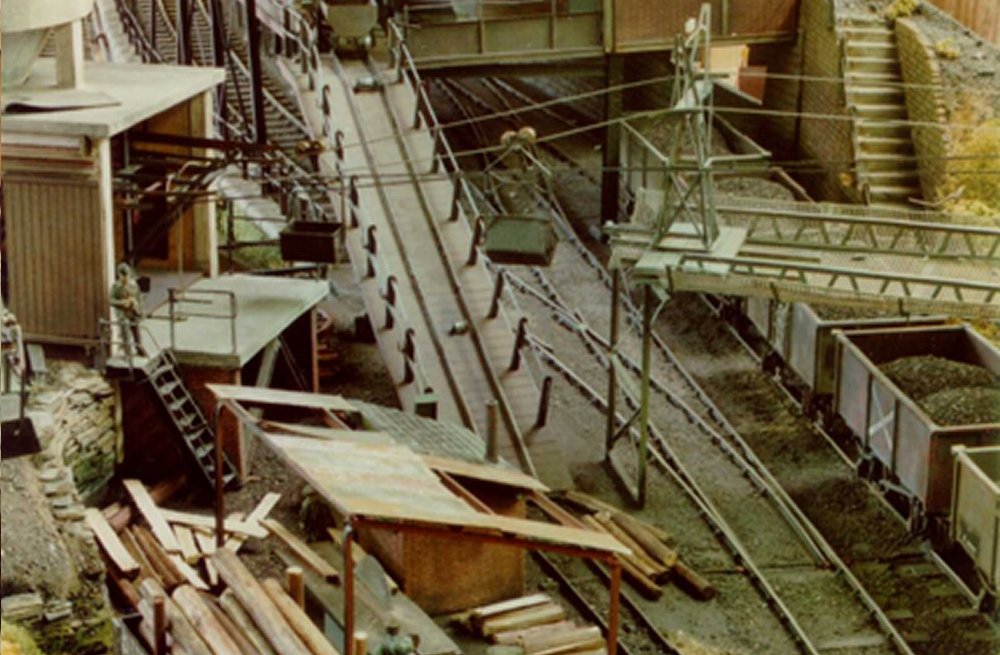
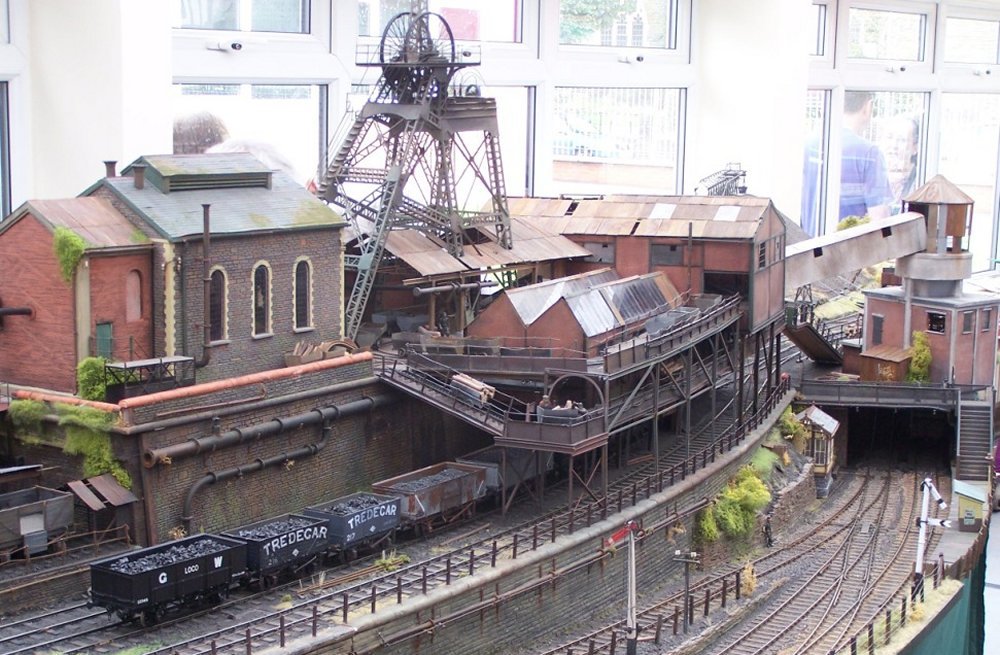
Layouts that attended in 2016
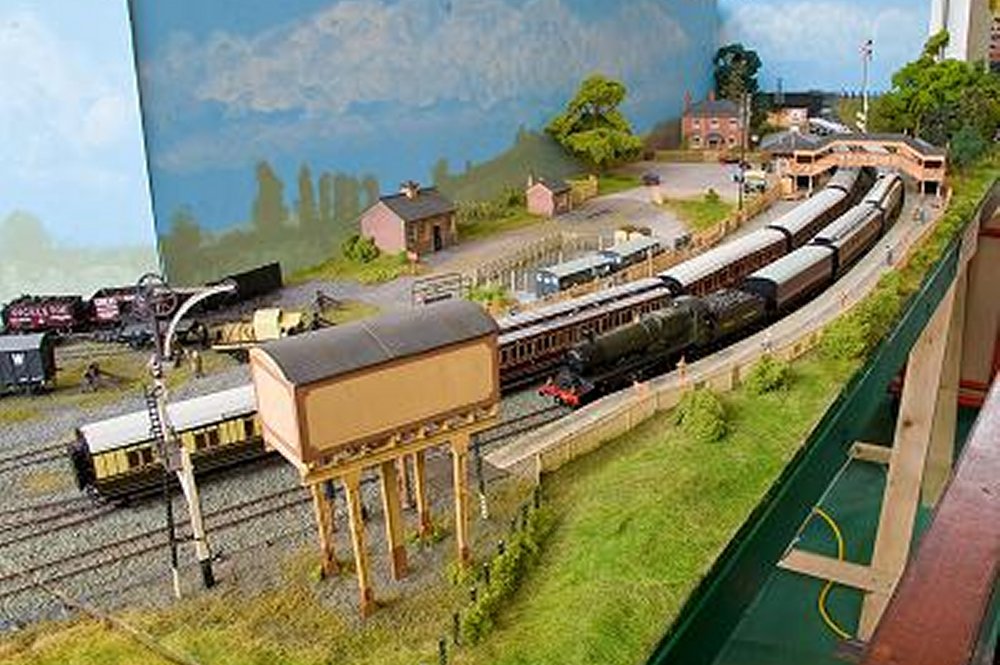
The prototype is unusual in that it was built as a branch from Bodmin Road in 1887: the following year a second line was built from Bodmin to Boscarne Junction on the LSWR, over which the GWR obtained running powers as far as Wadebridge. The GWR always treated the two lines as a single continuous branch, so that trains always had to reverse at Bodmin in order to complete their journey. As you look at the model, the line nearest you is the original from Bodmin Road; the one furthest is the 'branch off a branch' to Boscarne and Wadebridge.
It was extraordinarily busy for a branch line, and kept three locomotives and two sets of passenger stock hard at work all day. Over 40 trains appear in the timetable for the period between the two world wars, and as a large proportion ran through, there were some 60 or so arrivals and departures each day; for this reason, in each of our sessions we shew only a representative part of the day's workings.
Another feature of traffic at Bodmin was the carriage of china-clay from the Boscarne direction to Bodmin Road en-route to Par or Fowey for shipment by sea, with the balancing working of empty wagons in the opposite direction.
The ruling gradient on the line was 1 in 40 up from Bodmin Road, so that only locomotives with small driving wheels were normally used, and always chimney first to Bodmin, to keep the firebox crown covered with water - however we have allowed ourselves some modeller's licence in our choice of motive power, with occassional SR ones in addition to the GW ones, for variety.
The layout is modelled exactly to scale in all respects, and is as accurate as our skills allow. Our techniques were described at length in the now defunct Model Railway Constructor, so just let us remind you that the track and wheels are all to P4 standards, the gauge 18.83 mm, and the scale 4mm = 1 foot, using mostly components distributed by the Scalefour Society.
The Scalefour Society exists to serve the needs of everyone modelling to fine-scale standards; details are available on the stand, or from the Membership Secretary, Danny Cockling, 187 Painswick Road, Gloucester, GL4 4AG.
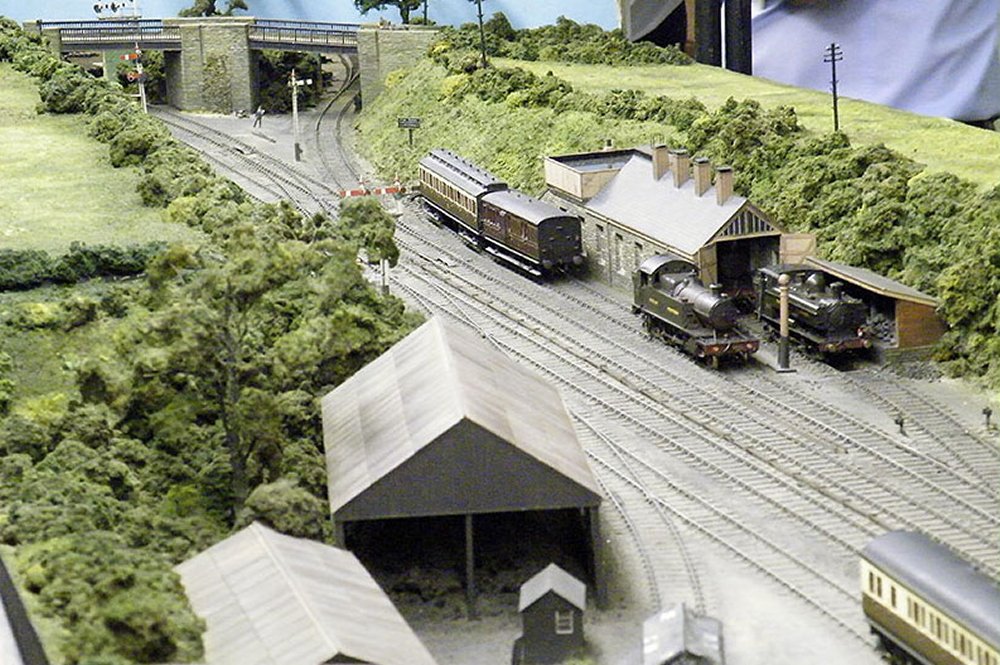
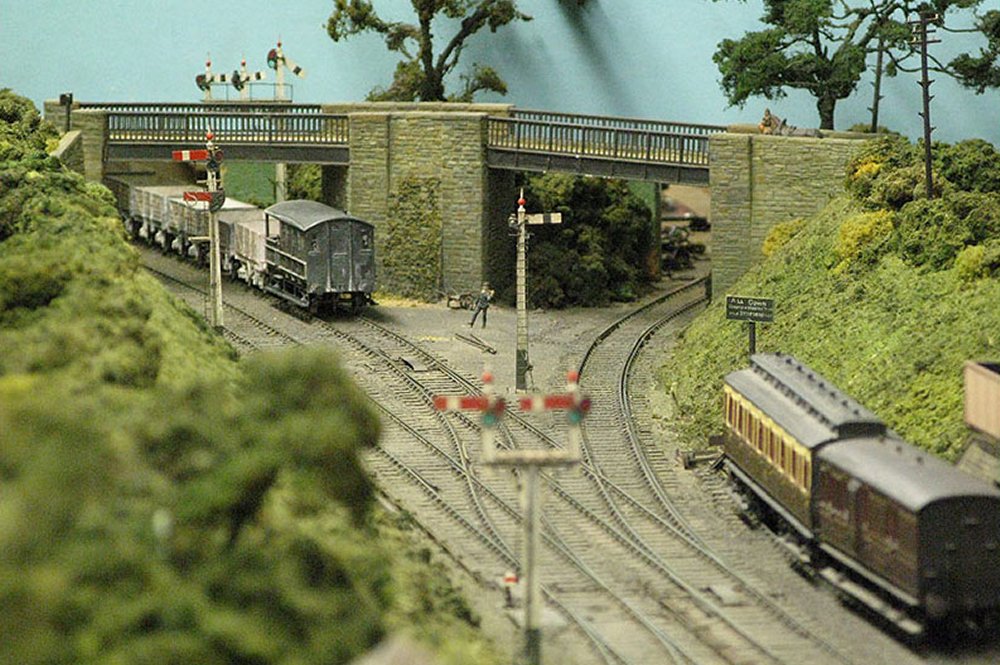
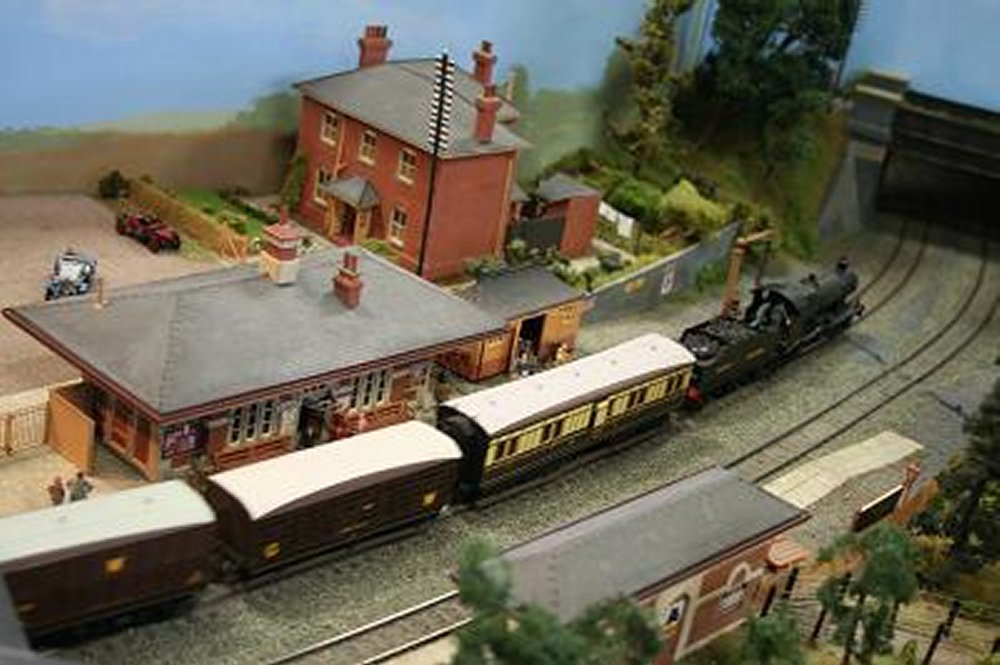
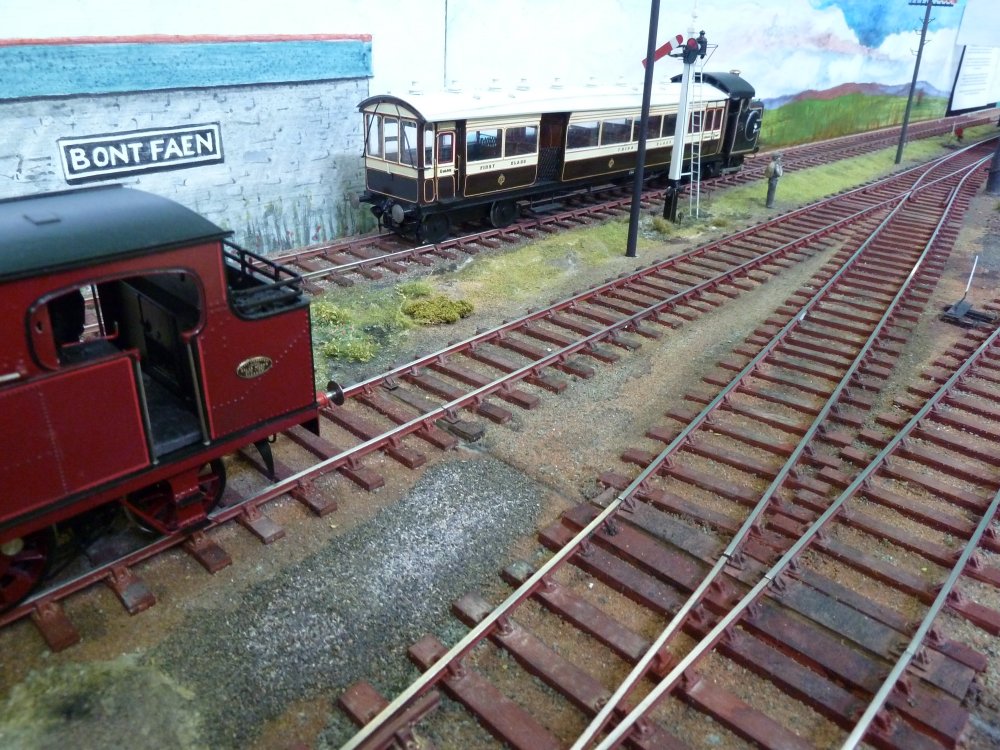
The name' Bont Faen' is the Welsh equivalent of Cowbridge in the Vale of Glamorgan, although the direct translation is Stone Bridge. The period of the layout is ca 1920. Cowbridge was a terminus on a branch from Llantrisant on the main South Wales Railway. It was operated by the Taff Vale Railway.
This location and track layout was chosen as somewhere with a prototypical background to enable me to show locomotives which I had built, and which do not often, otherwise see light of day ! My principal interest is in the Taff Vale Railway, but other South Wales Railways are also featured, though I have no record of them having visited the line, until after the Grouping in 1923.
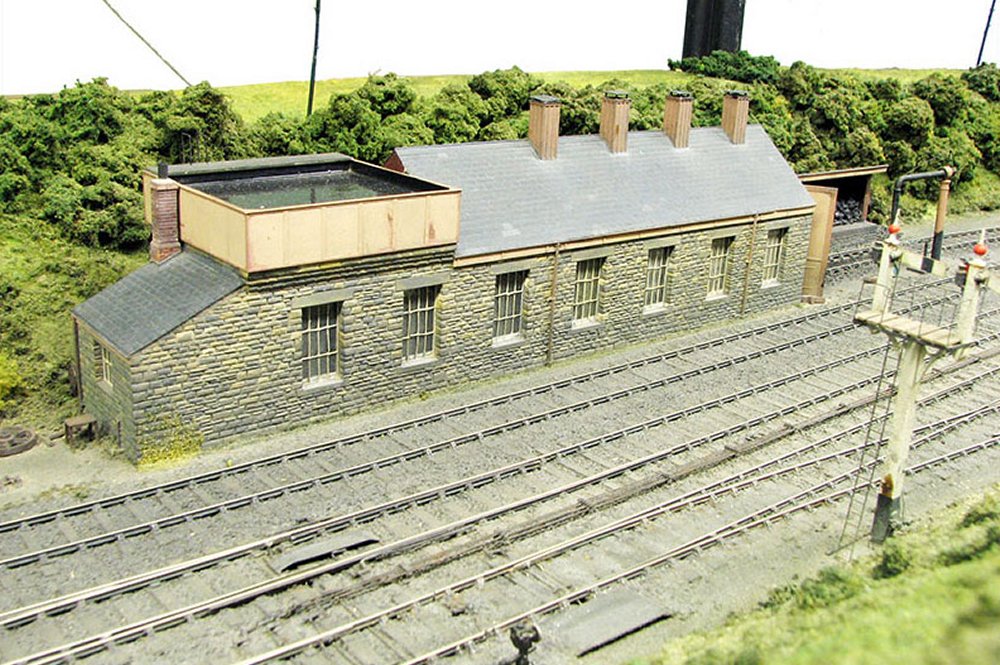
The Loco Shed and the Coaling Stage are both from the original station track plan, which ran into a terminus which was at rightangles to the 'High' street.
When the line was later extended to Aberthaw, a new station was built on a curve, which bypassed the original station. The old station buildings were then used as a goods facility and the Loco shed and later the coal stage became redundant and were demolished.
Information for construction of the buildings was taken from the book by Colin Chapman, published by OPC entitled The Cowbridge Railway. No drawing existed for the coal stage, so an aerial photograph and a shot of a similar stage at Ferndale in the Rhondda, was utilised to estimate dimensions. All of the coaling was done by hand, from a wagon which was parked under the shed roof. The coal was then handled on to the stage platform and either directly by shovel or basket into the bunker of the loco which had been drawn up on the adjacent track.
The layout will feature locomotives from the Taff Vale Railway which had its headquarters in Cardiff and also representatives from other lines such as The Barry Railway and The Great Western Railway of that period. A Taff Vale Railcar, which was used on the line, will also make an appearance, from time to time,on the passenger line, which runs along the back of the layout.
The hand painted backscene attempts to feature the townscape and topography of the area surrounding the original station.
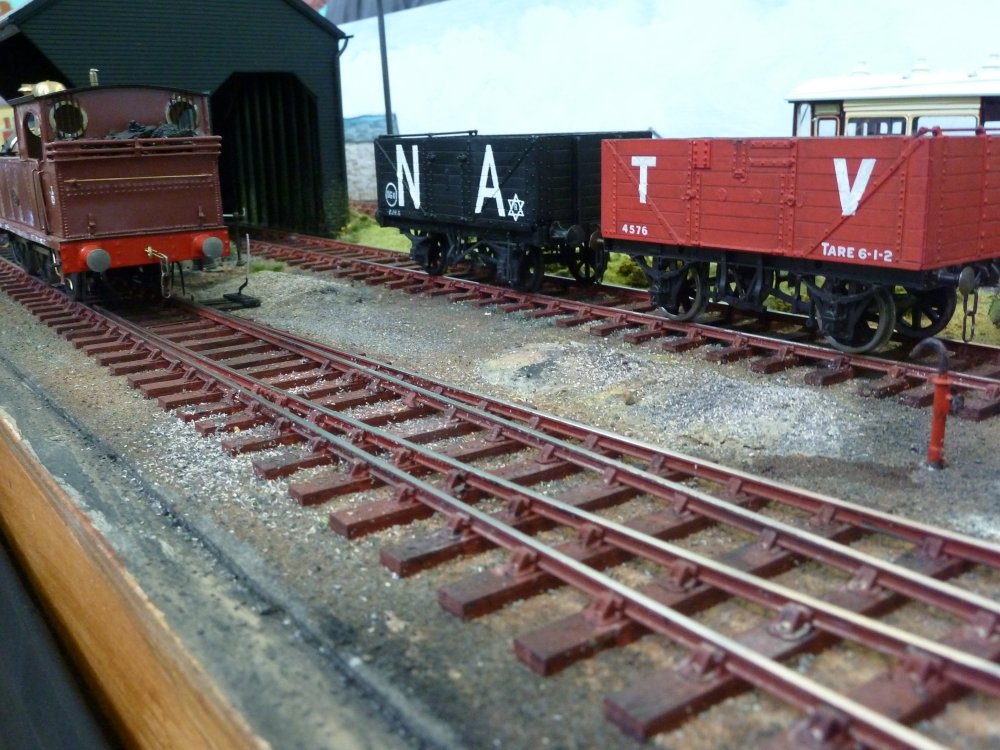
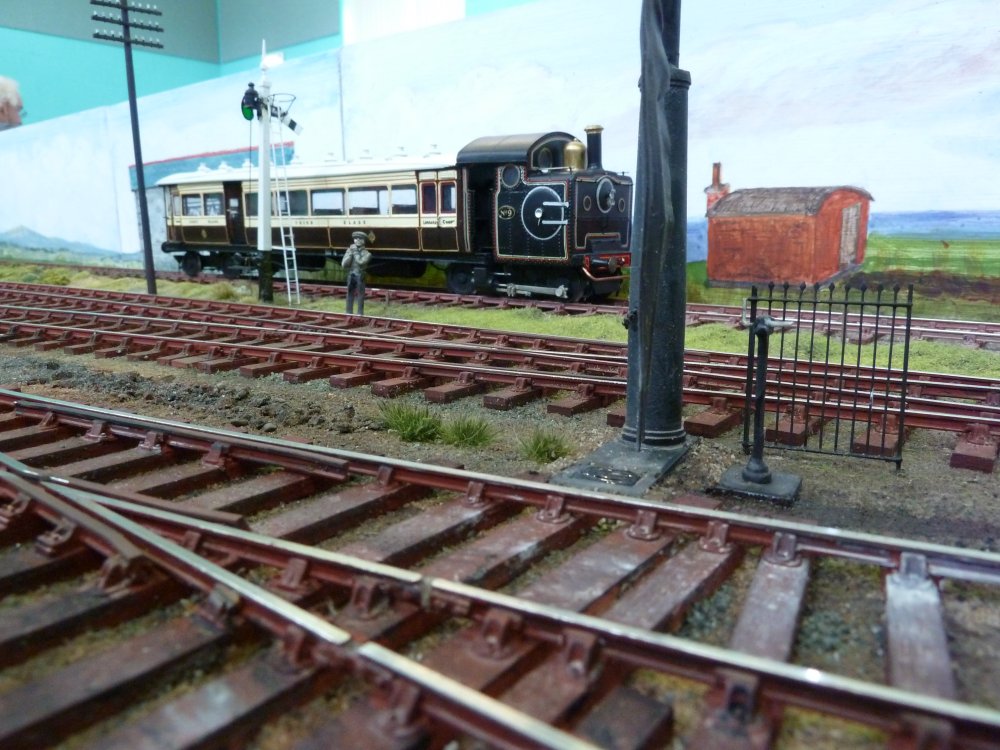
Broadchurch is a fictitious branch line situated on the Plymouth Devonport & South Western Junction railway. It is operated in the 1962 - 1964 period just before the closure.
The model is DCC operated with small steam & Diesel locomotives fitted with Zimo 645 decoders, the latter with sound. Control is by the excellent NCE Powercab.
Steam locomotives are Kit built with Diesels from Bachmann Brass Works & Ixion.
Rolling stock is made up of Parkside & Slaters Kits, with an increasing number of Dapol Wagons.
Thanks go to John Spencer who scratch built the station building from photographs and Bernie Baker for the installation of the decoders.
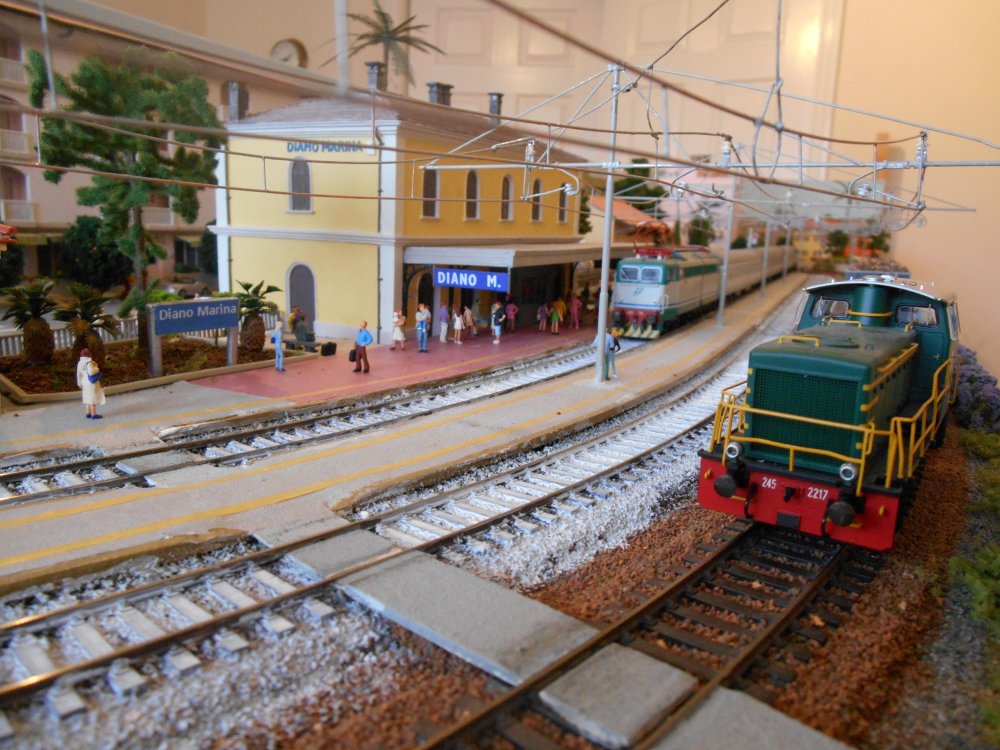
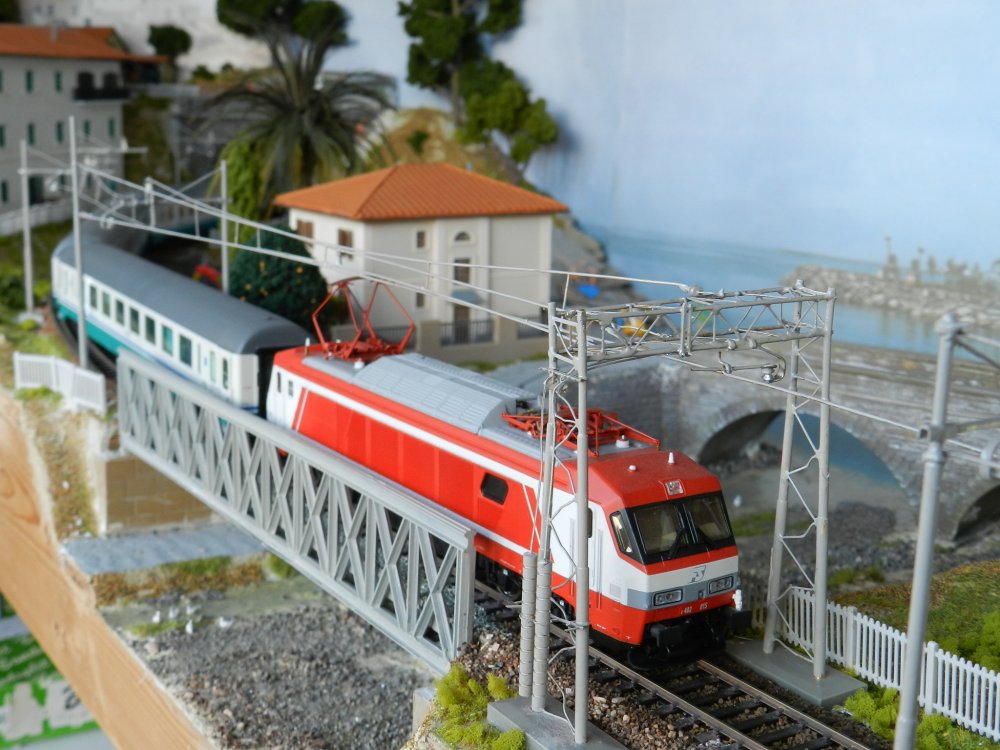
Diano Marina is a small seaside resort on the Riviera dei Fiori (the coast of flowers) in north west Italy, on the FS main line from Genova towards the French border at Ventimiglia and onwards to Nice and Marseille. Diano is between Imperia and Alassio.
The line carries local and inter regional trains as well as Intercity expresses to Milano and some through freight to southern France, including steel and gas. Until the surge in budget air travel there were also through trains to Spain and Rome, and nightly sleepers Nice-Rome and Venice, and a daily through train to/from Zurich in the summer.
The railway was originally almost all single track, winding in and out of each bay along the coast, but much of it has now been replaced by a 'direttissimo' high speed line running a mile or so back from the coast mostly in tunnel. Diano is one of the last few traditional passing stations on what was one of Europe's most beautiful train rides. Along with Cervo and Andora it is due for closure and replacement in the next year or so.
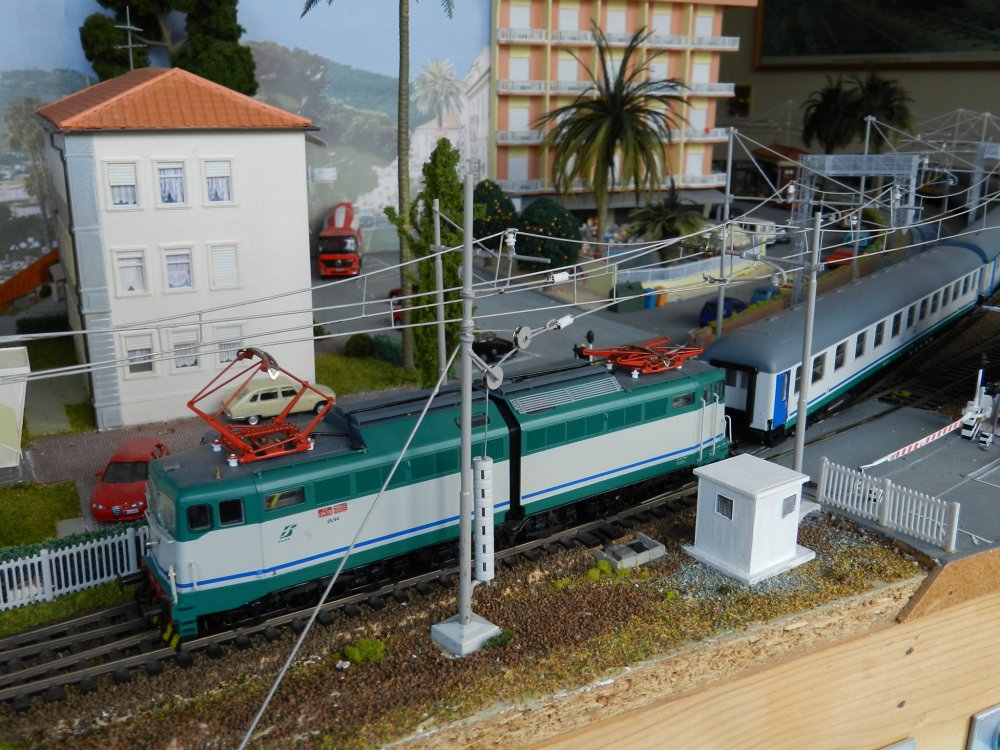
The line was first electrified on the three phase system with twin wires over each track, but this was replaced with 3,000v DC overhead in the 60's, when the substation was built. The OHLE equipment on the model is by Sommerfeldt but is not 'live' as it would have been too much of a faff to wire the fiddle yard.
We have had to make some compromises in modelling Diano - train lengths are roughly halved, the real thing accommodates regular 15 car invalid excursions to Lourdes: one level crossing and one siding at the substation have been omitted and the goods shed shortened: a couple of miles of seaside suburbia has been removed between the station and the Cervo headland tunnel, and finally our favourite hotel has been moved a block nearer the station so you can now watch the passing trains from a lounger by the pool!
We have been visiting Diano since 1992 so the rolling stock varies in period but the layout is set around the Millennium. It is in HO scale (3.5mm/ft) and measures 11' by 9' and fits in our dining room (yes, Sue's very understanding) and uses Peco track, Gaugemaster control (simple DC cab control) and the rolling stock is mostly Roco with some Acme, Rivarossi, Lima, Heris, Lilliput etc.
One of the beauties of modelling a real place is you have to make unusual features for yourself, such as a toilet block with a palm tree growing out of one corner and a triangular greenhouse cafe extension. Other oddities to note are the use of the torrente (flood relief channels) as footpaths, the shaded LPG store, the genuine English graffiti found on the goods shed, the little signal box under the platform canopy with dispatcher in his magnificent red felt topped official hat, and us sitting outside the Bar Eden with a beer waiting for the level crossing bells to start.
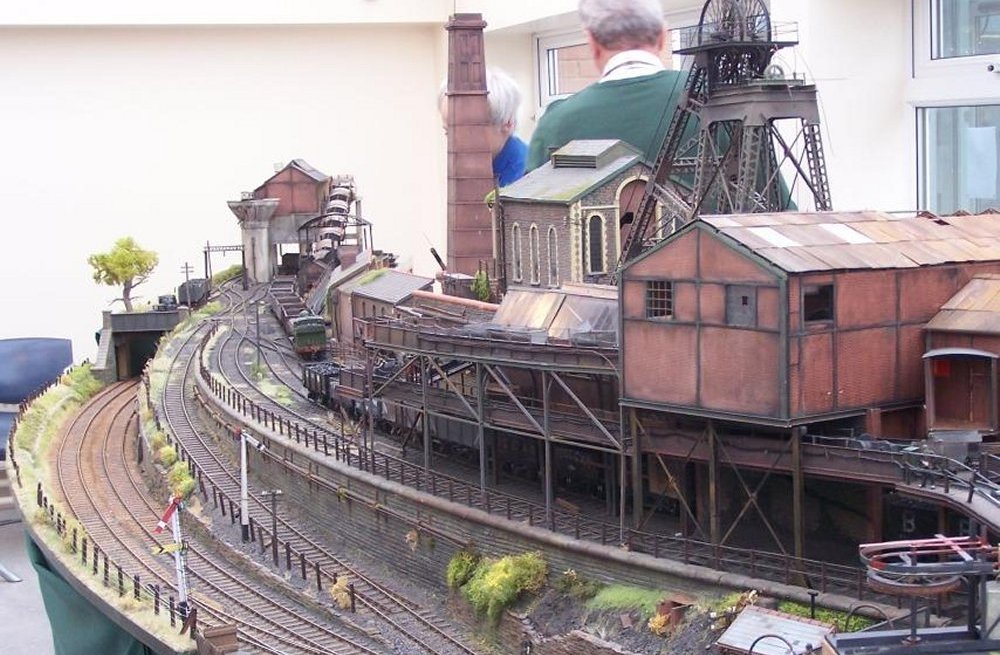
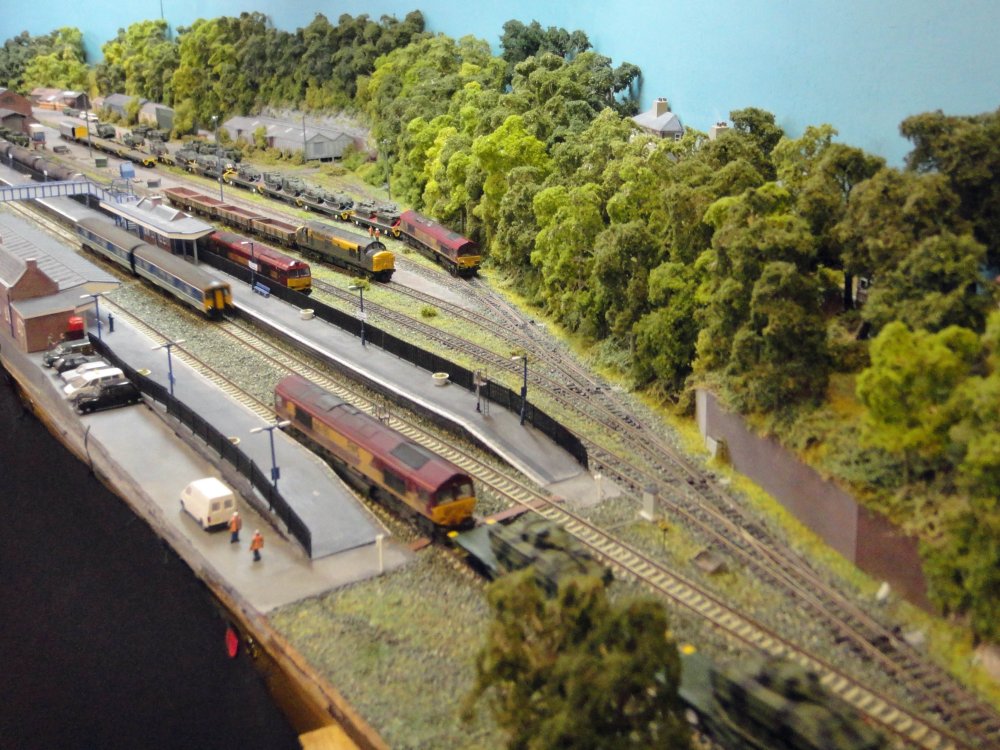
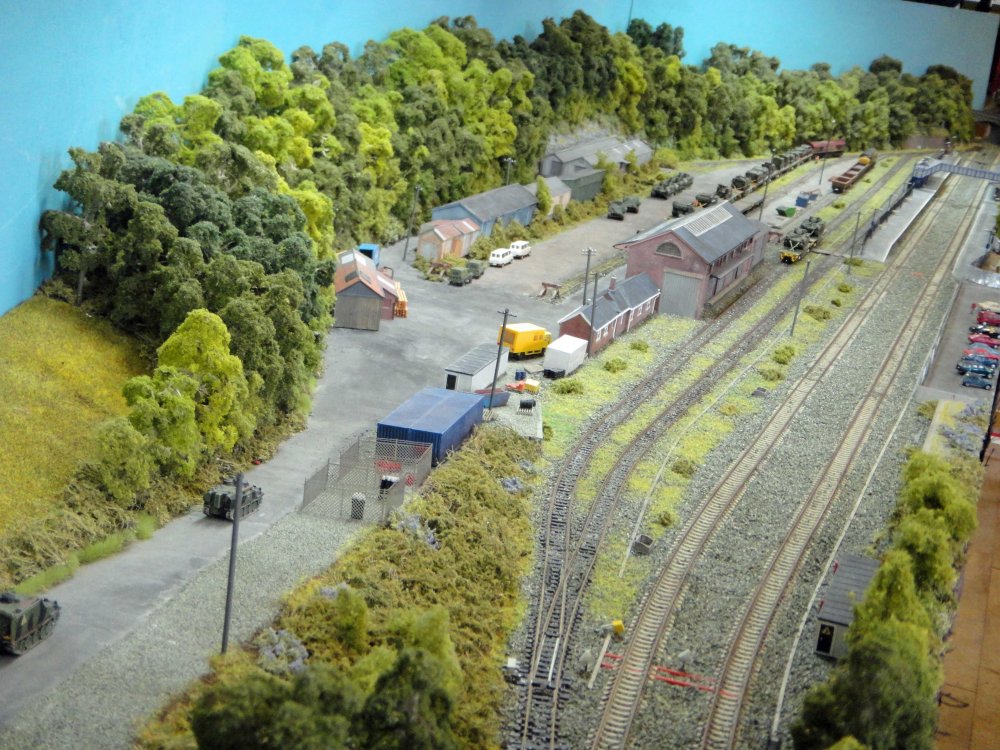
This modern image layout is themed around an independent service provider undertaking rolling stock repairs and refurbishments on its premises loosely based around the old Barry wagon repair shed.
At different periods, you may see Network rail test train stock, Modern bulk hoppers in for wheel and bogie servicing. and even serco stock being refurbished.
Please feel free to ask any questions of the the operators.
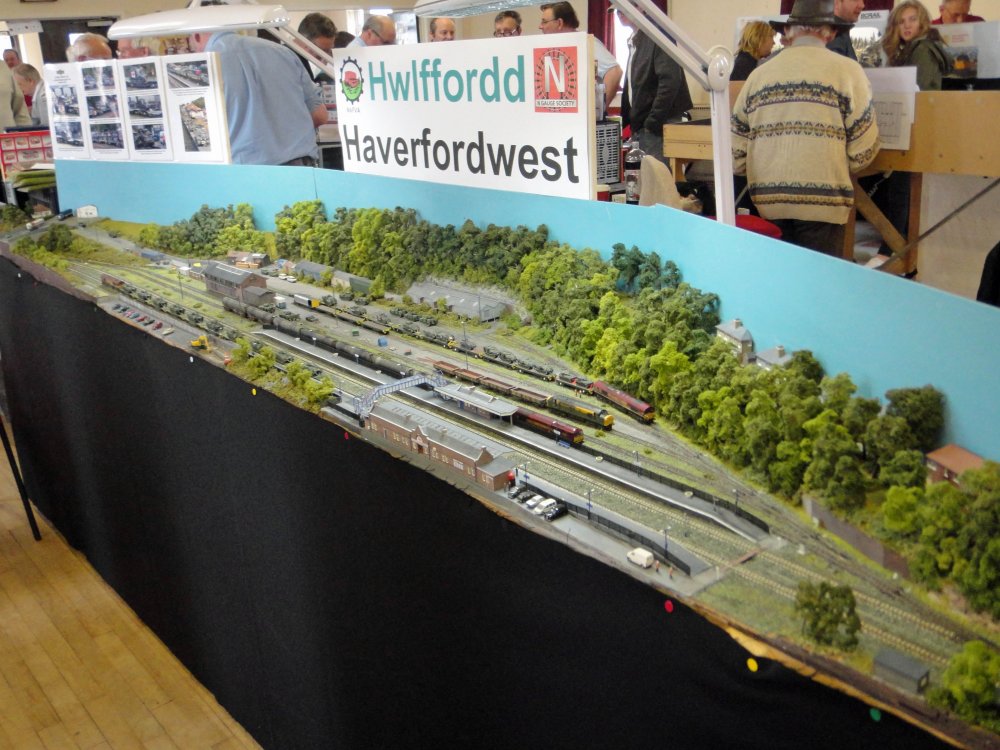
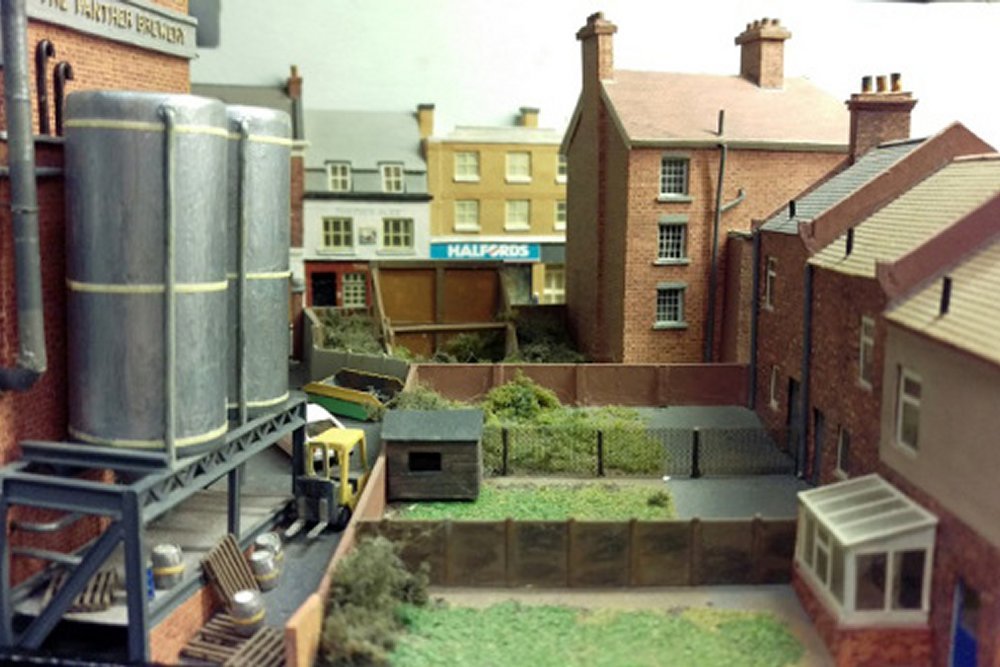
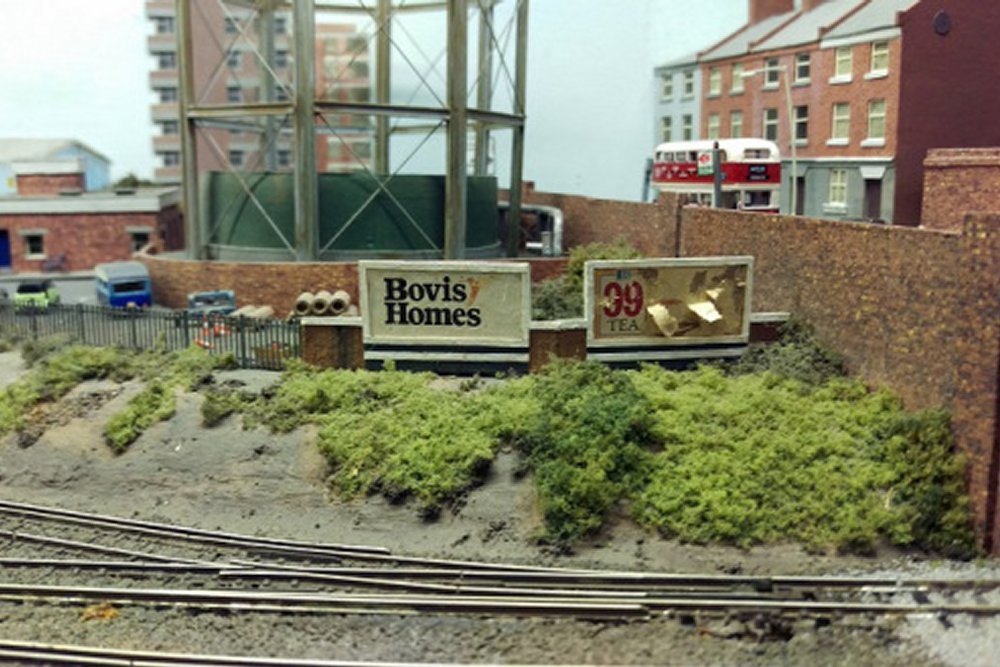
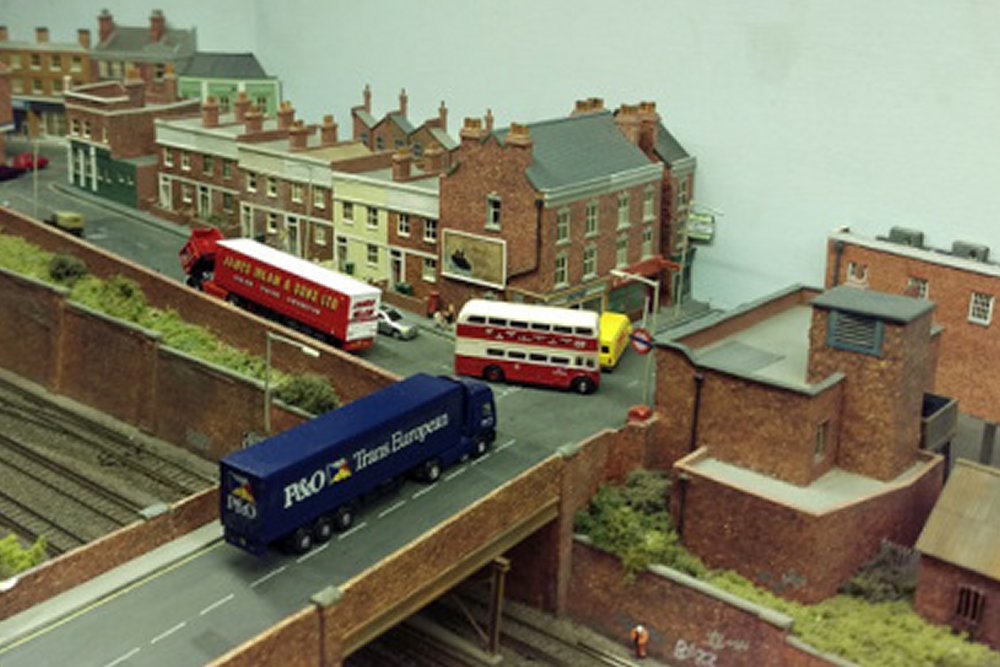
The Fiction Hedges Hill Cutting is just that, a cutting located in the suburbs of south London at some time in the early 1990s.
The Facts Hedges Hills Cutting is a popular and well-known layout and so when its originator Grahame Hedges decided to sell the layout in 2008 The Bentley Model Railway Groupleapt at the opportunity to add this little gem to their collection.
The layout is extremely compact, the original narrow width of the layout was the maximum that would fit through the loft hatch where the layout was stored. Also being the first exhibition layout that Grahame built it was a test bed for his various modelling ideas and he opted to avoid the hassle of joining baseboards. Thus the whole layout was designed to fit on a single board that could be handled by one person plus had a strong chance of reaching completion before interest waned and desire to start something new took over.
All the buildings and structures on the layout, with the exception of one SR platelayers hut (in the single line refuelling yard), are scratch built from cardboard. Some commercial modelling products have been used, such as the Ratio water tank and factory chimney, Plastruct girders, PECO wagon tanks, and occasionally plastic embossed roofing sheets, but the vast majority are made from card either covered with brick paper or simply painted with acrylics.
Many of the buildings on the layout are of actual prototypes, either modified to suit the location on the layout, or built as they really stand. For such a small layout there are quite a few buildings and all of them are modelled, along with the railway, in space a maximum of 15 inches wide and less than six feet long.
There are three pubs (the Ship and Royal Standard from Croydon and the Beehive from Peckham), a wealth of shops (Halfords, British Gas showroom, Hedges Healthfoods, Ace Cabs, Newsagents, and Ladbrokes) plus one closing down and one up for let (which is typical for the era), a bank (Lloyds), a building society (Lambeth), an Indian restaurant (Natraj), over twenty domestic houses, various industrial buildings, a London Transport underground station (based on New Cross Gate station without its pitched roof), a gas holder site and a brewery (very loosely based on Robinsons Unicorn brewery in Stockport). Please note that the LT station is assumed to be the ground level entrance with the tube lines and platforms deep underground and out of sight below Hedges Hill.
The North end tunnel entrance is based on Denmark Hill tunnel (with three lines instead of four) and the middle road bridge is loosely modelled on Goat House bridge at West Norwood complete with its outside sewerage pipe.
The location was chosen as Grahame lived in various locations in South London for quite a few years and his railway experience and interest is in the electric third rail, which is not very often modelled in N gauge. Selecting the Network South East area of London meant an urban setting with buildings and industrial developments as opposed to the more usually modelled and unjustifiably popular green rural scene with fields and farms. Urban settings often offered what Grahame considered more interesting architecture and civil engineering.
Chris and his beautiful evocation of Hemyock Station on the GWR Culm Valley Light Railway which ran for seven and a half miles from Tiverton Junction to Hemyock. The chosen period is circa 1933 following major alterations to the track layout including an additional siding to the creamery.
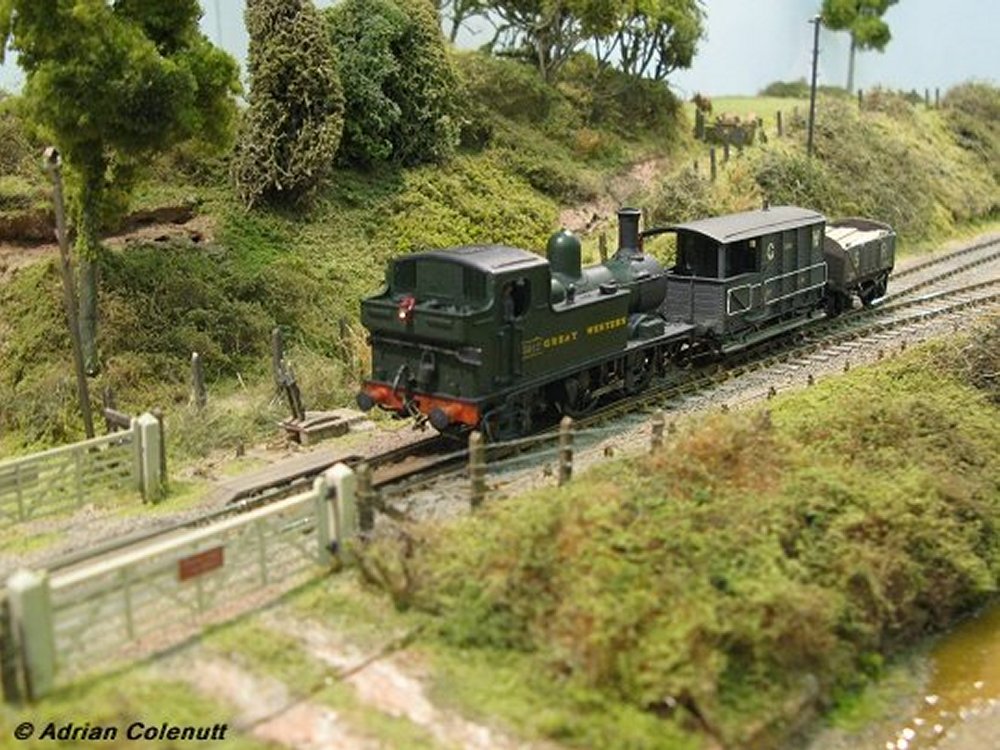
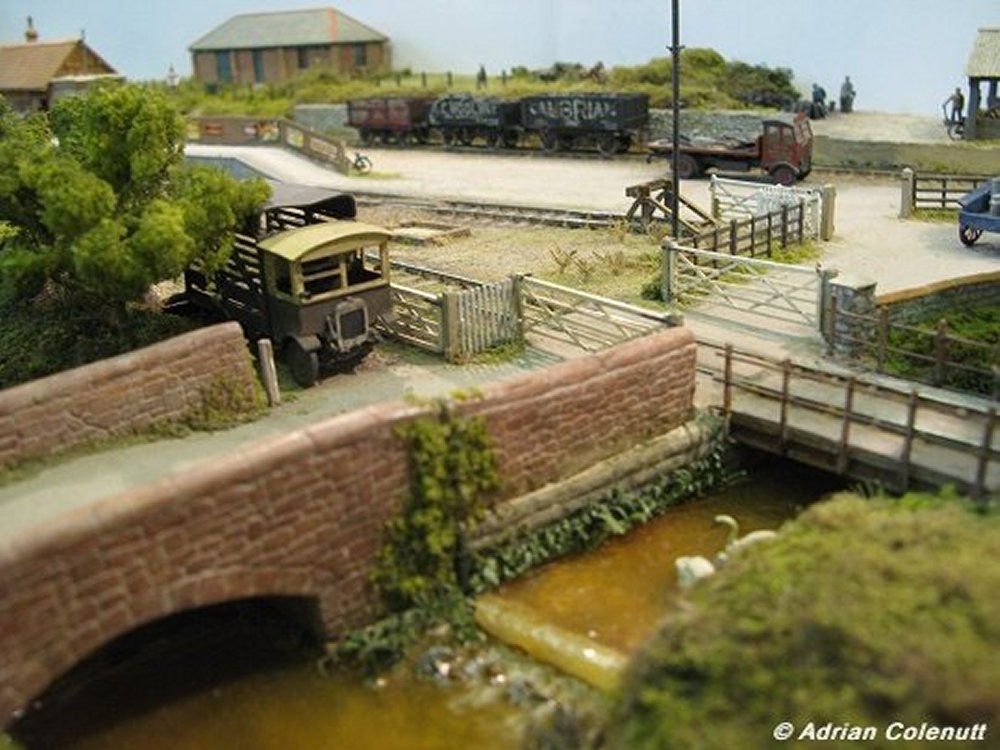
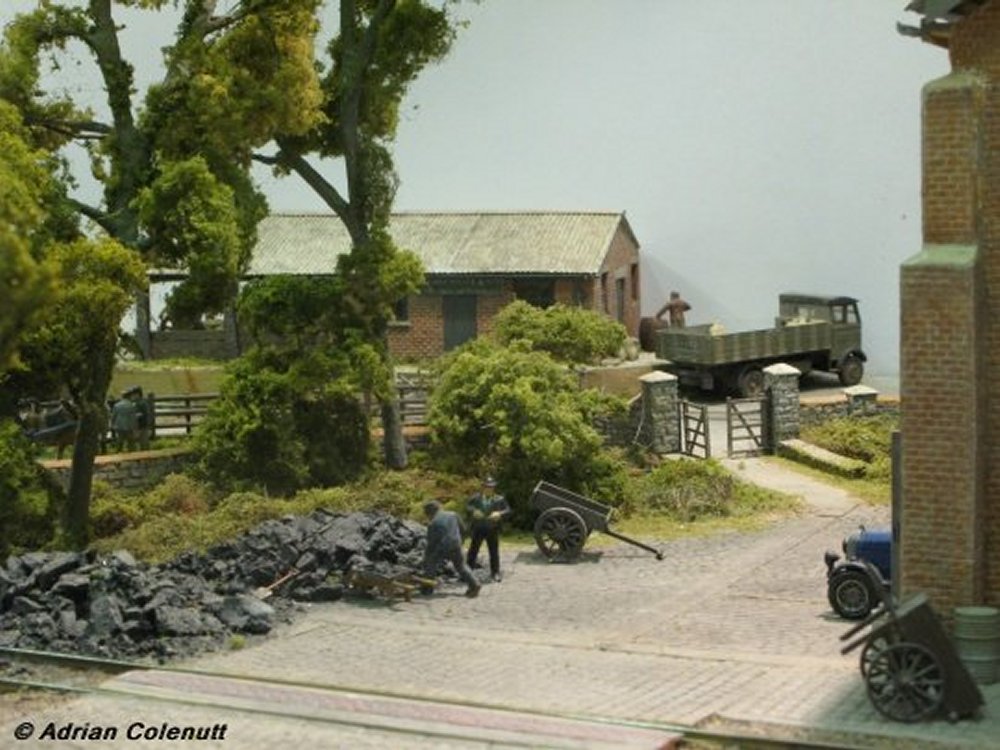
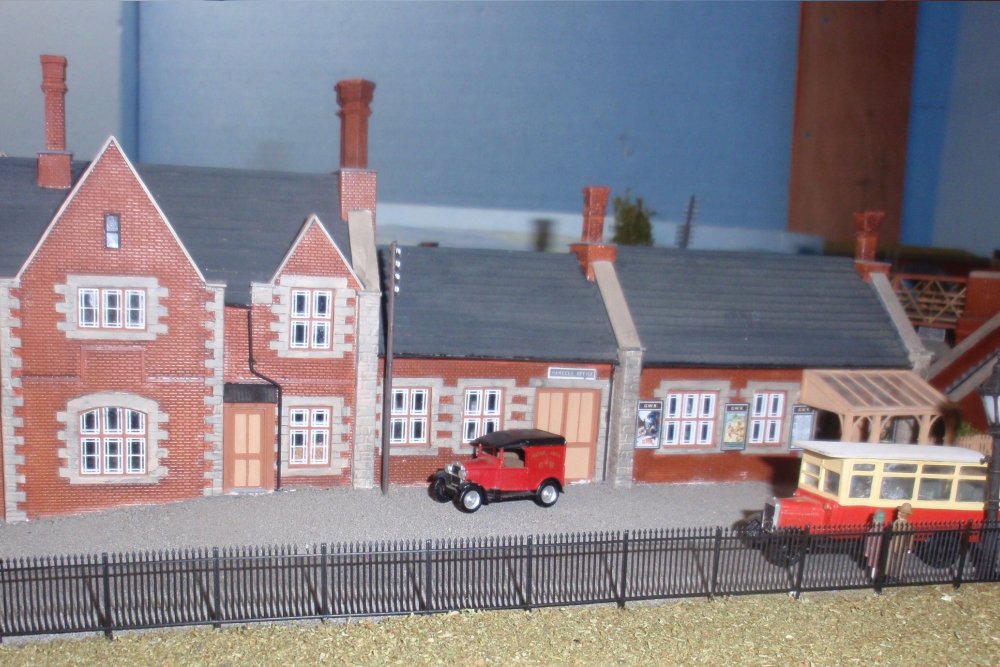
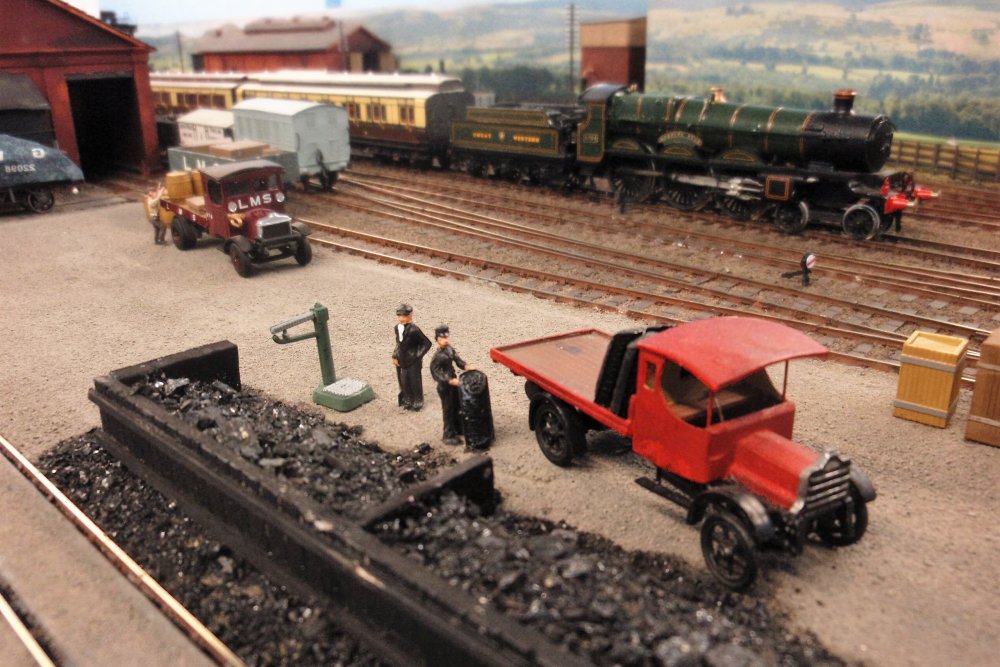
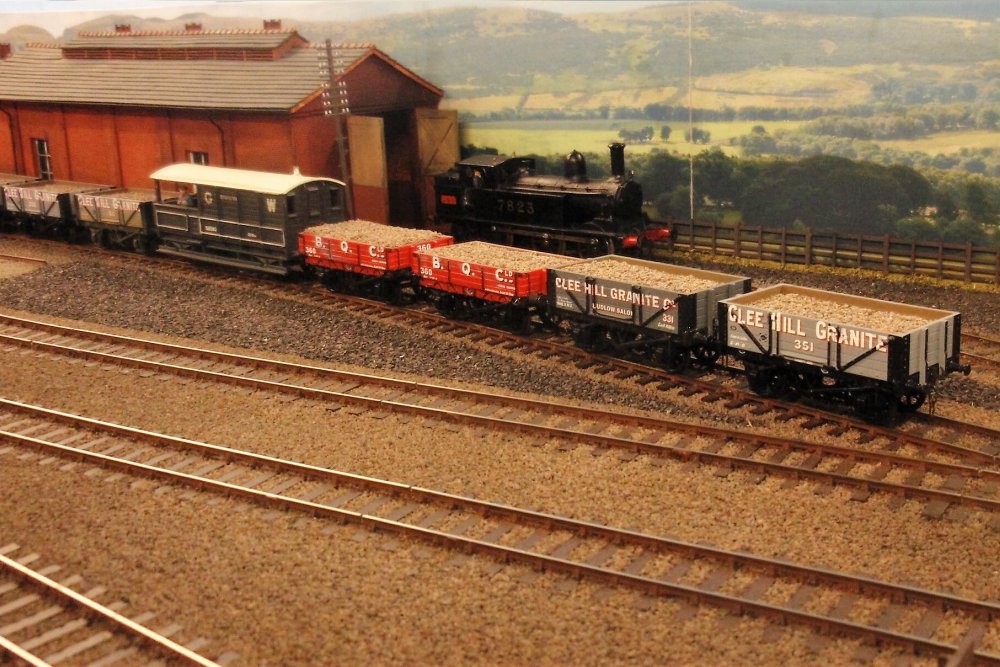
The Shrewsbury and Hereford Railway opened south from Shrewsbury as far as Ludlow in April 1852 and on to Hereford in December 1853. In July 1862 it was taken over by the Great Western, London & North Western and West Midland Railways, the latter becoming part of the GWR in August 1863. After the grouping in 1923 the line was jointly owned by the GWR and LMS. The independent branch to the Clee Hill quarries opened in August 1864 and was taken into the joint ownership in 1893.
Ludlow has been modelled in circa 1930 depicting trains from both owning companies including joint trains, which were seen at this time.
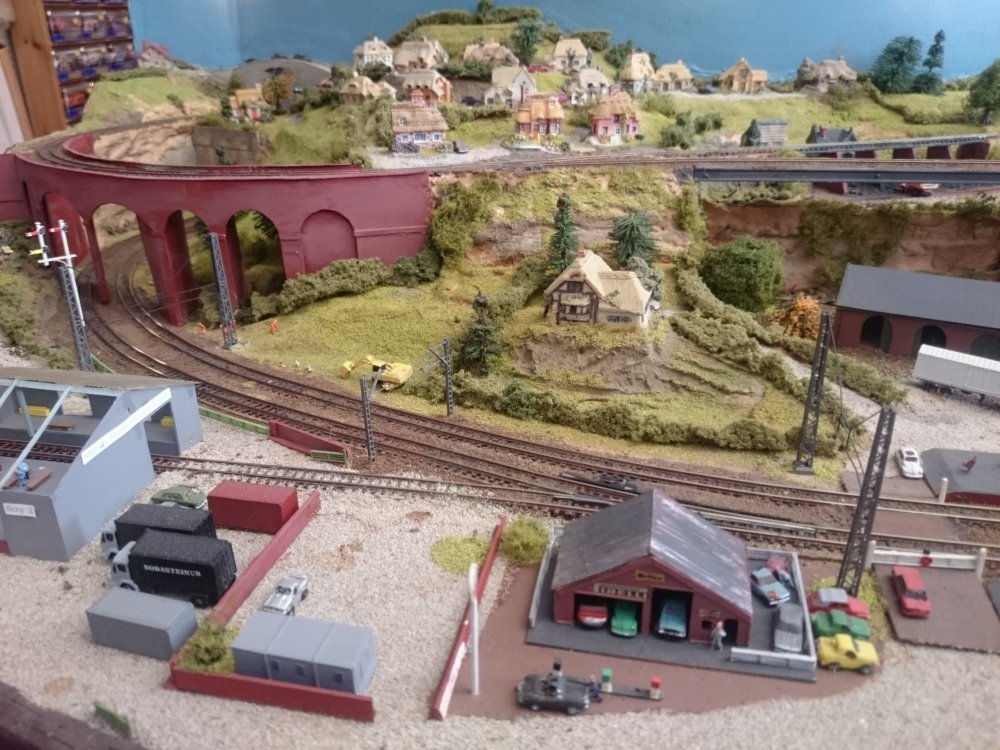
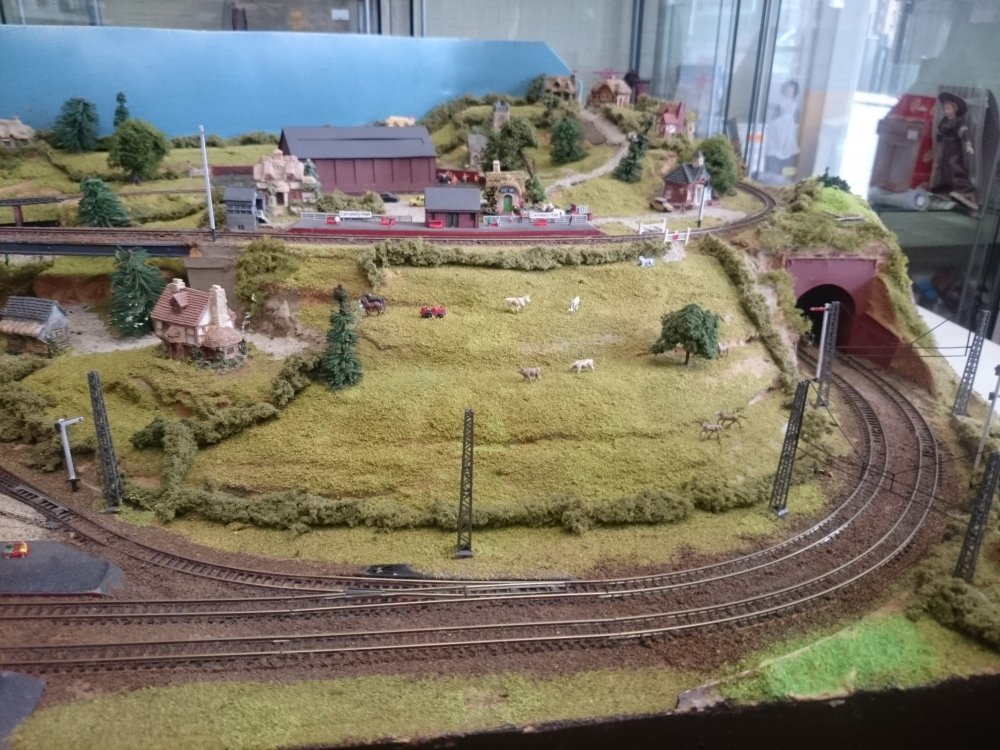
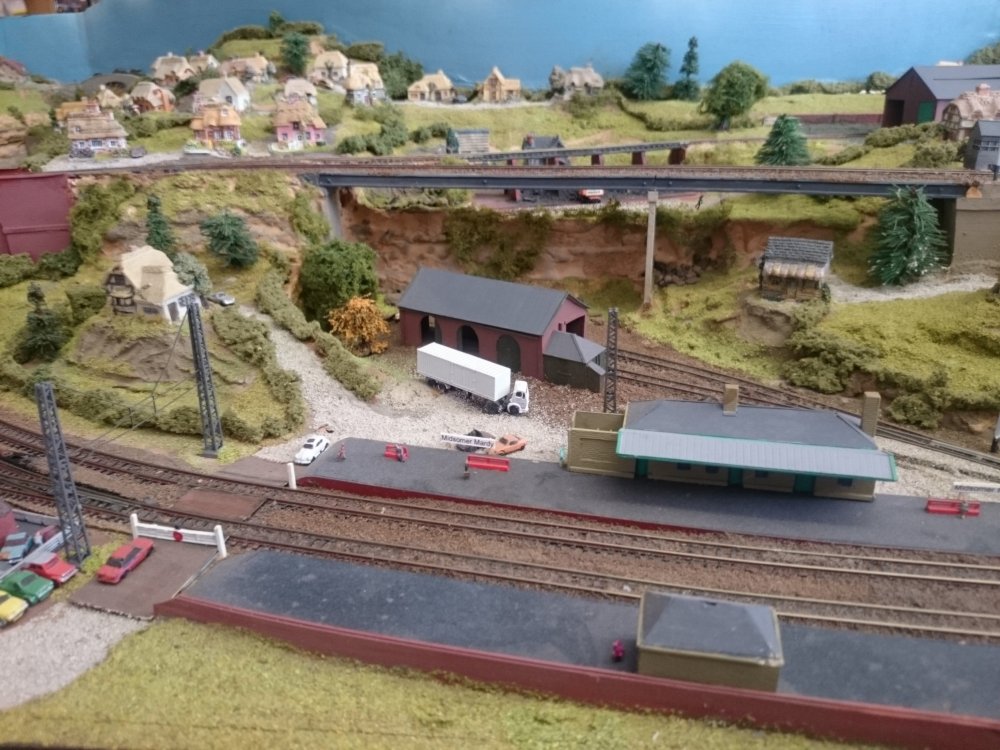
The layout packs a lot of detail and operating interest into just a 4ft by 2ft6inch and features an entire village bought from car boot sales and charity shops. The buildings are resin cast cottages sold as collectors items including 'Tetley Tea folk' houses. They are to slightly varying scales and are used to "force the perspective" on the layout by using the larger ones at the front and smaller ones at the back to increase perception of depth.
The most any of these buildings has cost is £1.50. The station buildings and other railway structures are scratch built in plasticard based on Midland Railway and Lancashire and Yorkshire Railway prototypes. There is a small harbour which serves Mardy Frozen Foods warehouse and Mardy marine ships handlers.
Three trains can run simultaneously two on the lower track and one on the high level branch line.
The track is a mix of Marklin and Peco and all points are electrically operated. The lower tracks are fitted with overhead catenary.
Rolling stock is a mixture of diesel, electric and steam based on Marklin chassis and includes class 47s,56s,90s and HSTs. Steam outline includes LNER A3s and A4s. Rolling stock is a mix of scratch built and repainted Marklin items.
Hidden on the layout (and very small indeed) the good folk of Midsomer Mardy are up to their favourite pastime, murder!
Midsomer Murders is a popular TV detective show in England set in a sleepy village full of thatched roofed houses. See if you can spot the murders that have or are about to happen.
The layout is quite ground breaking in representing the U.K rail scene in Z. Any questions from the public are always welcome.
This layout was never intended for exhibition and was a source of amusement for enthusiasts in the back room of the little shop they used to run.
It was built to OO finescale standards, the track is S.M.P. All the signals including route indicators and dummies work via H&M point motors along with the points.
The period depicted is 1922, just before grouping, so I can run all sorts of liveries in through trains.
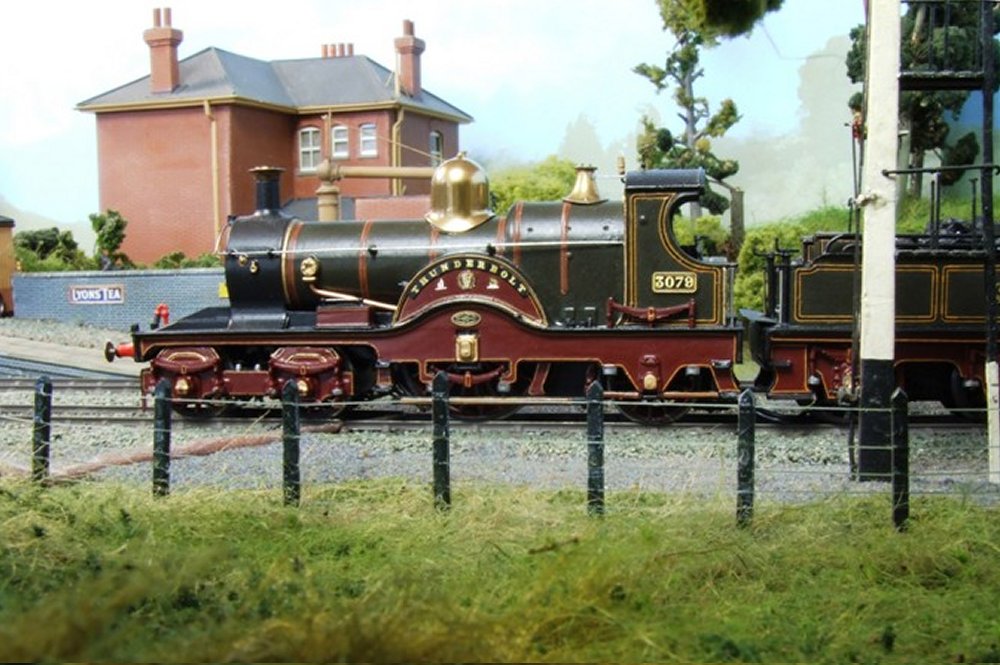
You can observe the following features: 1912 Lake (crimson) coaches, red distant signals and do look out for the very tall duplicate signals. Locomotives, stock and buildings are in the main kits or scratch built. Occasionally they will run one of Felicity's locomotives namely, Brunel and Thunderbolt both with big brass domes.