Layouts that attended in 2019
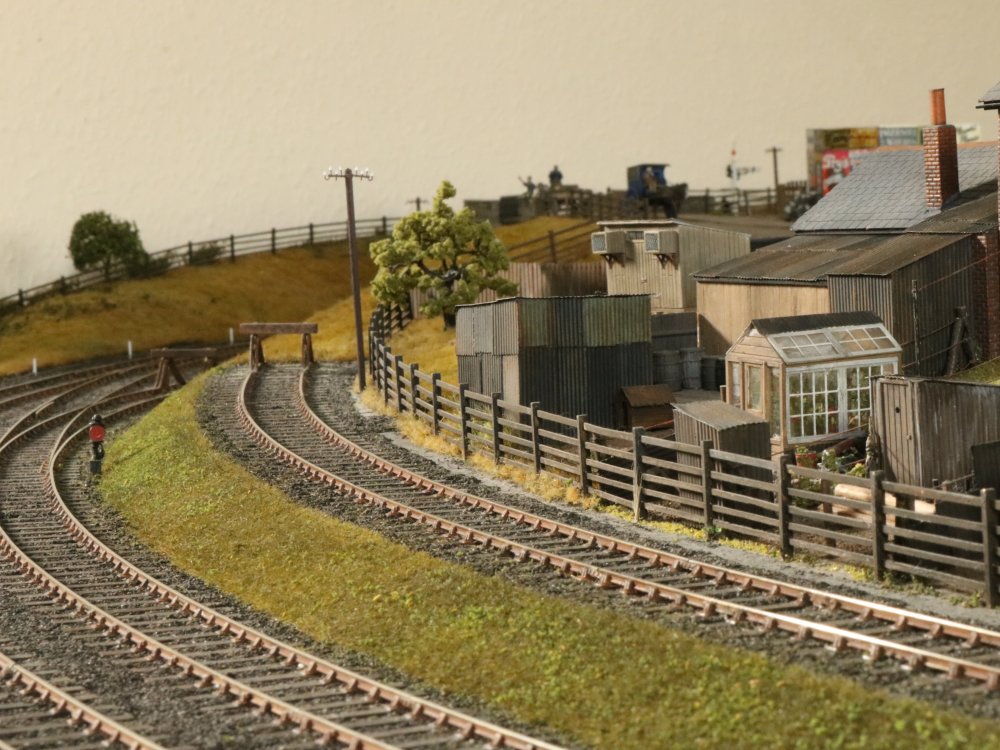
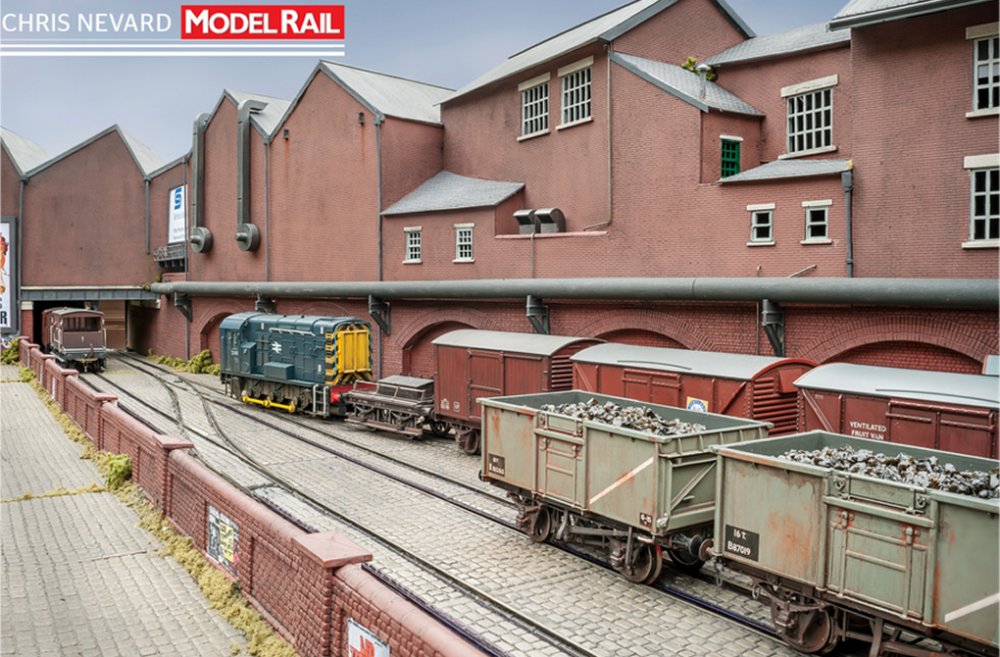
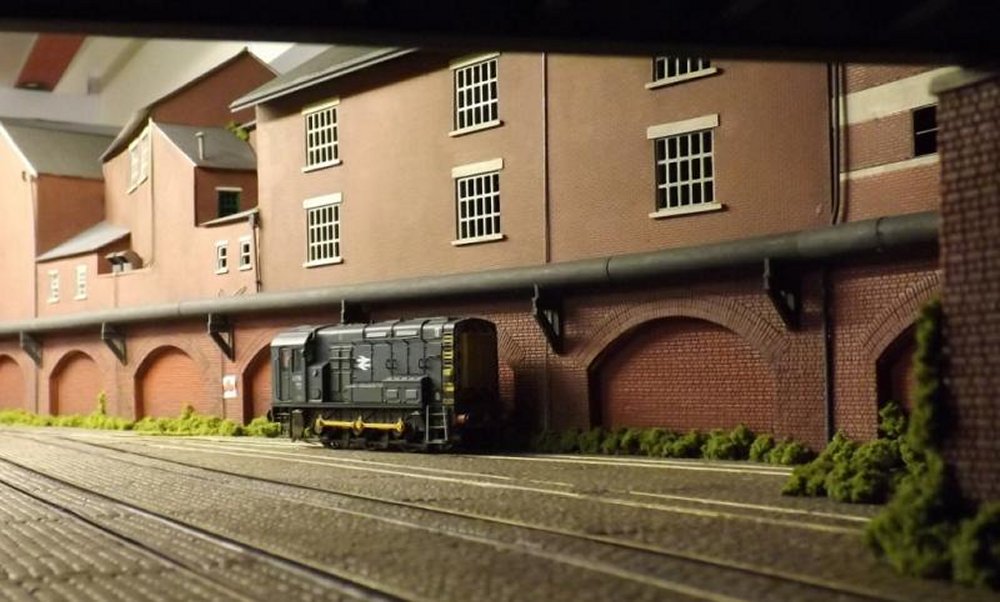
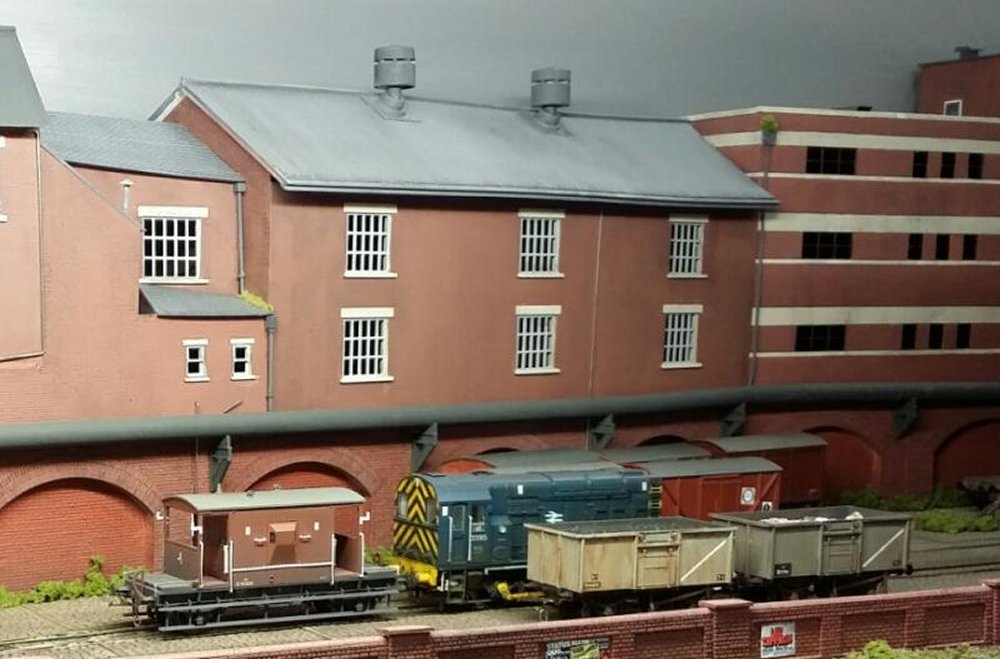
This is a small yard where engines are stored and is set in the 1970's and 1980's. There is a small BR yard where a few wagons drop off materials. Some factory units and a transport depot are also in the area.
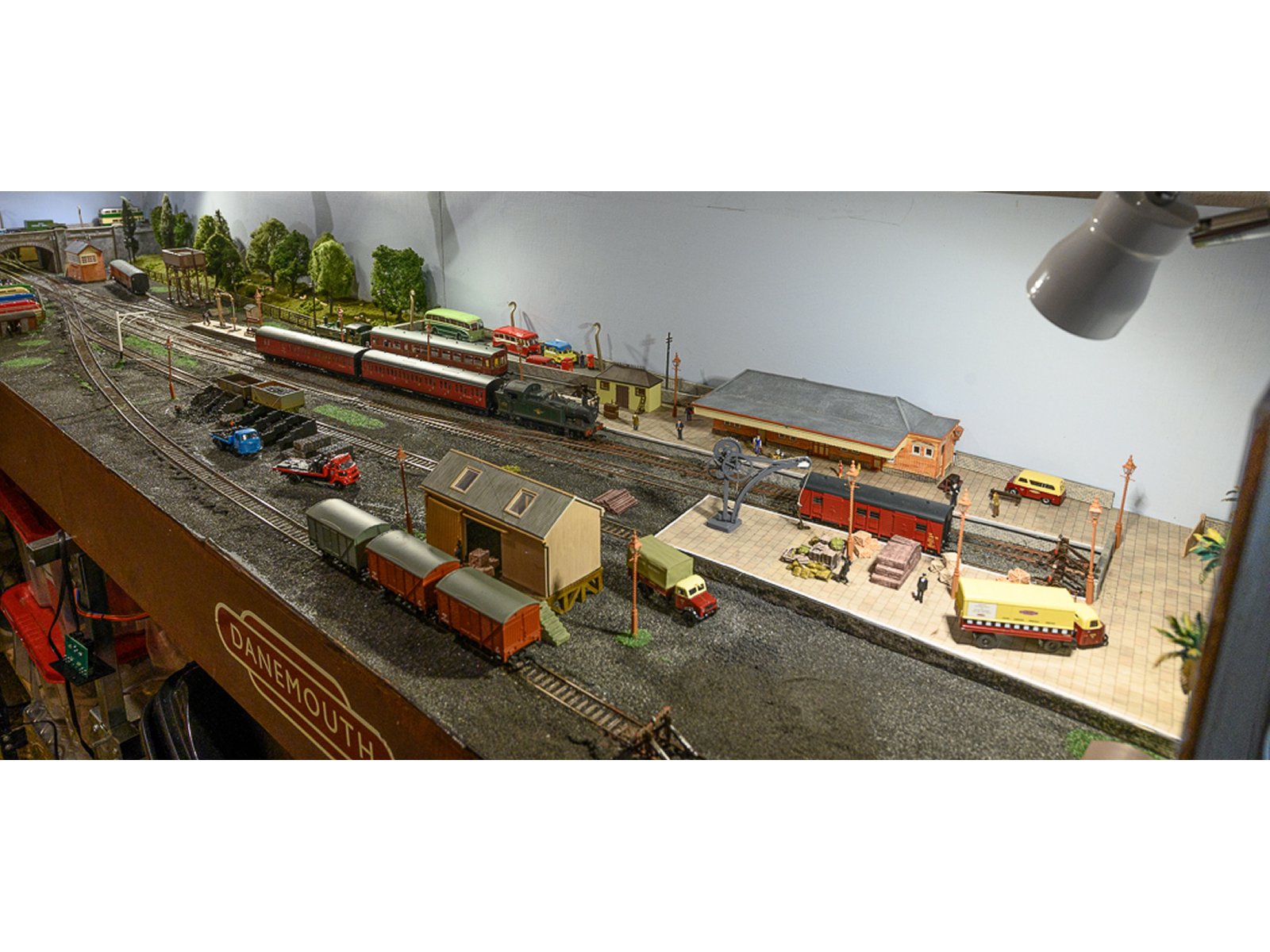
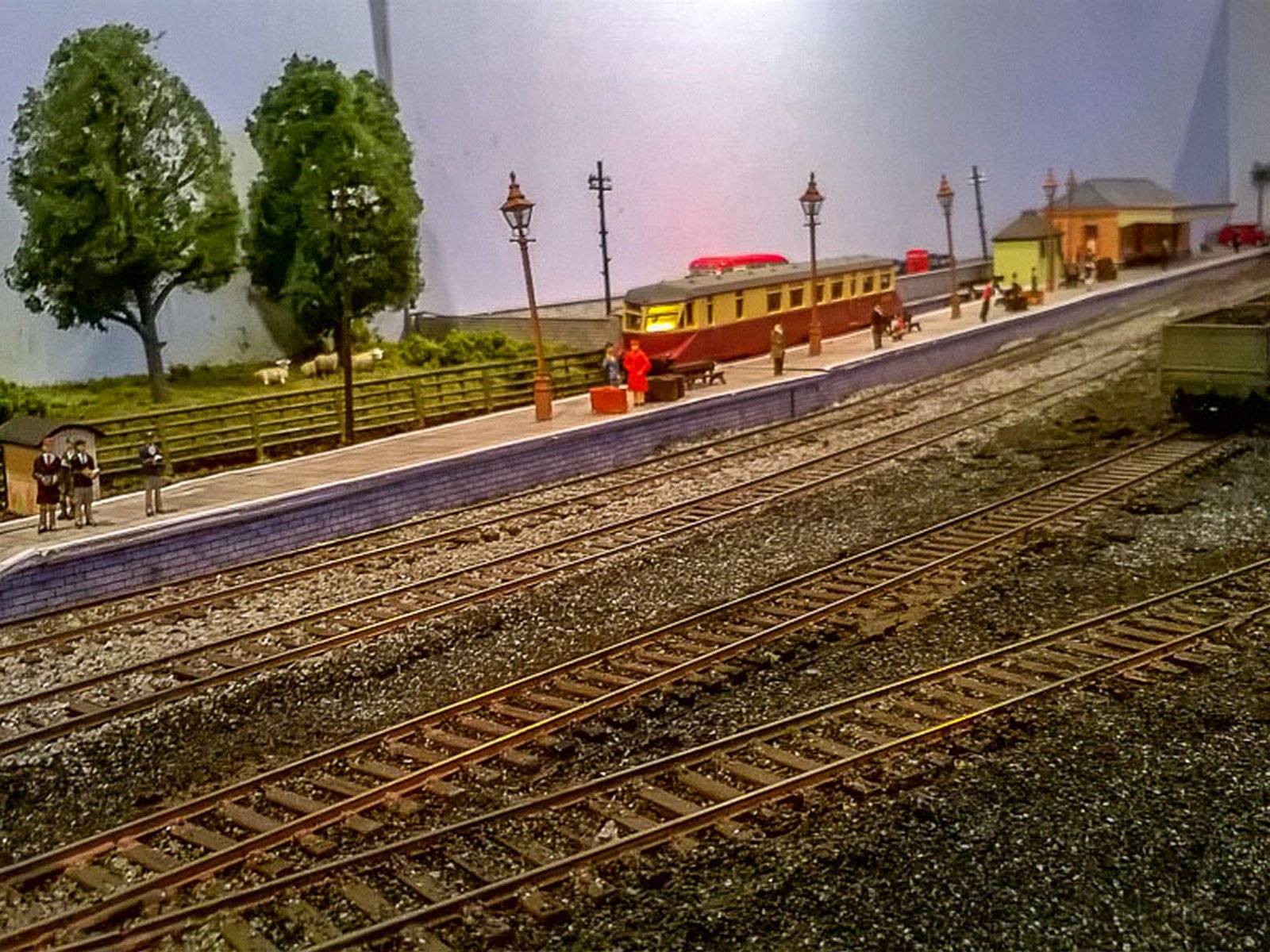
Danemouth is a fictional seaside town on the South Coast. Its station is at the end of a branch a few miles long off the former GWR South Coast mainline; the station is at the far end of the promenade. It is a typical branch line terminus of the era. The period is the early sixties steam with the occasional diesel appearing. The traffic is mainly holidaymakers and daytrippers who have changed trains at the mainline junction on to the Autocoach or B Set trains though there are coaches detached from Expresses and added to local trains. There is also a limited amount of goods traffic.
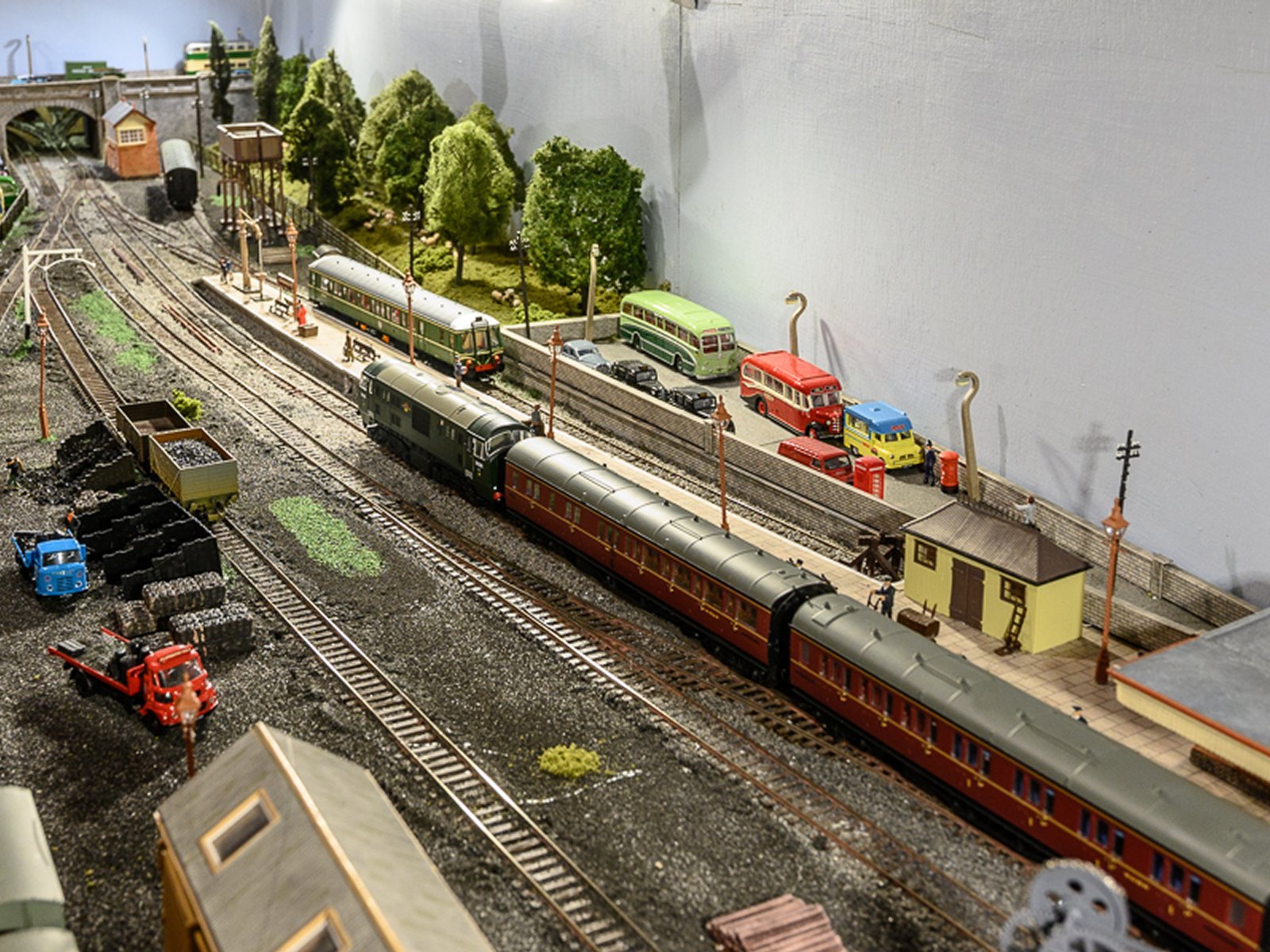
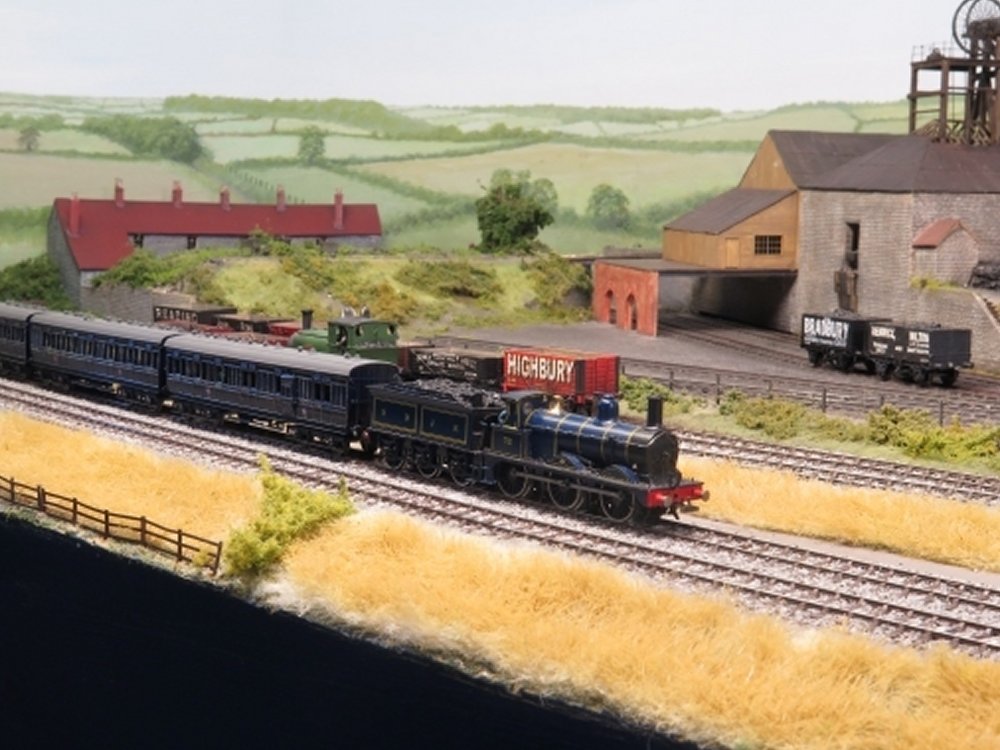
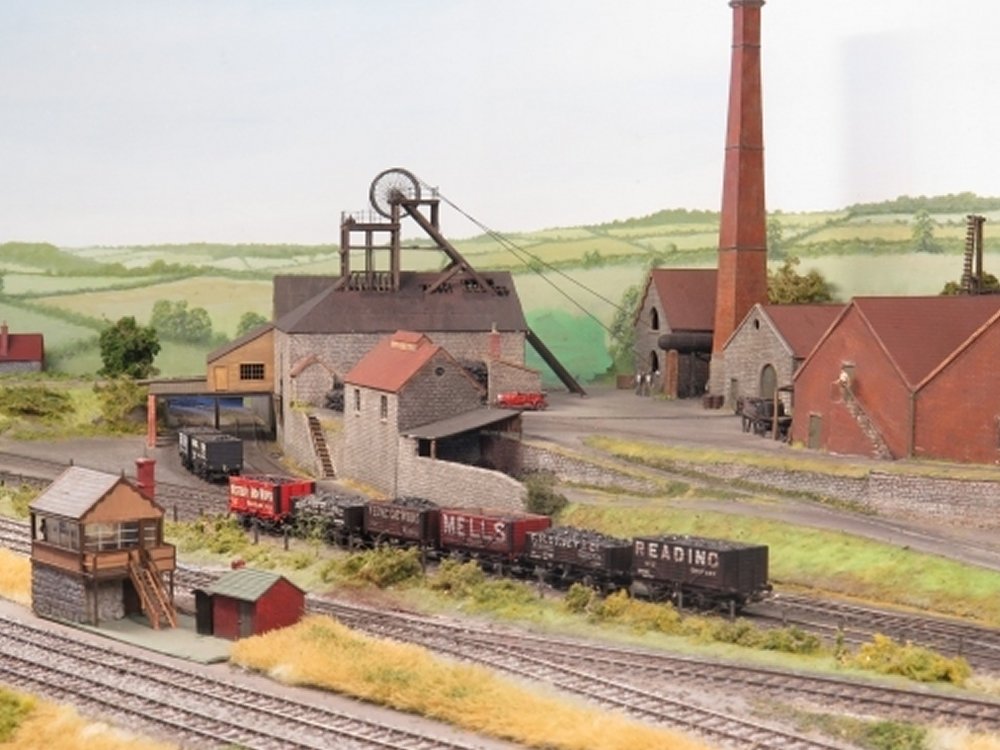
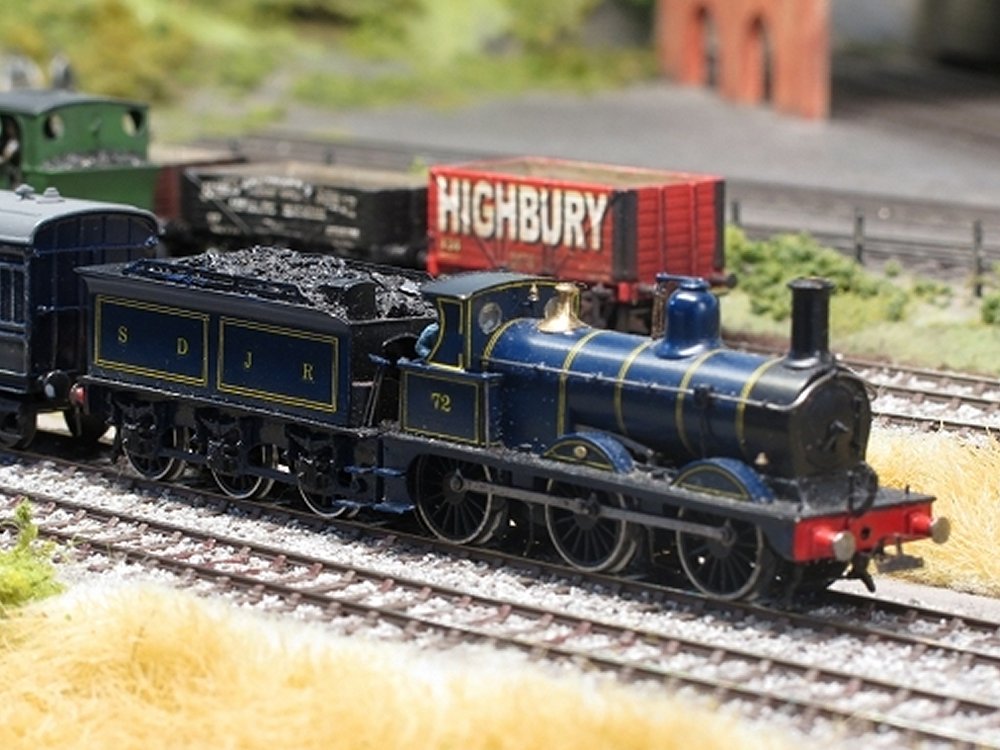
Highbury Colliery was retired from the exhibition circuit in 2014. Following a period in storage I decided to incorporate it into my home layout, Bath Queen square, but in such a way that it could still make the occasional exhibition appearance in its own right. To this end the layout was completely rebuilt and expanded. In the process it acquired a double track mainline across the front, the old single track branch morphing into a pair of exchange sidings similar to those at Writhlington on the Somerset and Dorset. A halt, Foxcote and Paglinch, has appeared in the style of several built on the S&D in the 1920s in an attempt to combat competition from buses in particular Shoscombe and Single Hill which actually serves the real Parish of Foxcote.
Foxcote is situated in a steep valley just north of Radstock in the heart of the North Somerset coalfield. There was a colliery there which at one time was connected to the S&D via a tramway although it bears no resemblance to the model. In order to differentiate the model from the real Foxcote colliery New Pit was added to the name - a nod to Camerton New Pit which was the main inspiration for the original layout.
The layout is set in the years following the first world war, up to 1930 when the S&D lost its independent identity, particularly its famous Prussian blue livery. It is built to the finescale standards of the 2mm Scale Association. If you have any questions about the layout, the S&D or 2mm modelling in general then please don't hesitate to ask.
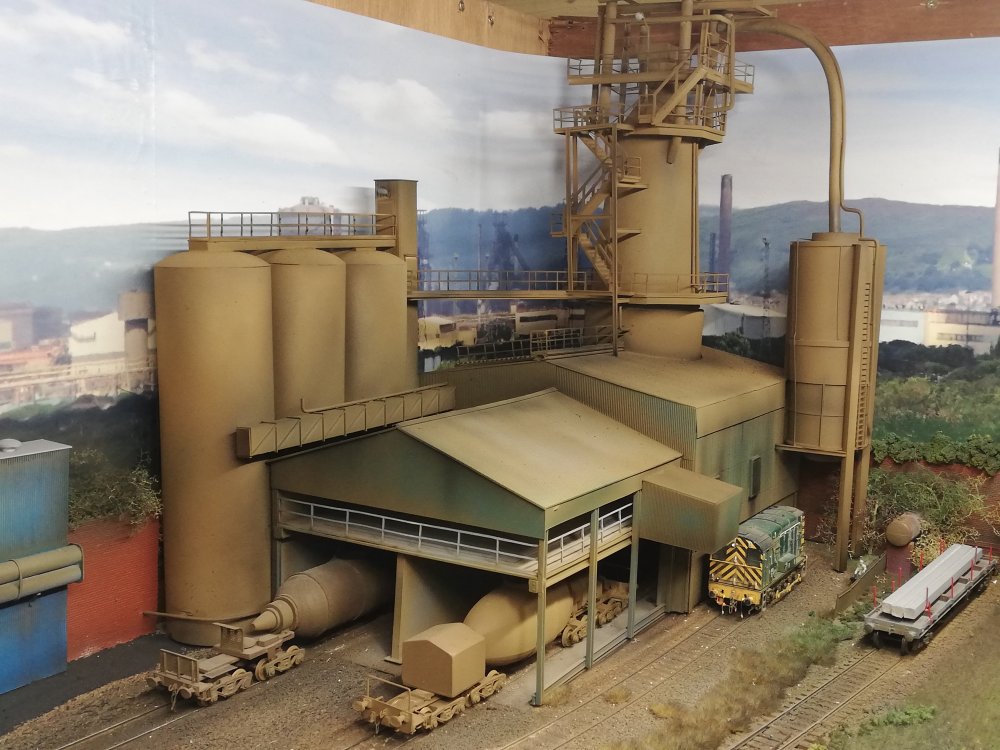
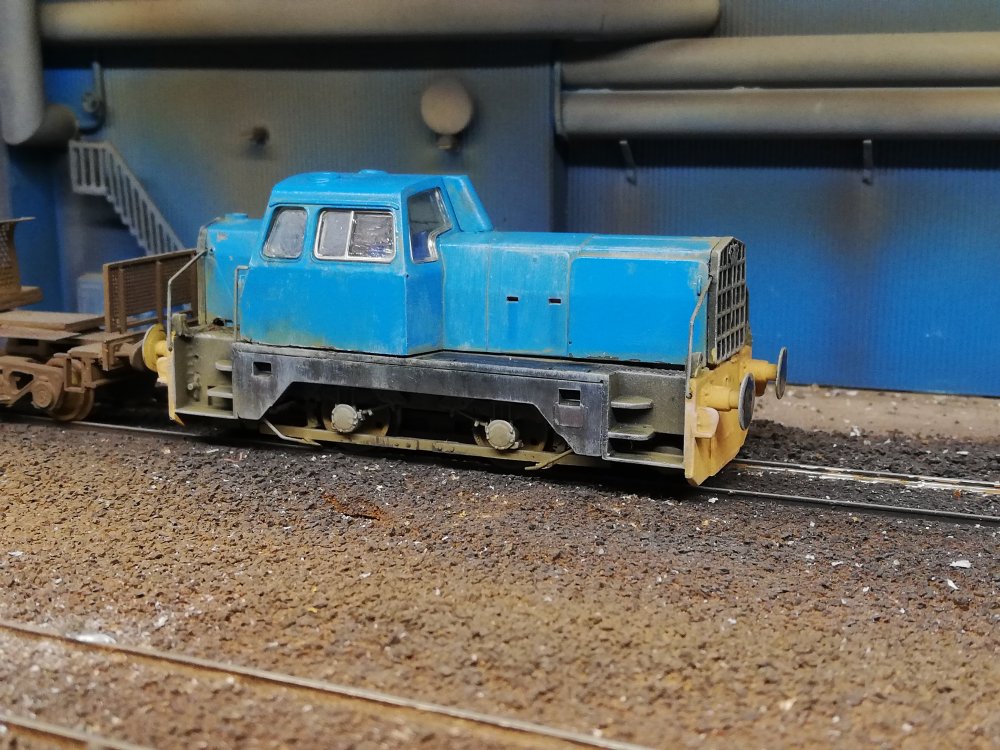
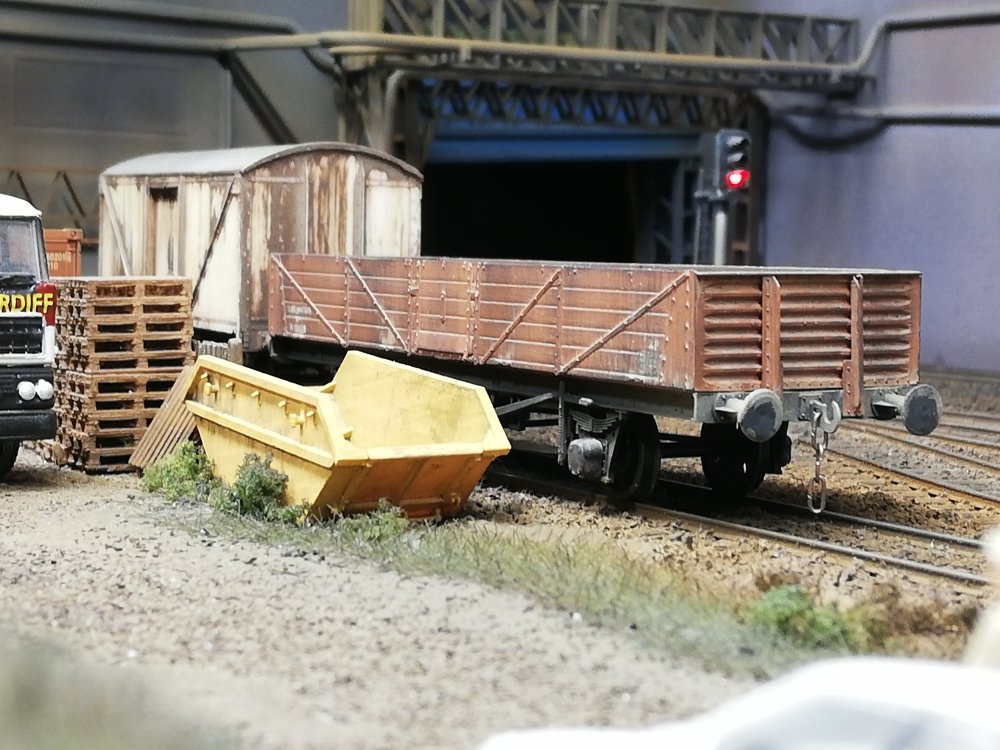
Furnace 5 is a small exhibition layout built in the 4mm scale. Furnace is based loosely around the steel industry of south wales, although not a scale representation of any one location, it is a mash up of various sites around the south of wales all thrown in together to produce something small enough to fit within the limitations of the baseboards, but still give the perspective of a large busy site. Although Kyle built the layout alone, he did have some assistance along the way with bits like 3d printing of smaller parts such as the compression silo tops and some locomotive parts by Peter Evans. The layout is based within the 90s through to modern day and most of its rolling stock is based on what runs or has run at the Port Talbot steel works, sporting locomotives from the early 90s, right up to the Trojan shunters used recently. Kyle built this layout to be fully DCC with electrofrog track work, powered points, and lights throughout buildings and even down to the orange flicker of the molten metal. The reason for DCC was purely freedom. The freedom to move multiple engines around the layout, shunting a range of wagons without worrying about isolating sections, as well as lights that can be left on for realism.
The layout came from a long standing interest in the steel industry. Because his father has worked within Cardiff and Port talbot works for as long as he can remember, he has always been interested to learn more. Although the build itself took a little shy of a year, with its debut show being at the Penarth MRC this year, planning for this layout started back when he was modelling in a different era all together.
Hergest assumes that the horse drawn Kington Tramway which ran from Kington up on to Hergest Ridge was upgraded to a steam powered narrow gauge railway. For a short distance it ran parallel to the GWR New Radnor extension of the Leominster to Kington branch and a small station was established at Hergest to provide a secondary interchange between the two railways.
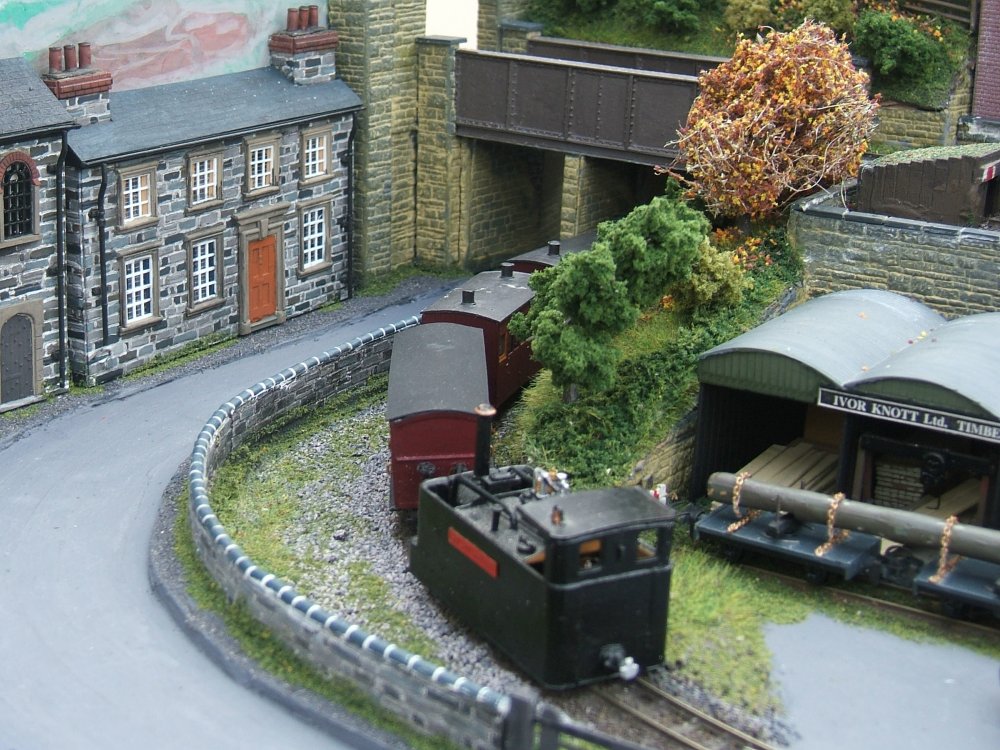
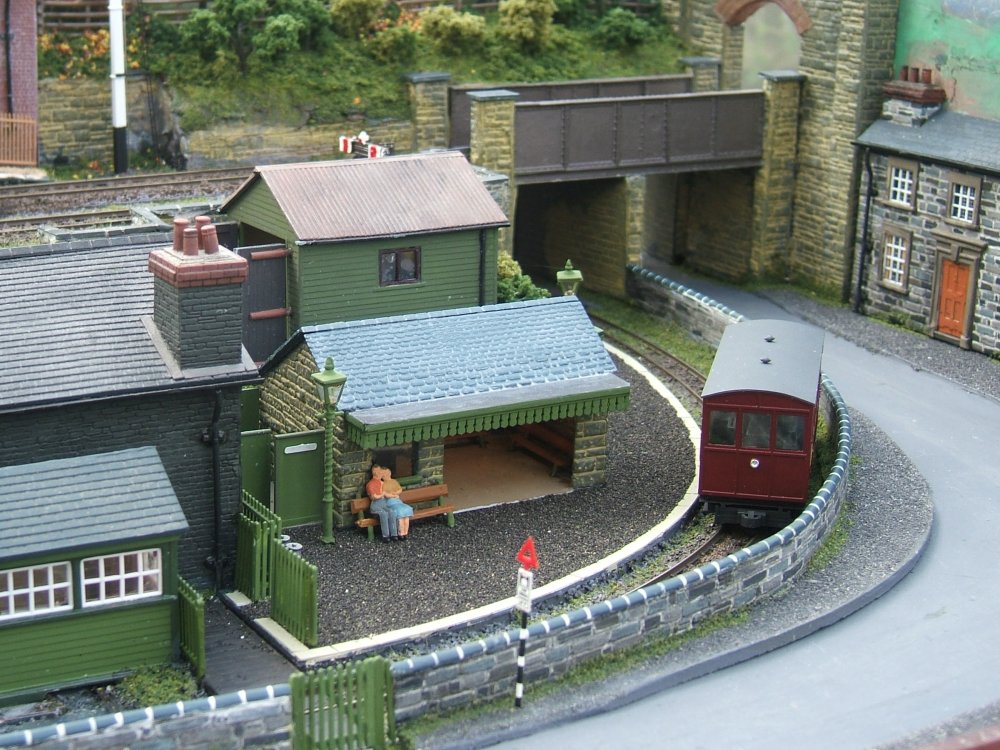
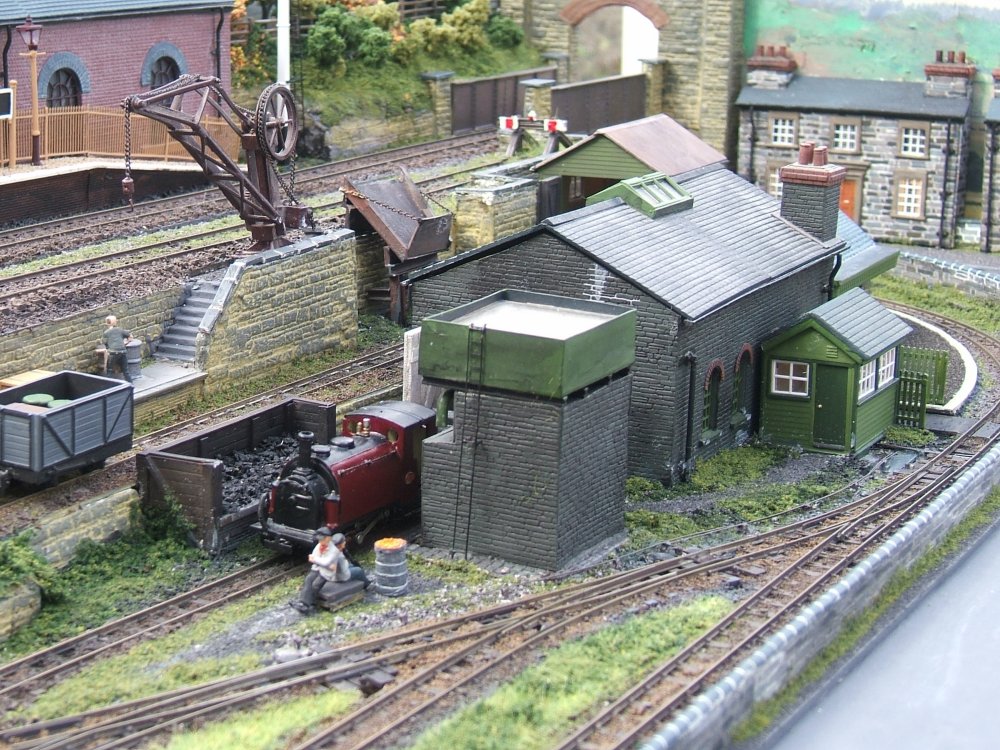
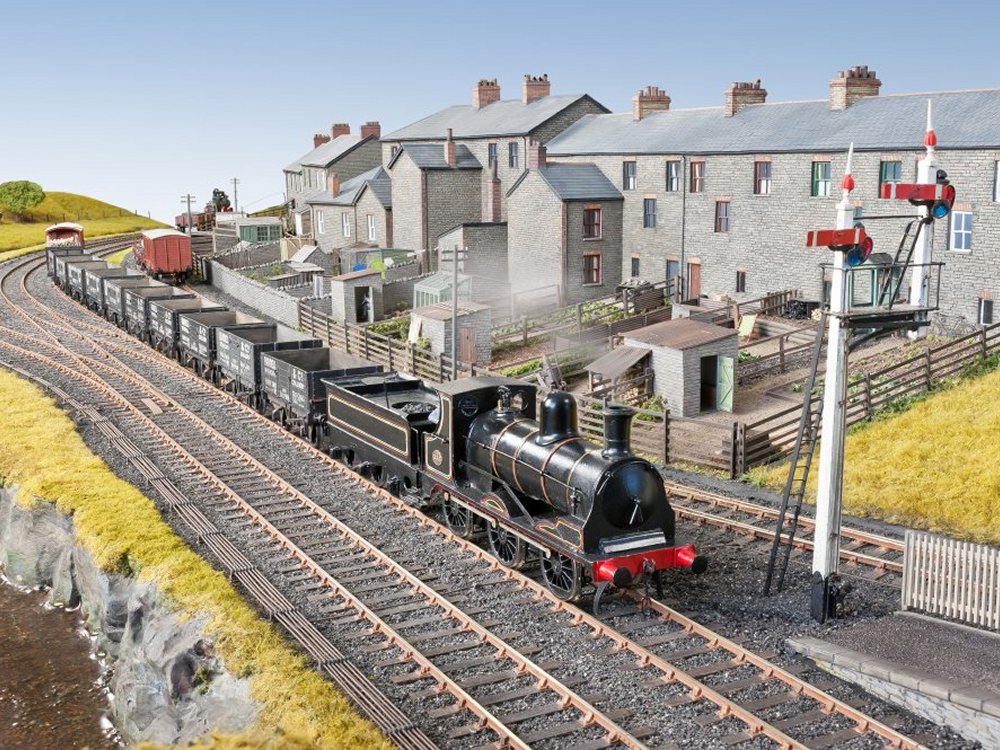
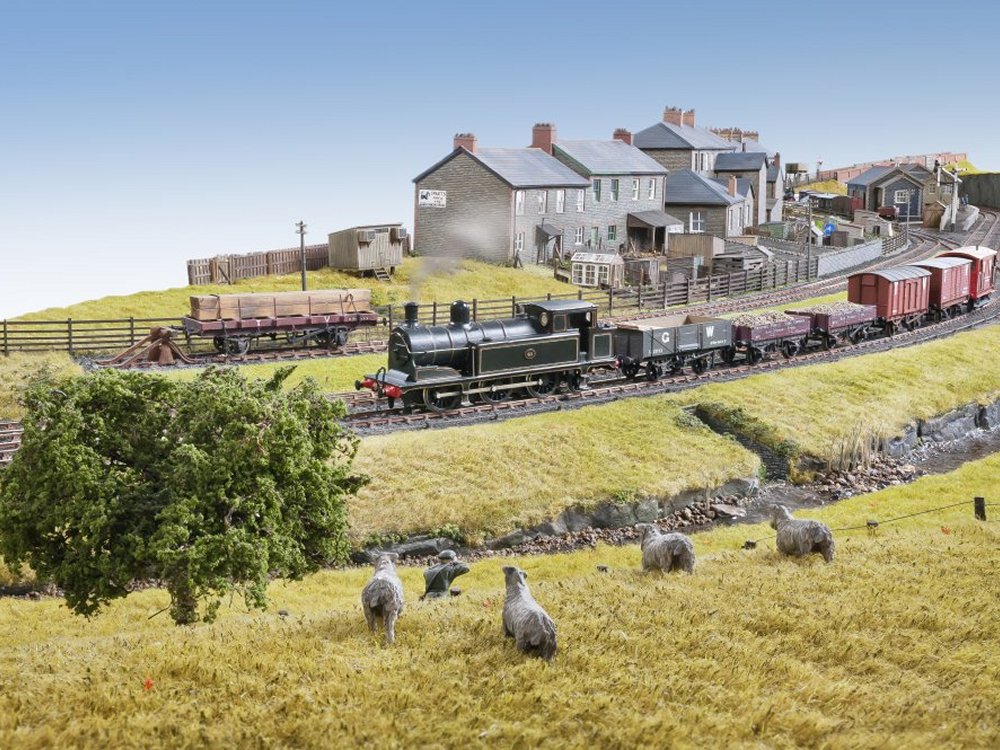
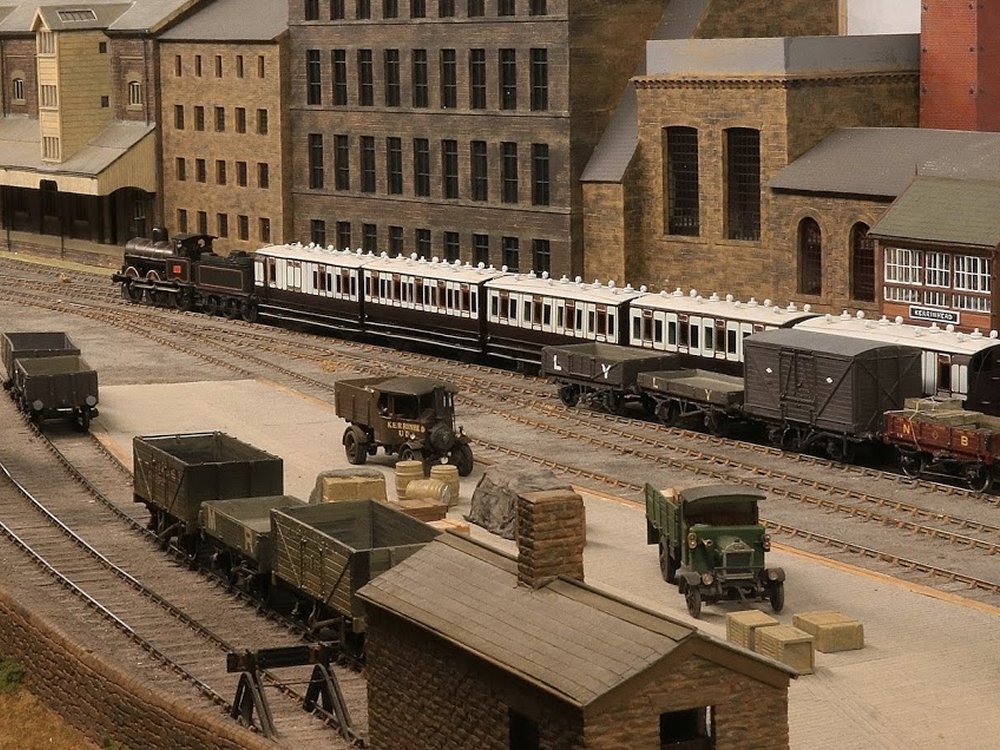
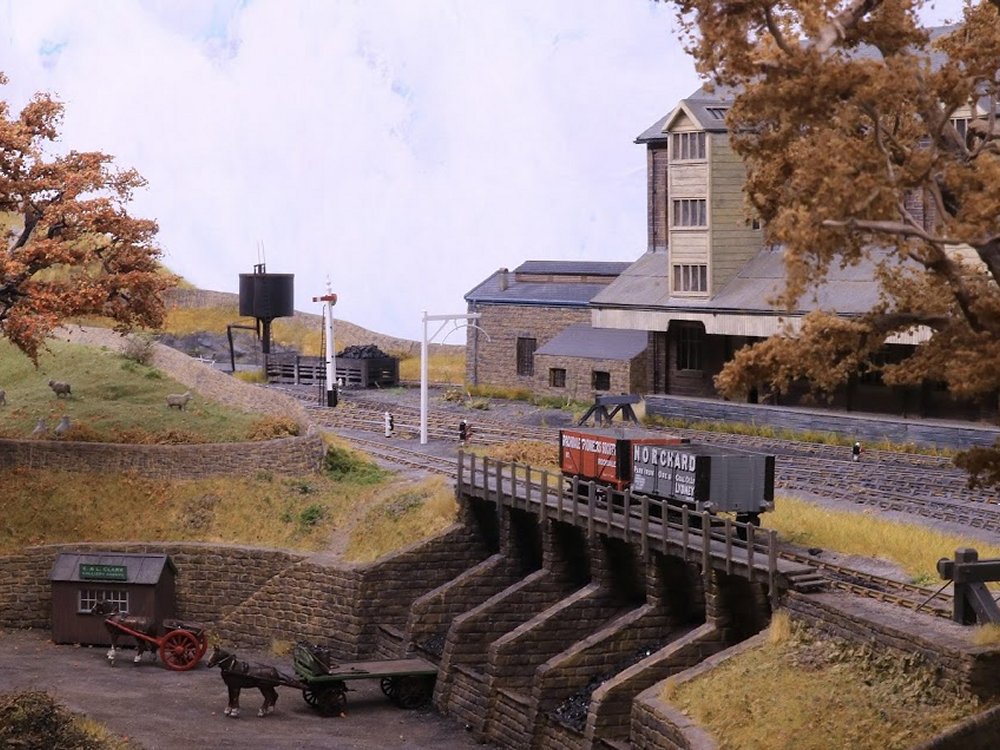
KERRINHEAD REPRESENTS an imaginary, slightly atypical, single track ex-LYR branch line in the mid 1920s, somewhere in the hills that cover the eastern edge of Lancashire and the western edge of Yorkshire. Traffic consists of local passenger and goods services, an occasional excursion or express, and coal and gasworks traffic which arrives and then is taken back out along an imaginary spur to the colliery and gasworks.
The baseboards are generally constructed as a jigsaw, with baseboard edges along scenic boundaries. They also needed to be of reasonably small size to facilitate getting them in and out of the railway room at home. Stone walls have been produced in a number of different ways: embossed plasticard, carved plasticard and carved DAS. All were painted using enamel paints.
The layout is controlled entirely using DCC, including all pointwork, signals, uncouplers and the turntable. The control panel uses the Society lever frame, and all control goes along, in this case, the NCE Cab Bus from the panel to the layout. MERG kits have been used for feedback from the layout to the control panel for route indicators.
The layout is exhibited with the help of friends in the local Scalefour Society Area Group, also known as the Marches Finescale Group, in Shropshire. Despite the layout being entirely the owner's responsibility, there have been invaluable suggestions and help from other members of the Group, in particular Geoff Taylor who made some of the buildings, and the late John Bailey, who was influential in getting the trackwork built in time for its first exhibition in 2015, and whose LNWR locos are among those used on the layout. Others including Jim Roberts, Tim Lewis, Tudor Watkins, David Beale, Jeff George, David Sutton and Simon Bolton have contributed and are among members of the operating team along with Gavin's family.
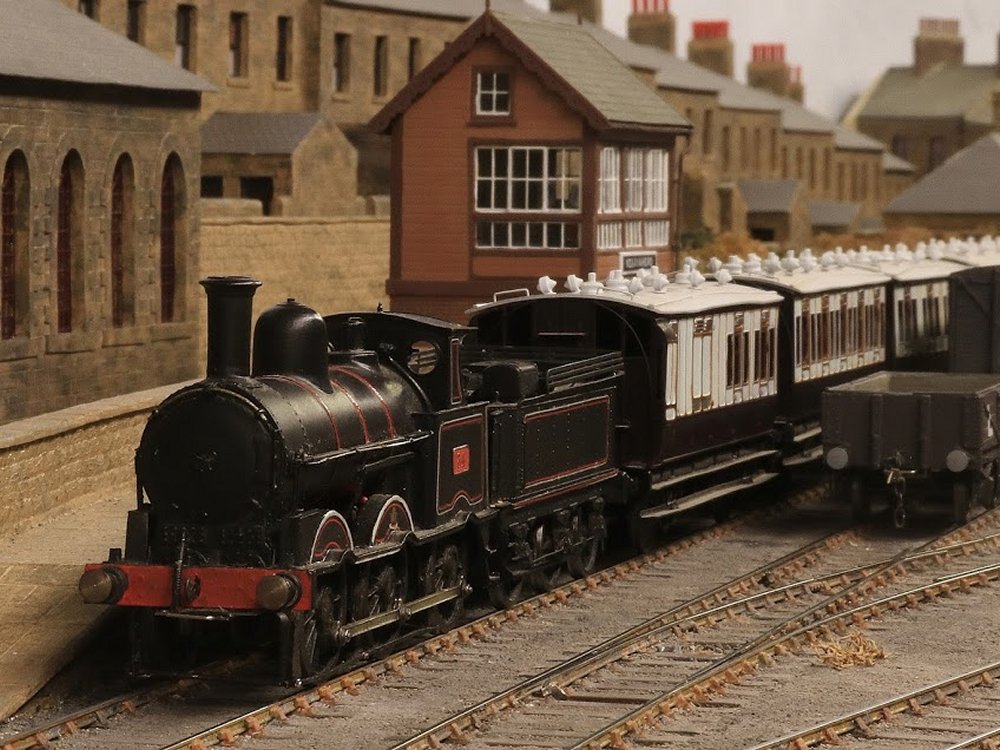
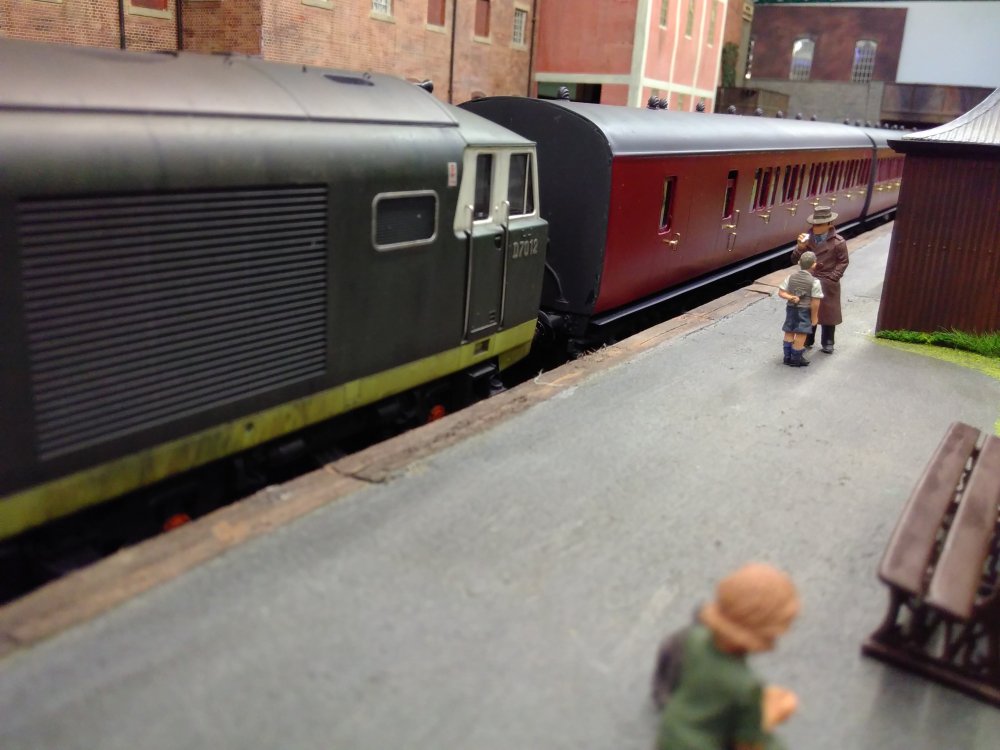
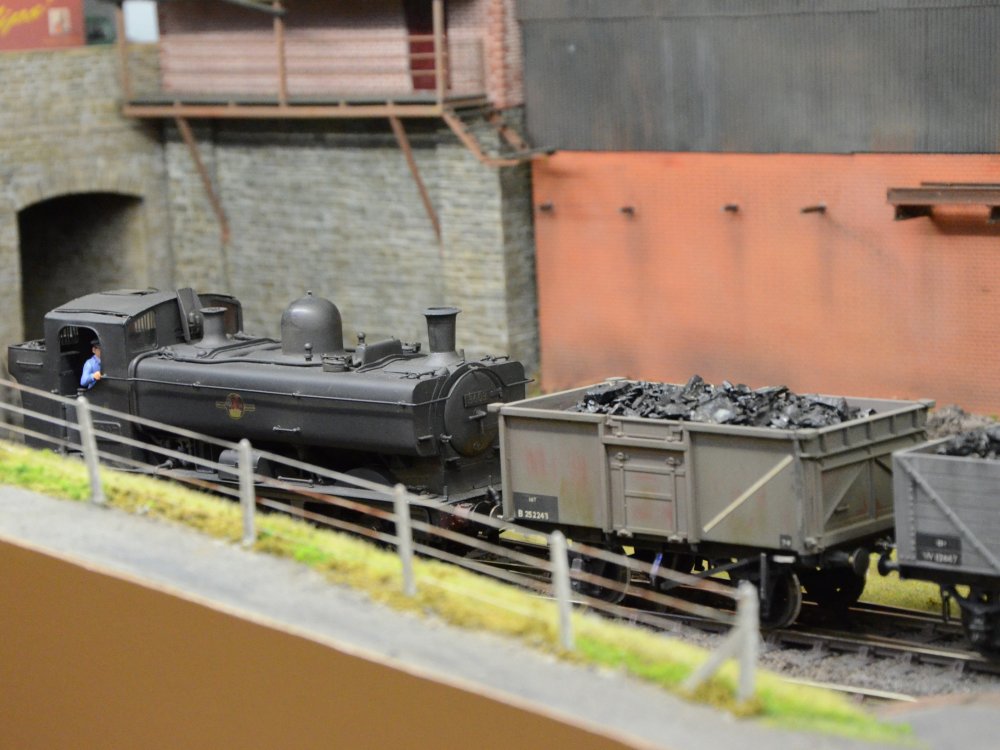
Set in an industrial area, probably South Wales the line was cut back to Pavilion End. The station became the terminus with the reduction to single line working. The nearby colliery produced high quality coal providing traffic along with the extensive metalworks behind the halt. The branch has a regular passenger service operated by a pushpull set or a couple of coaches. Freight serves the colliery and also the metal works.
So its BR (Western Region) set late 50s early 60s built to 7mm scale O Gauge with a track gauge of 31.2mm. Control is by DCC but without sound.
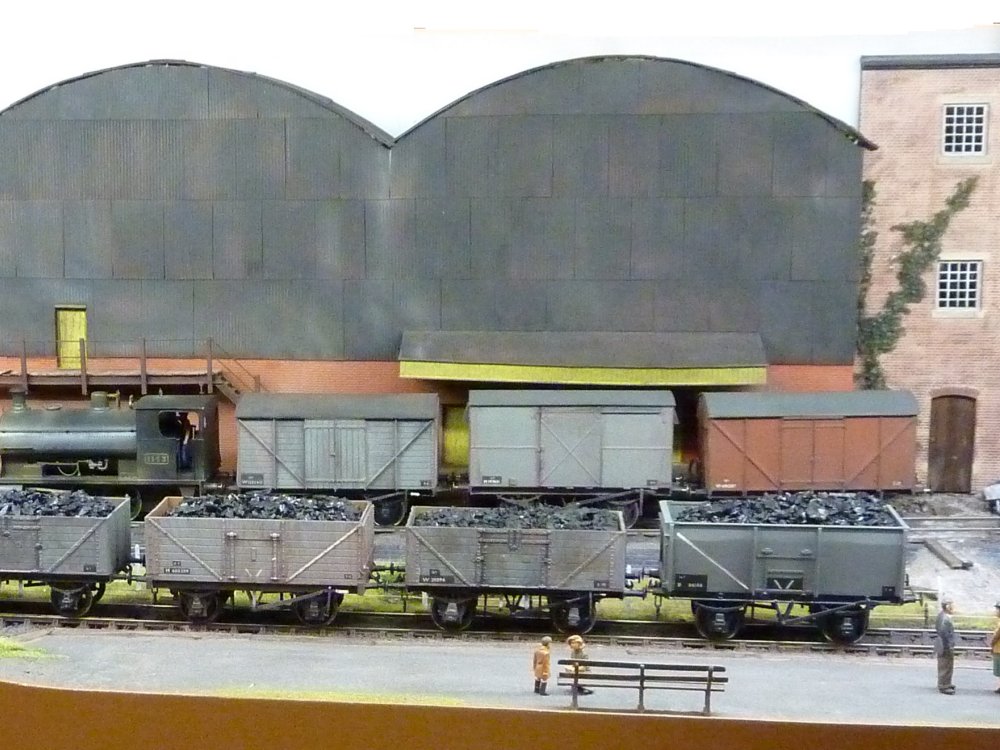
As a trainspotter in the late 60s and early 70s the ultimate aim was always to 'clear B.R.' But, sitting in a BRUTE at Cardiff General logging Westerns and Brushes would never achieve such an ambition.
"If you want to clear BR, you need to get the shunters" extolled my spotting mentor, Doug.
So, instead of undertaking lone wolf shed bashes to Birmingham (for Bescot & Saltley) or Manchester (for Longsight, Newton Heath & Reddish) I joined a local railway society that ran weekend coach trips to such out of the way places as King's Lynn, Westhouses, Northwich and Frodingham.
A browse through my 1971 and 1972 locoshed books would show my Brushes (now Cl.47) and "H-Bombs" (now Cl.20) looking decidedly healthy ................ but those shunters, the lack of lines under their numbers stood out like a sore thumb.
The only way to track the shunters down would be to find out where they worked, and where they stabled at weekends - all this in the days before the indespensible "Shunter Duties" was an idea, yet a publication.
Shunters could spend weeks away from their home depot, and they could work many miles from that depot e.g. a Canton shunter would be outbased at Aberdare (only 25 miles) whereas a Landore shunter could be at Carmarthen, Whitland or worse,F ishguard Harbour !
Those shunters not under repair on shed, or working as shed, yard or station pilots lurked in dingy urban environments, small yards or sidings hidden away amongst engineering works, factories and depressing streets where access was impossible unless you were either 'in the know' or had special forces training.
Such a place was Rosamund Street, actually Rosamund Street (Low Level) Sidings.
By the turn of the 1970s this industrialised inner-city yard was but a shadow of its former self, ( a group of sidings serving local industries and businesses ) on a freight only branch that left the mainline at Riverside Junc. a mile or two away and which, via Rosamund Street (Low Level) eventually served several riverside yards and industries further along the line from Rosamund Street.
The Rosamund Street pilot job was withdrawn a year or so ago, and the branch was tripped 'as and when required' by the Riverside Junc. pilot.
But recently NCL (National Carriers Ltd.) have had their eyes on at least part of Rosamund Street (Low Level).
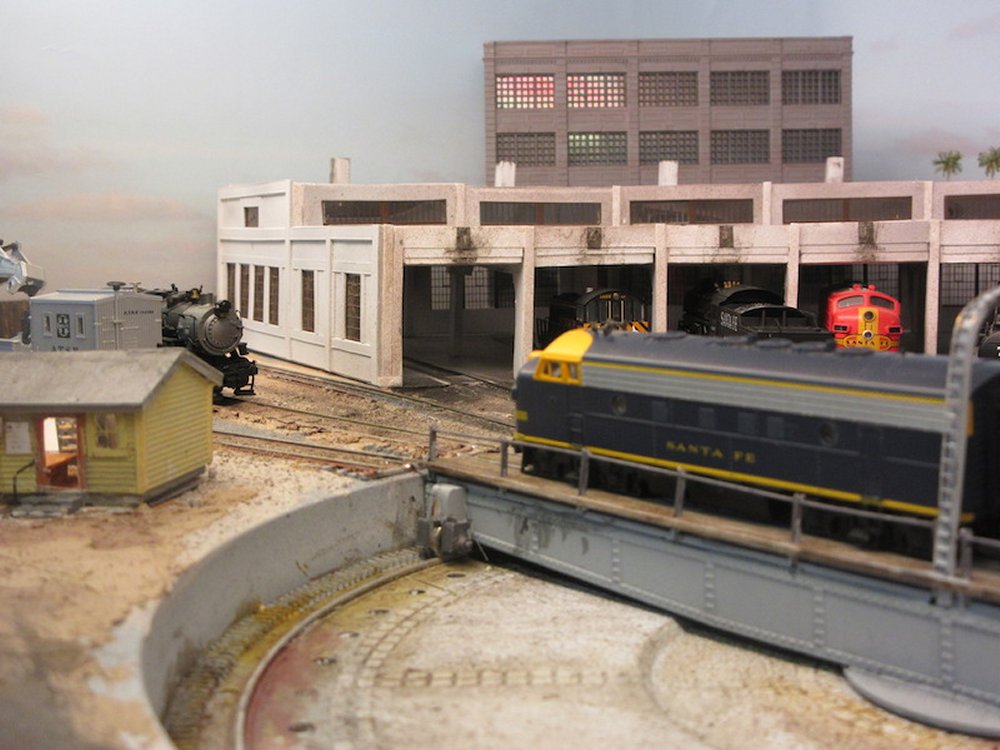
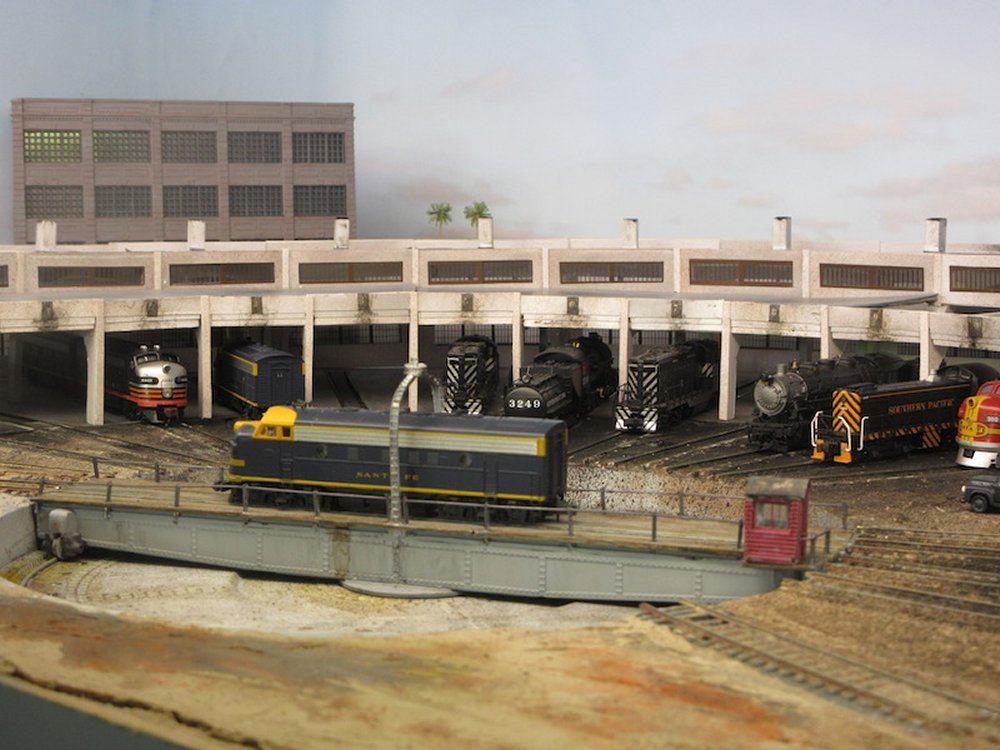
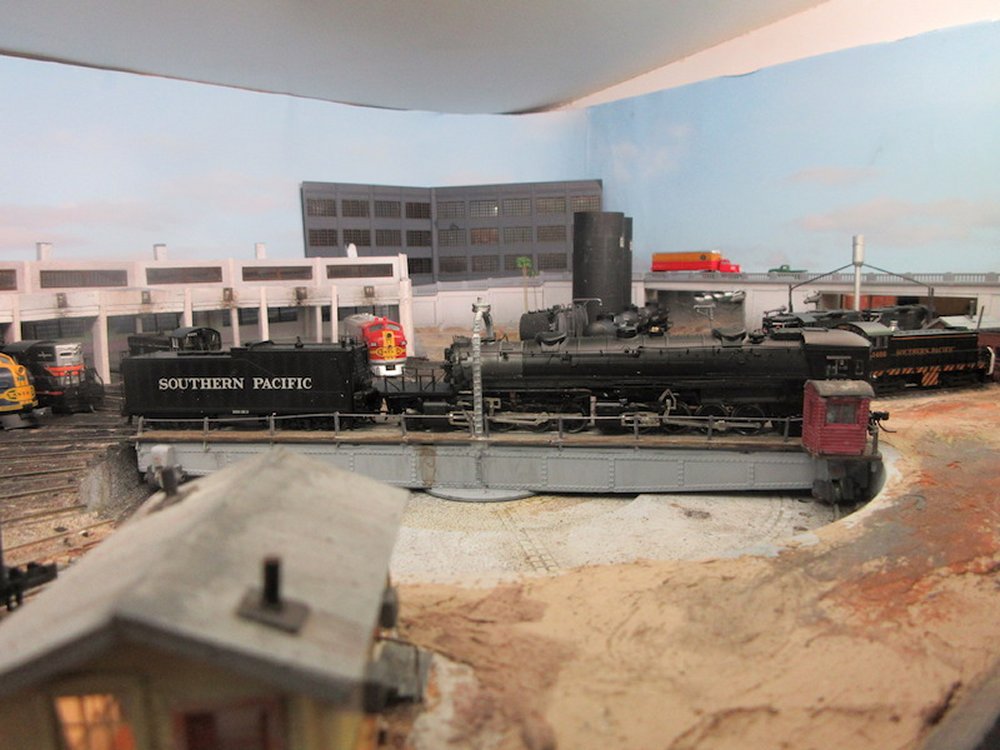
The sun beats down in southern California (or is it southern Texas?) port of Santa Margarita. In the shimmering heat an oil-burning locomotive shuffles onto the turntable and out on the exit track, stopping for some sand, water and fuel oil.
Roundhouse is a micro-layout that will form part of a Southern Pacific and Santa Fe joint line. It is an opportunity to display some N scale stock collected over the years, and to experiment with some 2mm modelling ideas. Track is a mixture of 2mm finescale, Atlas and Peco (in the hidden section). The structures are a mixture of scratch built, doctored kits and commercial detailing.
As night falls, and the heat gradually subsides a little to a clammy 80° Fahrenheit, a Southern Pacific articulated Cab-Forward comes on shed, closely followed by a group of F7 diesels, recently acquired by the Santa Fe, and scheduled for tomorrow's "Medicine Man" streamliner to Chicago.
With imagination, and a little bit of theatre, lack of space should not be a complete constraint on model railways. This little layout has no switches (points!) at all, and perhaps by next year you might be able to see the dock served by the railroad where a US Navy destroyer, fresh from patrol in the Korean War, is visiting. Much remains to be done - weathering and modification of stock, completion of scenery - but perhaps you might accept that it is more important to get something running and enjoy it rather than strive for completion. The journey is more important than the arrival - or at least so it seems under those palm trees, sipping an ice- cold Budweiser and watching the local switcher engine push an oil tanker into the yard.....
Sherton Abbas is my 7mm scale representation of a Great Western Railway branch line terminus and is set in the Edwardian era circa 1905. Although modelling a real location has some appeal I didn't want to be constrained by modelling a prototype station. The layout is consequently a composite of a number of prototype stations and buildings arranged into what I hope is a convincing Great Western scene
The name Sherton Abbas comes from Thomas Hardy's novel "The Woodlanders" which is set in Dorset, quite what he would have made of my railway is anyone's guess! The buildings and lineside structures are all scratch built from plastic card and painted using enamel paints. The station building and goods shed are based on structures designed by an architect/building contractor called William Clarke who built a number of stations in the mid-19th century. The track was built using wooden sleepers with chairs and rail from C & L products and is set to 31.5 mm gauge.
The signals were built using components from Model Signal Engineering and are operated using miniature servos
The locomotives and stock are built from etched brass or plastic kits with compensated chassis running on wheels and axles from Slaters.
The landscape was carved from Polystyrene sheet glued in position on top of the base boards. This substructure was then covered in a mixture of static grass fibres, rubberised horse hair and ground foam scatters.
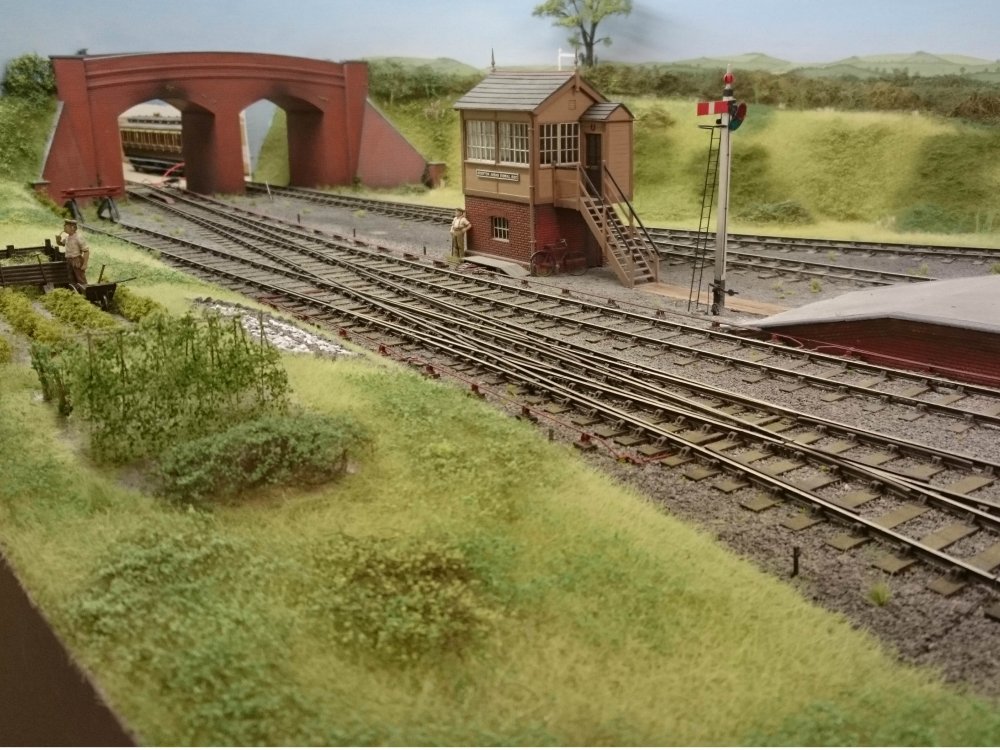
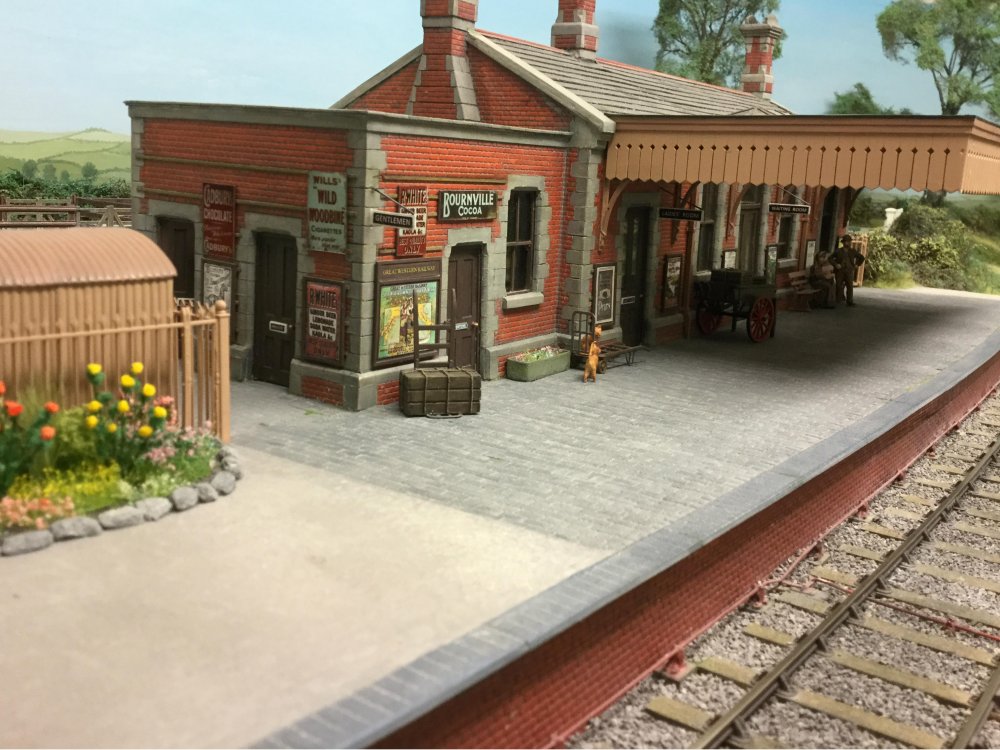
Talybont is a small station on a Cambrian Railways branchline in Mid-Wales. Although a through station, the passenger service beyond Talybont has been withdrawn, and only a very occaisional freight now runs. Talybont station is still quite busy, regular goods trains bringing supplies for the village and more remote dwellings further up the valley, as well as taking the unusual mineral product from the local quarry, interchanged here from the narrow gauge line.
A Z gauge layout depicting a compressed view area of the Walnut Tree Viaduct including Castell Coch and part of the Cardiff railway.
The real railway opened in 1911, closed to passengers in 1931 and the track was lifted in 1953.
Modellers licence shows how the railway might have looked today had the A470 not been built.
The layout is still being constructed to the photos below as of real lie photos of the area, photos of layout will be uploaded once available.
The layout is a faithful replica of the station and surrounding area in 1922 just prior to the Taff Vale Railway losing its independence at the grouping. Rolling stock is either scratch built, kit bashed or etched brass kits representing the stock and motive power used on the branch at the time.
Baseboards are open top construction on braced ply frames located at joints by brass connectors and steel bolts with captive "tee" nuts.
The main track work is purpose built using ply sleepers and plastic chairs and accessories, ballasted with a sieved mixture of recovered ash and proprietary fine ballast.
Control is by conventional wiring using hand held controllers. Most of the points are operated by "Tortoise" motors with Peco motors in the storage areas. Signals are MSE components adapted to accept solenoid operation.
The scenery is an adaption of the Pendon egg crate/card former system with scrim cloth covering and various surface treatments including flock, ground rubber, scatter materials and teddy bear fur. Rock faces are carved Dry Wall adhesive and the buildings and structures are all scratch built using a combination of preformed and flat plastic sheet.