Layouts that attended in 2023
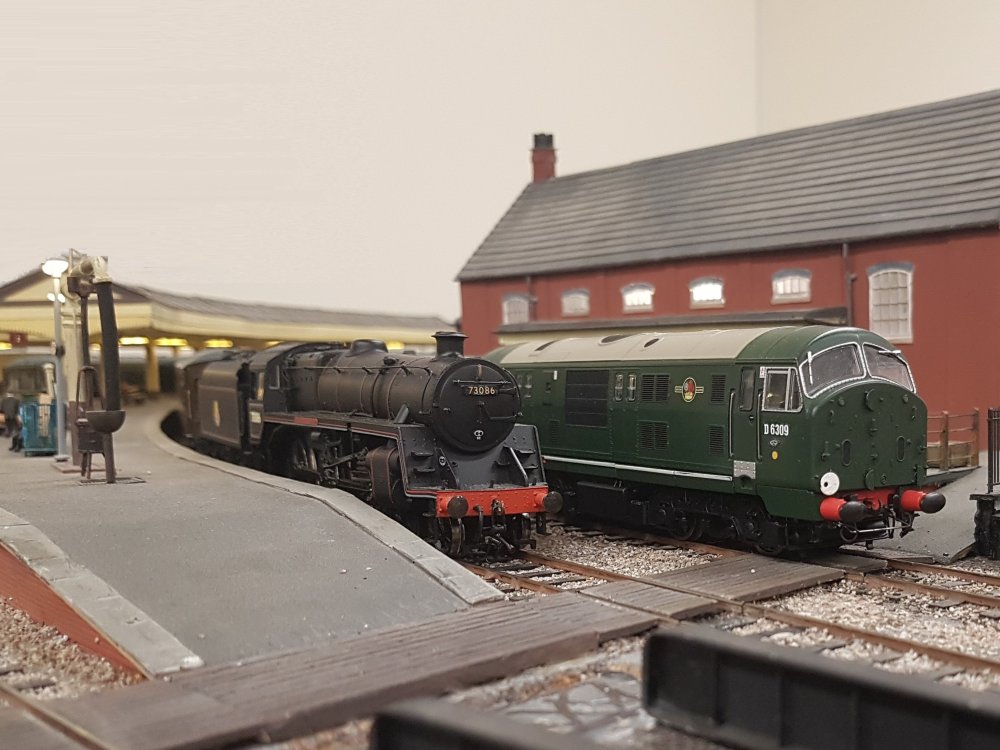
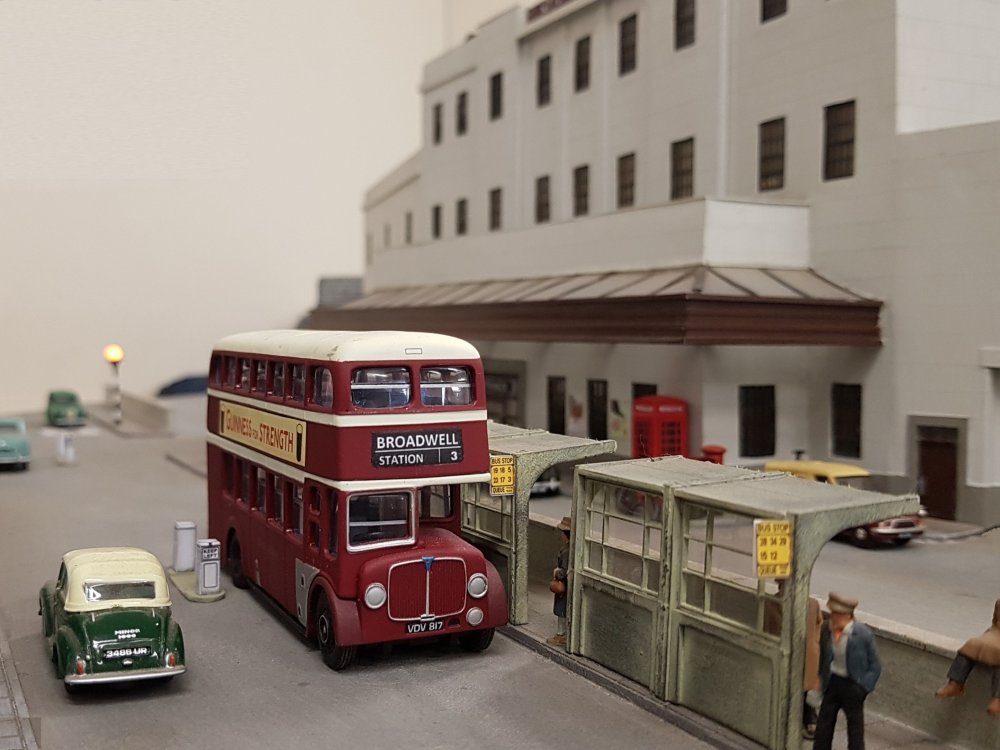
At the start of the 19th Century the fictitious Dorset seaside town of Broadwell had grown into the largest of the Jurassic coast resorts. However it was without a rail service until the Great Western Railway partnered with the LSWR to build a double track main line along the Devon/Dorset coast. Junctions were made with all the other established branch lines from Exmouth through to Bridport.
Our snapshot of this imaginary line covers a ten-year span of British Railways ownership between 1955 to 1965. The predominant traffic is steam hauled local passenger trains. We depict Western Region local trains from Exeter via Bridport to Weymouth alongside Southern Region locals to and from Exmouth, Sidmouth, Seaton and Lyme Regis. Through express trains from Devon and Cornwall head to and from London Paddington and Waterloo respectively. Inter-regional expresses from the North are seen, sometimes with through engines.
The track and points are hand built. The majority of structures are scratch built and are based on real-world prototypes. The sequence of trains and the automatic route selection of points is computer controlled. Details of train movements are output to the public-facing video screen along with real-time on-train video and background information about the layout.
Broadwell is the latest club layout built by the Cardiff Model Engineering Society, based in Heath Park, Cardiff. It continues the club's 50-year history of producing quality finescale OO exhibition layouts. We open our club's facilities to the public 12 times a year providing 5" and 7¼" gauge live steam train and 18" gauge tram rides.
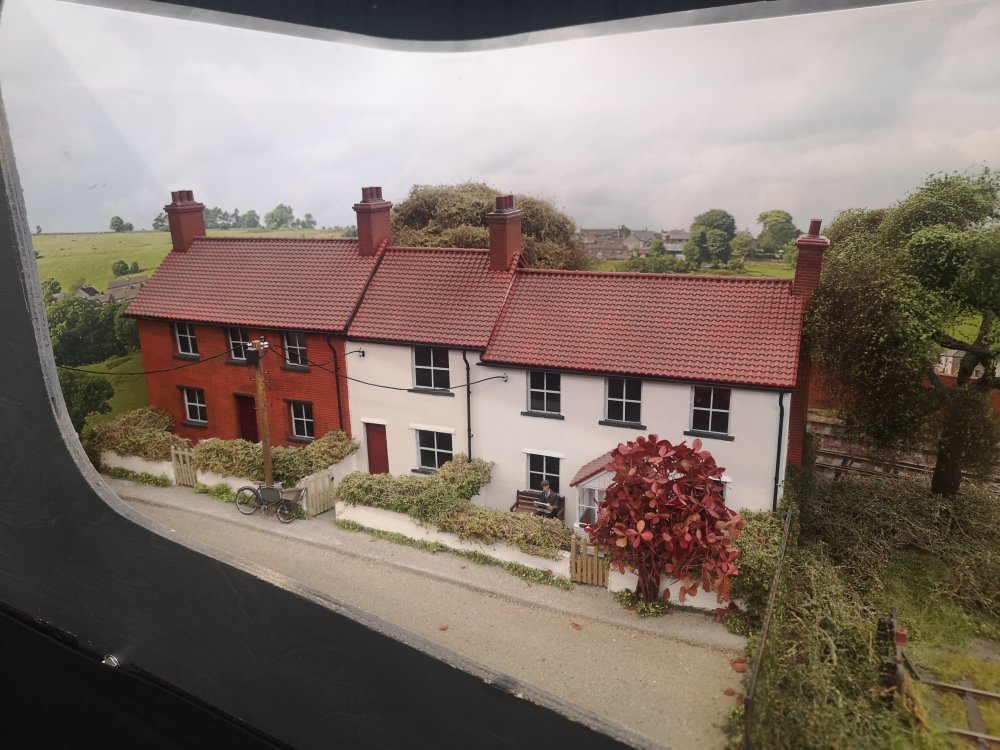
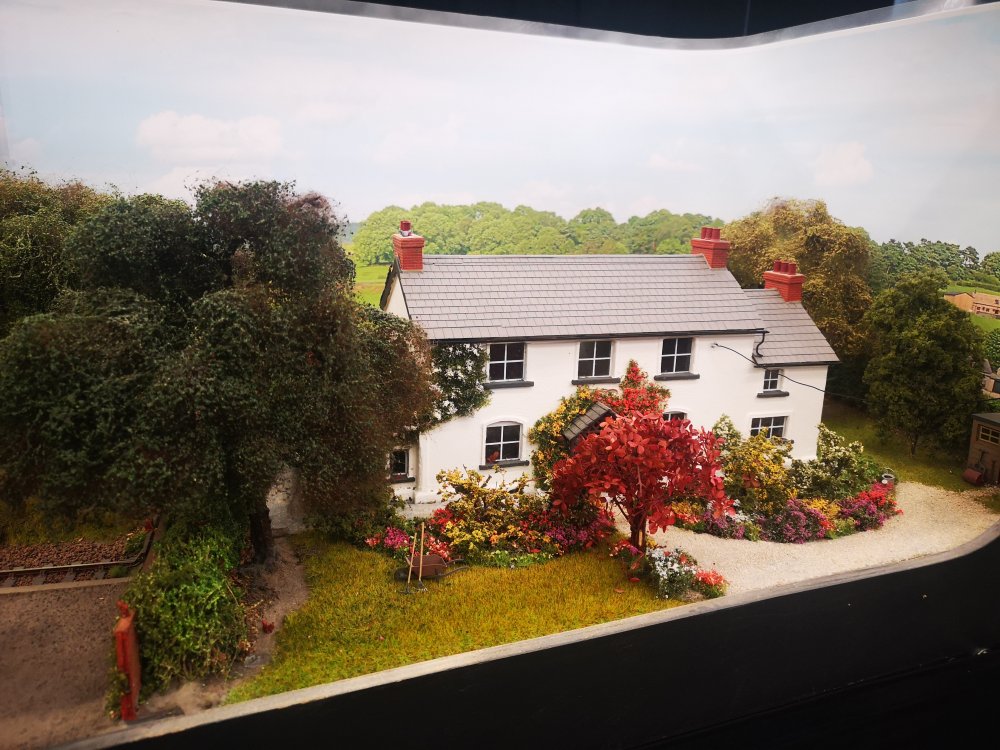
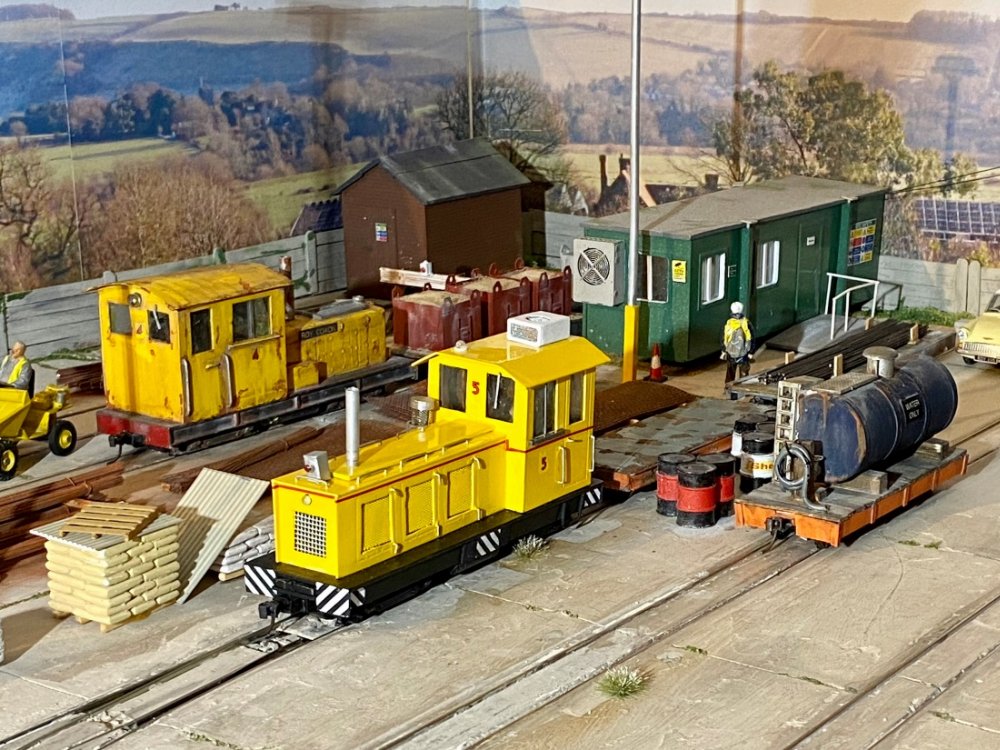
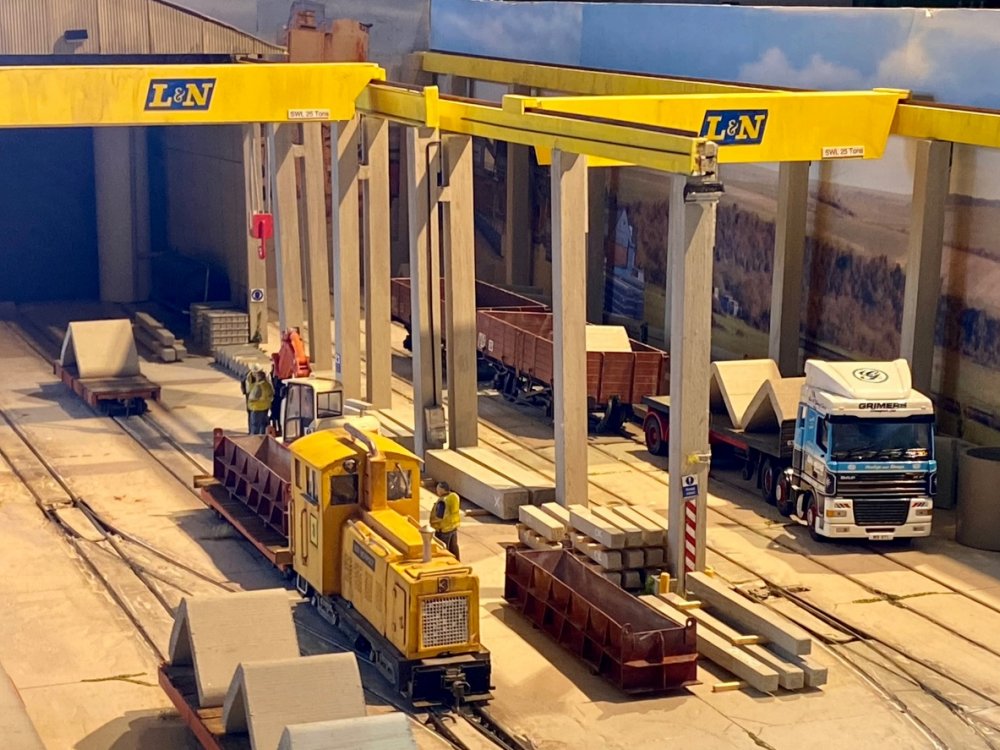
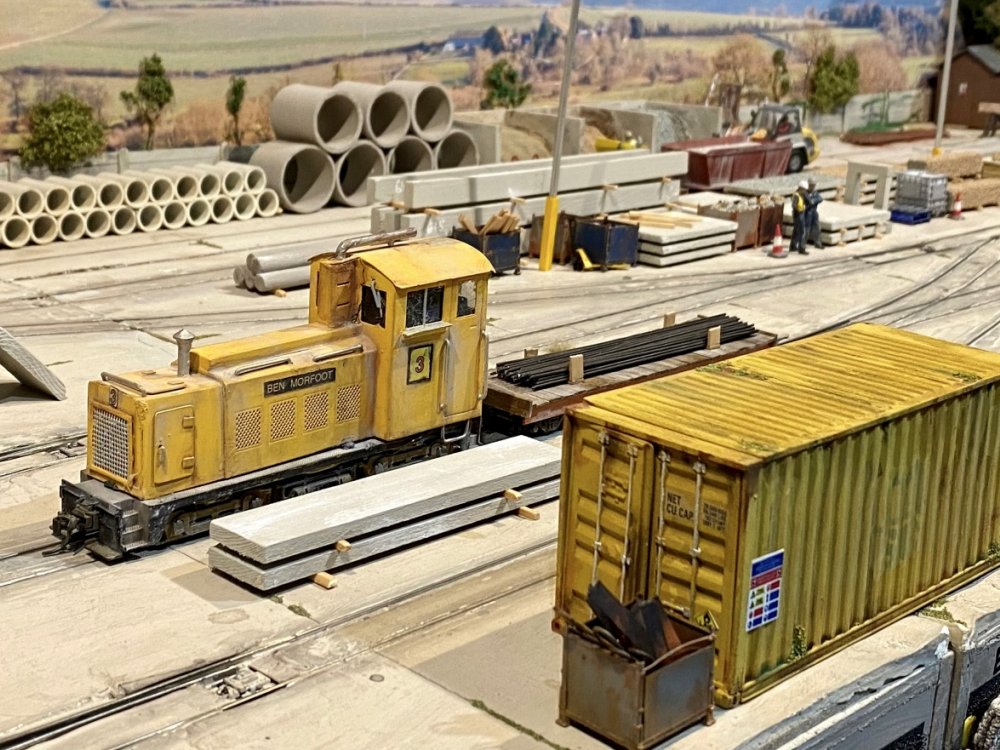
The layout is loosely based on the Tallington concrete works that is alongside the East Coast Main Line near Stamford. The works has been operated by Dowmac and Tarmac in the past, making concrete sleepers along with other concrete structures. They are now making tunnel sections for the new London Sewer.
The Tallington works did not have a narrow-gauge railway but does have sidings within the complex that are connected to the main line. The layout is a shunting operation, moving materials within the works, and finished products to a standard gauge siding.
The layout is 'O' Scale narrow gauge. DC operation.
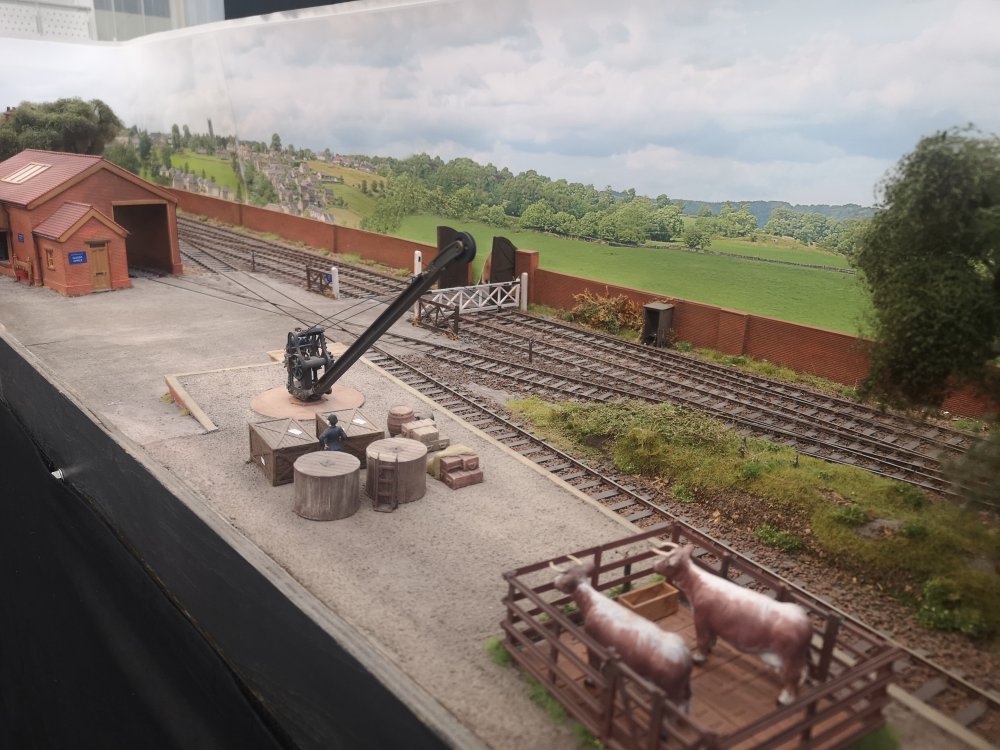
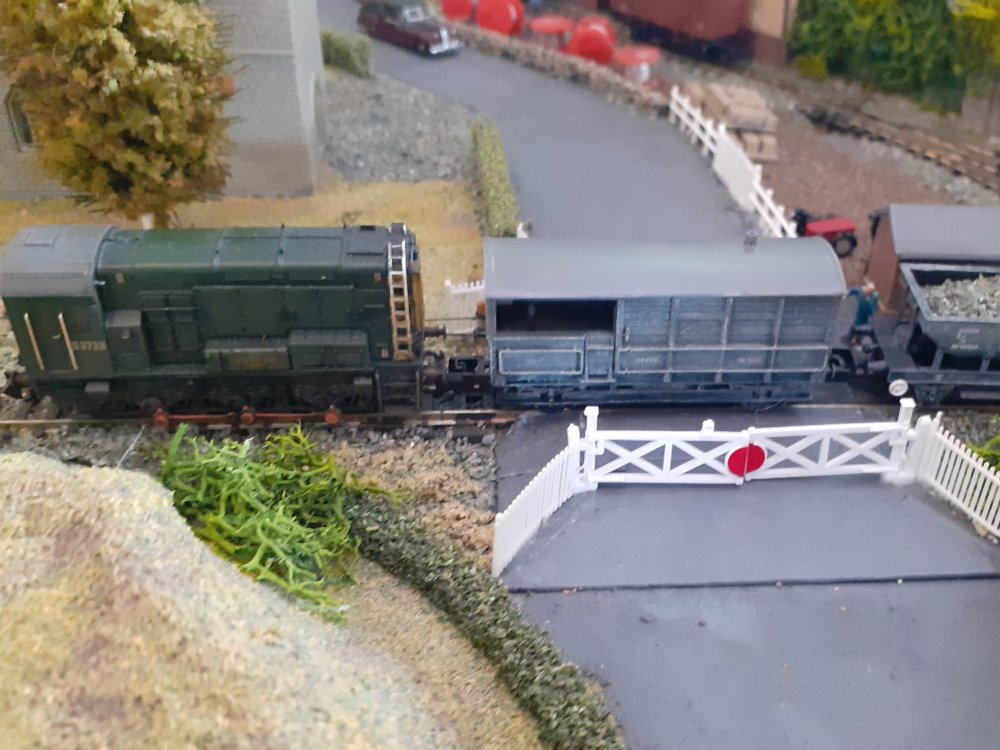
Cog Road is an imaginary branch of the Barry Railway dating from the late 1890s, that ran between Dinas Powys and Penarth, cutting across the moors via Cog Road and Swanbridge.
Set in the mid-1920s, the layout depicts the terminus station as it became, along with goods yard and cattle dock, which kept the line alive. Many former Barry, Taff Vale, Rhymney, Cardiff, Brecon & Merthyr, Neath and Brecon Railways locos and rolling stock absorbed into the Great Western Railway can be seen, along with newer GWR stock and Cambrian interlopers.
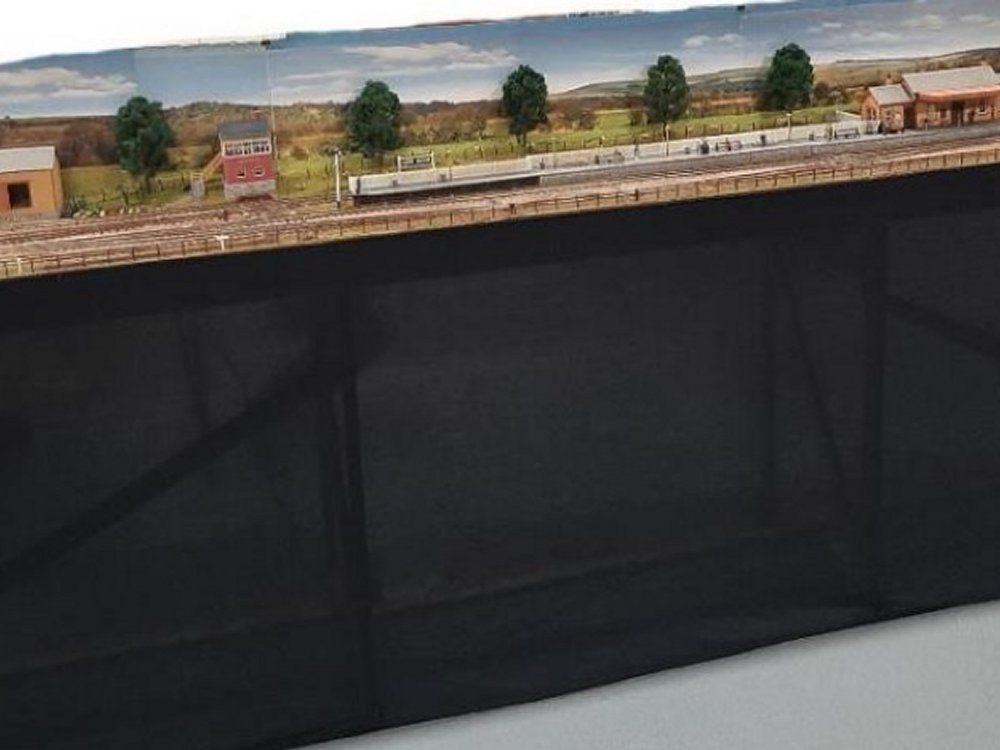
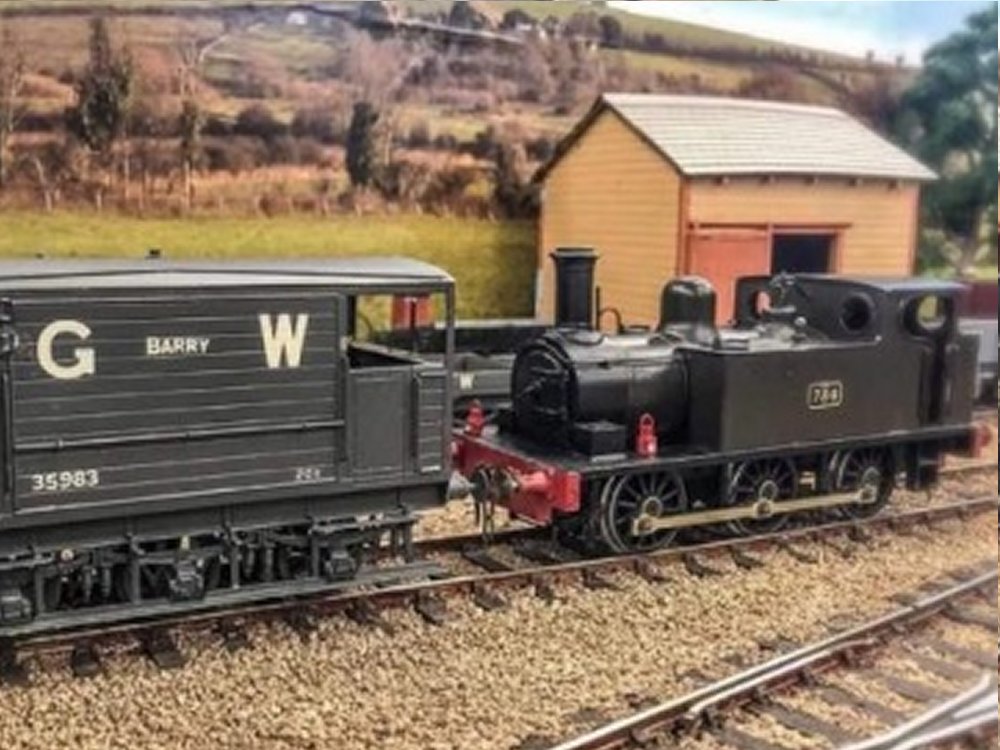
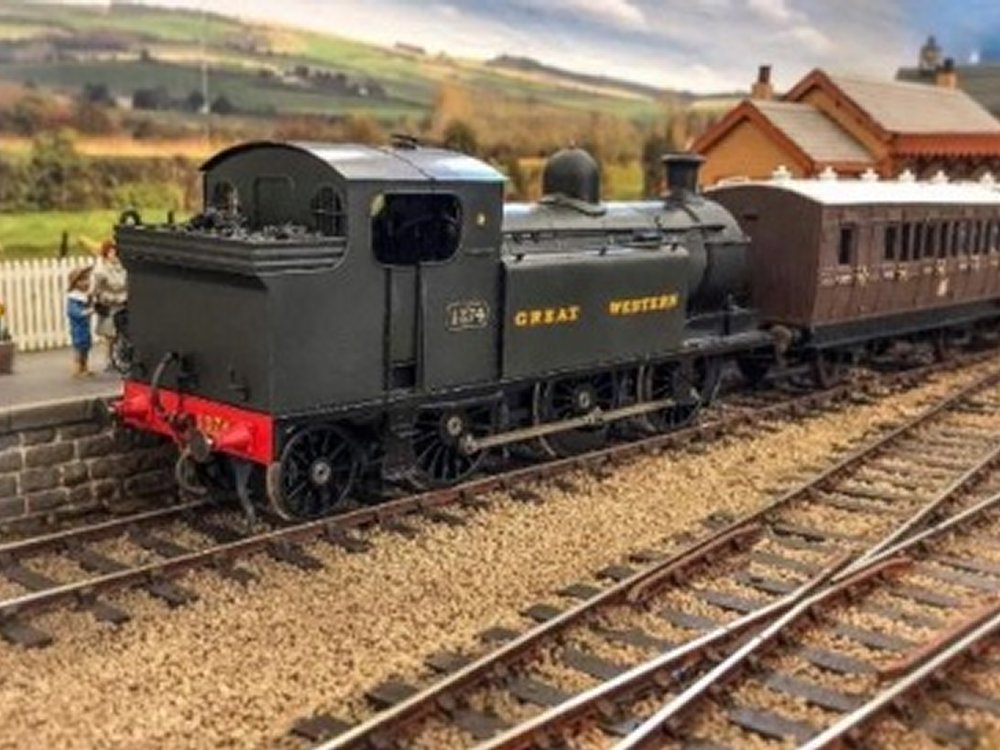
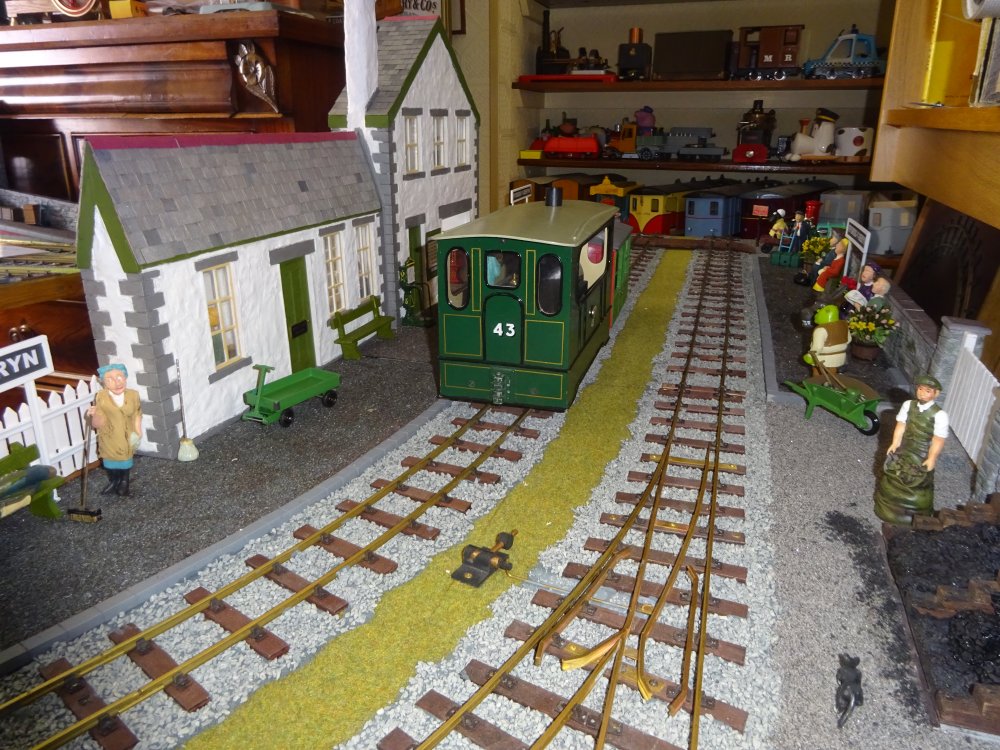
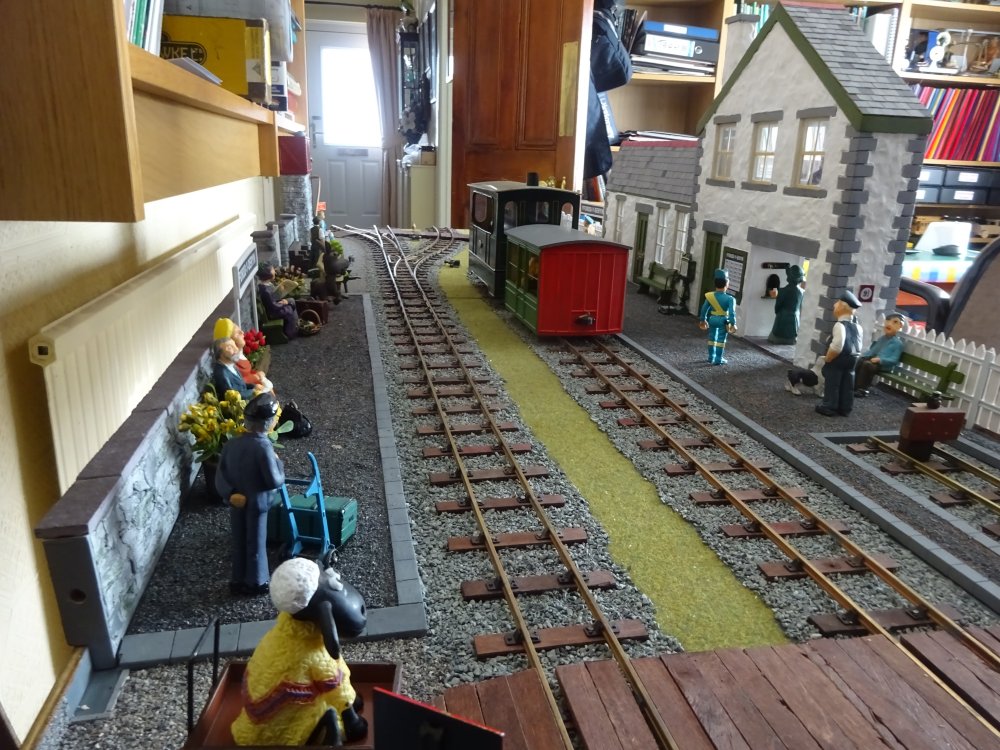
Gauge 'O', 16mm Scale, Narrow gauge model railway.
The layout was designed to allow the continuous running of live steam model locomotives, also it was to be as compact and light as possible for a portable model railway. The layout when erected is approximately 21 feet by 14 feet and along with its scenery and accessories fits into a trailer 5 feet long, 3feet wide and 2 feet high.
The track and points are scratch built using Tenmille bullhead rail reclaimed from a garden railway. There is no electric power to the track the locomotives used being either steam or battery powered. The layout isn't a copy of any particular railway.
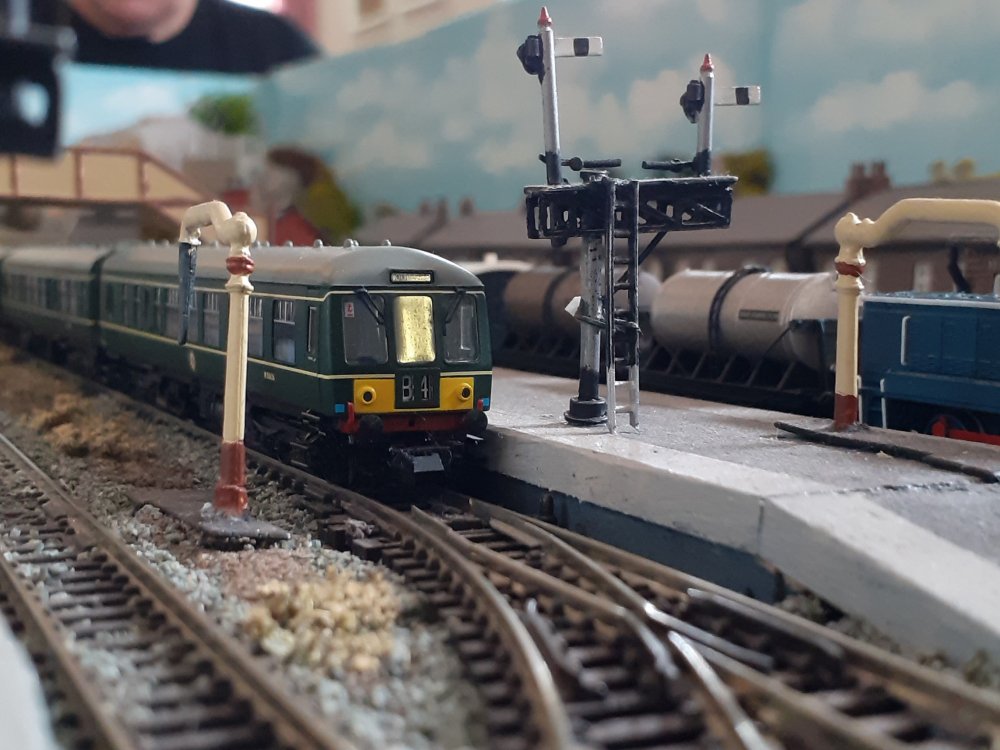
Foxwood End is an N Gauge layout based on a fictional town in the North East Gwent area featuring stock from BR Western and Midland regions. The layout can be run as late 50's up to mid 70's with various themes, steam diesel etc.
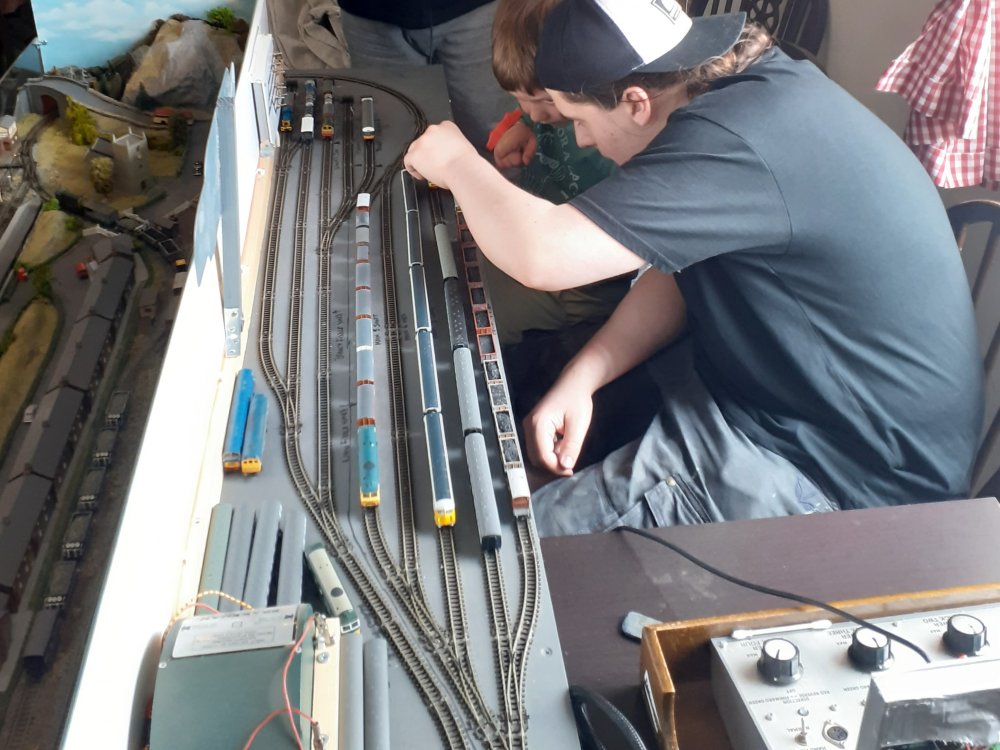
The base board measures 5'10" x 2'5" and has a single-track cross country route, a branch line and goods yard. The track is Peco Setrack with first radius curves, which has facilitated a substantial fiddle yard at the rear. The layout demonstrates what can be achieved with a reasonably small baseboard.
Operators of all ages can be seen running the layout.
MAFVA - The Miniature Armoured Fighting Vehicles Association
MAFVA exists to promote interest in Armoured Fighting Vehicles and their associated equipment and to act as a non-profit making organisation for the collection and dissemination of information about AFVs.
MAFVA tries to answer queries or seek sources of information for their international membership and to encourage correspondence between those with similar interests.
They provide members with a regular magazine called Tankette. Local branches exist in the UK and overseas and are encouraged to hold meetings, displays and competitions to enable members to get more out of their hobby by meeting others with similar interests and to share information and expertise.
In this year's show they will be showcasing a range of military dioramas featuring road and rail vehicles. Ask them about membership and the benefits it brings.
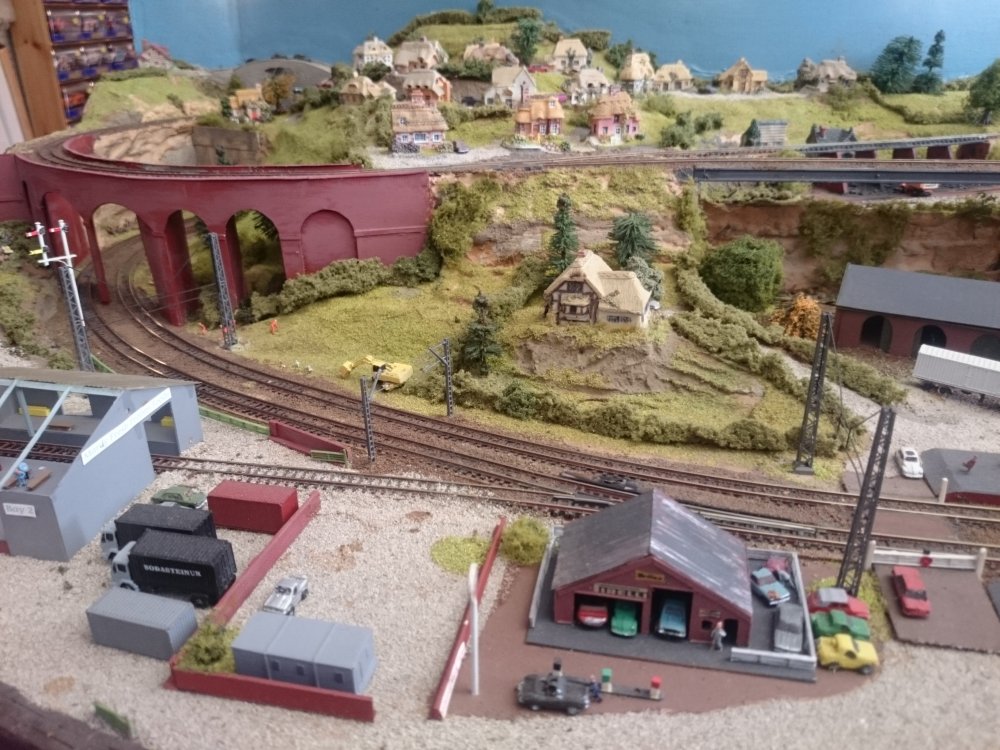
The layout packs a lot of detail and operating interest into just a 4ft by 2ft 6inch and features an entire village bought from car boot sales and charity shops.
The buildings are resin cast cottages sold as collectors items including 'Tetley Tea folk' houses. They are to slightly varying scales and are used to "force the perspective" on the layout by using the larger ones at the front and smaller ones at the back to increase perception of depth.
The most any of these buildings have cost is around £1.50 each. The station buildings and other railway structures are scratch built in plasticard based on Midland Railway and Lancashire and Yorkshire Railway prototypes. There is a small harbour which serves Mardy Frozen Foods warehouse and Mardy marine ships handlers.
Three trains can run simultaneously two on the lower track and one on the high level branch line.
The track is a mix of Marklin and Peco and all points are electrically operated. The lower tracks are fitted with overhead catenary.
Rolling stock is a mixture of diesel, electric and steam based on Marklin chassis and includes class 47s, 56s, 90s and HSTs. Steam outline includes LNER A3s and A4s. Rolling stock is a mix of scratch built and repainted Marklin items.
Hidden on the layout (and very small indeed) the good folk of Midsomer Mardy are up to their favourite pastime, murder!
Midsomer Murders is a popular TV detective show in England set in a sleepy village full of thatched roofed houses. See if you can spot the murders that have or are about to happen.
The layout is quite ground breaking in representing the U.K rail scene in Z.
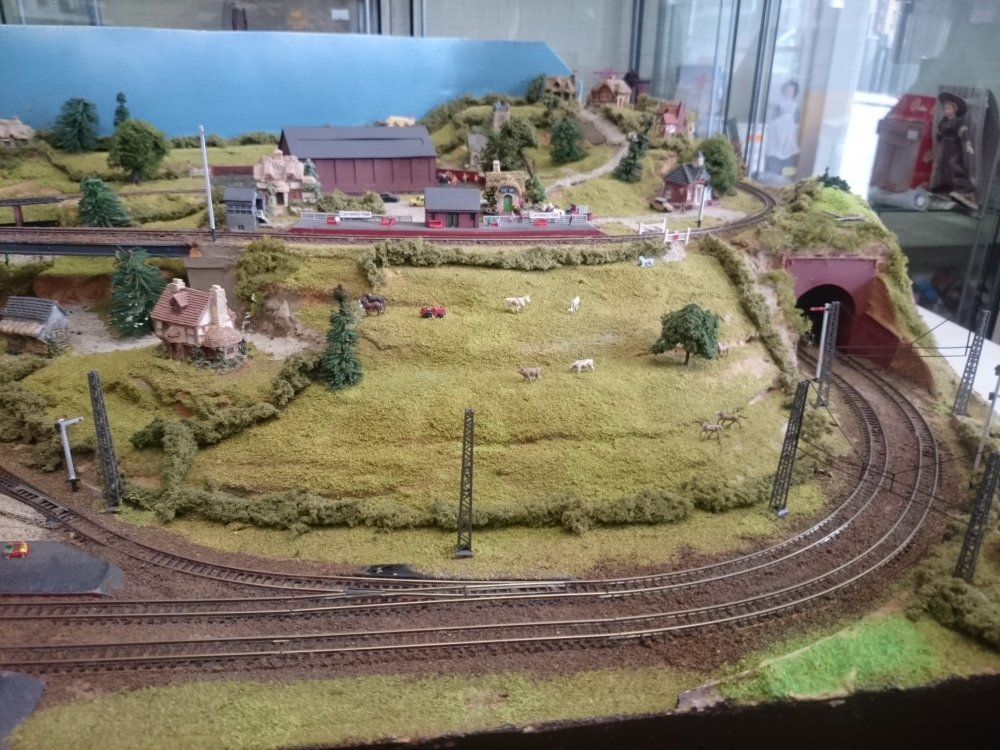
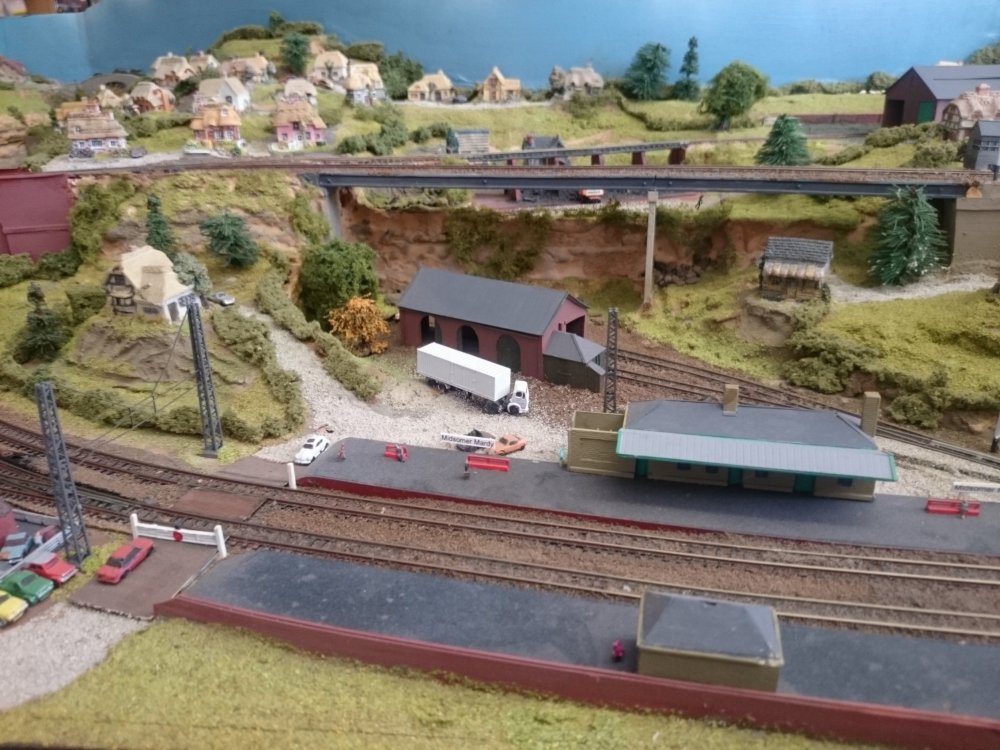
Oasis Camp is a maintenance of way and service yard for The Redlake Valley Lumber Company somewhere in the USA. It is located between the sawmill and the area being logged. Consequently large train loads of felled timber pass regularly through the complex. The camp supplies a variety of different locos with fuel and water and can provide basic maintenance to both locomotives and rolling stock.
At any one time it might be possible to view a two truck Shay, three truck Shay, Climax or Heisler locomotive in action.
The layout was conceived and constructed in 2004 by myself and my friend Leigh Clark. It was intended to be an exercise in "desk top modelling", and an office desk was used as the baseboard. Three of the main buildings had previously been constructed as dioramas by myself and Leigh constructed the layout around them. He has built a number of modules over the years so knew all above track laying and electrics.
The layout had one public outing in 2004 and then lay dormant for 18 years until August Bank Holiday 2022 where I displayed at a local show in South Shropshire.
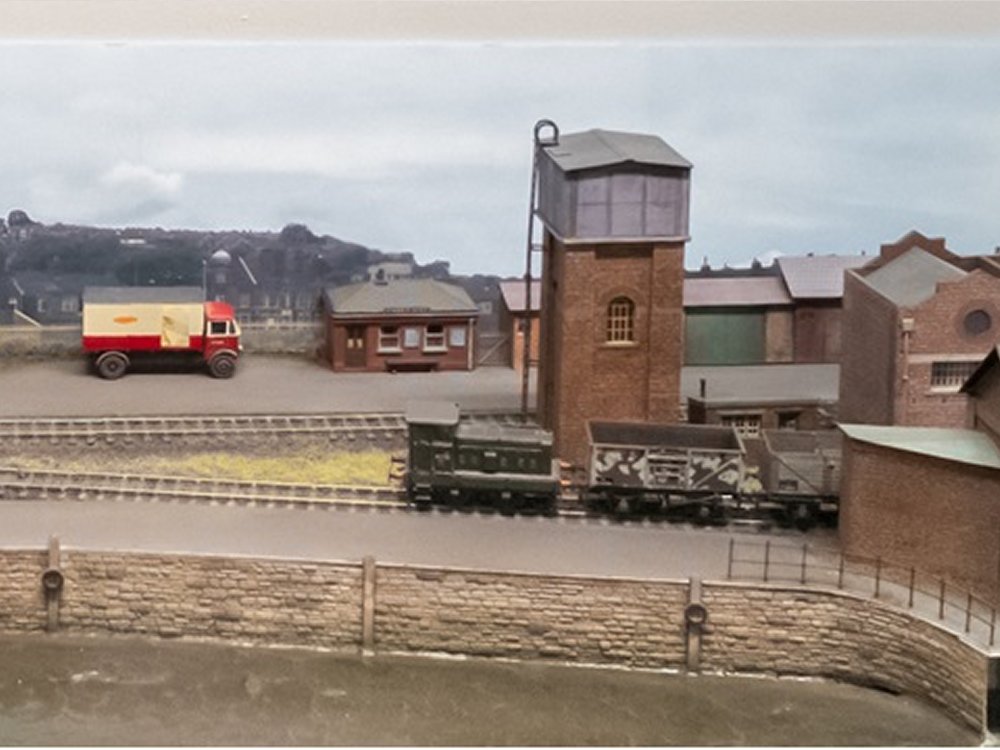
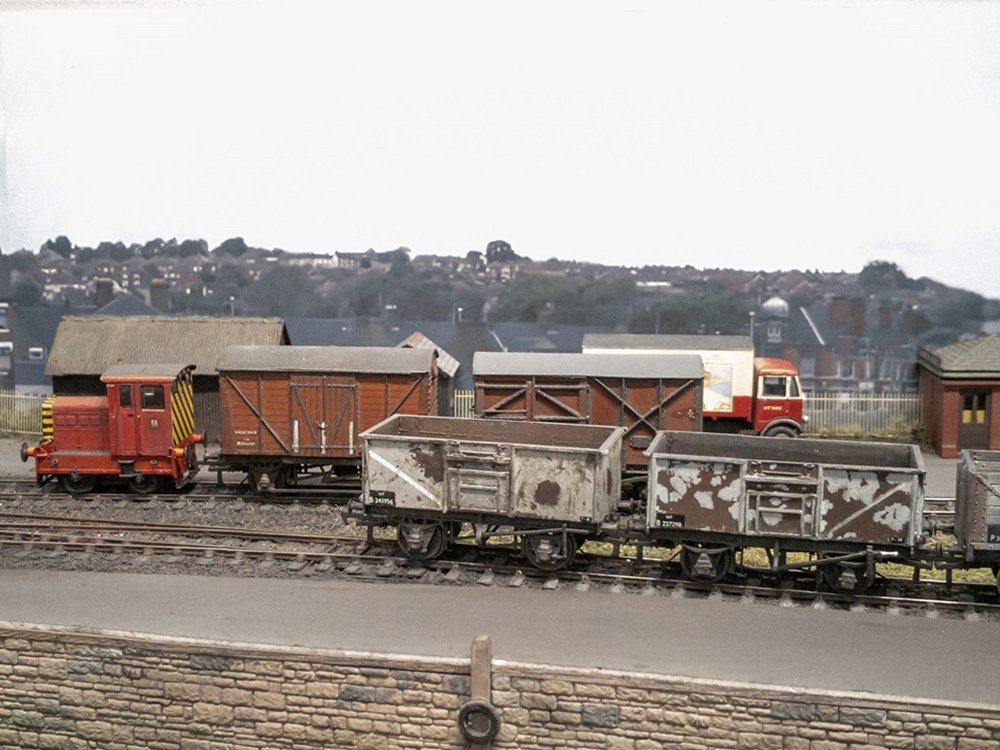
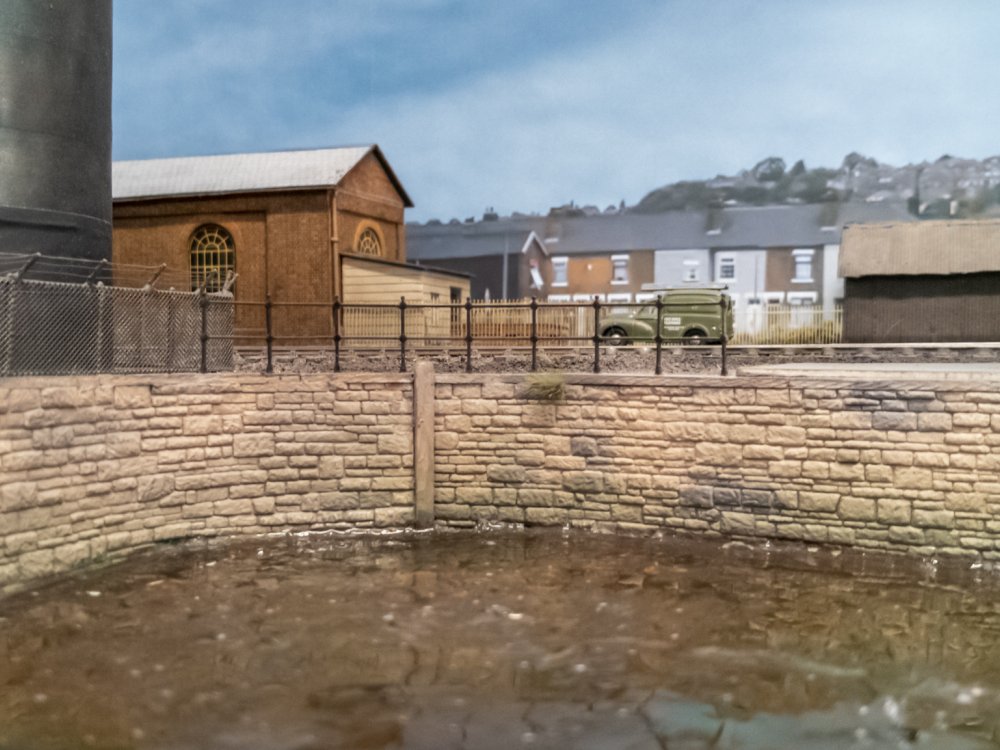
South Wales Coals is a semi-micro layout based on the concept used at the harton low staithes. The idea being wagon loads of coal are brought in by rail (coal waste in harton's case), the wagons are discharged through bottom wagon doors, and loaded into truck/trailers.
Thee vehicles being RC will then take the loaded trailers off scene, and the empties run back down. The layout also feature full DCC sound, and working smoke fitted steam locomotives.
The layout main area is 4x4' viewable from the front, and rigt hand side. There is then a 6x1' marshaling yard attached to the left hand side.
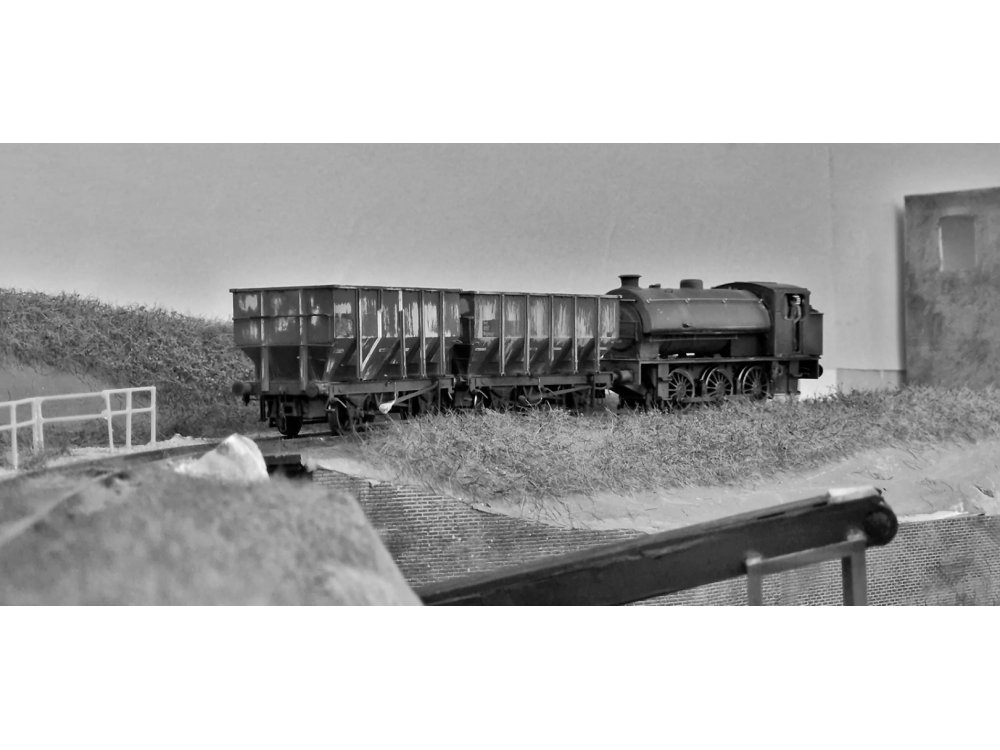
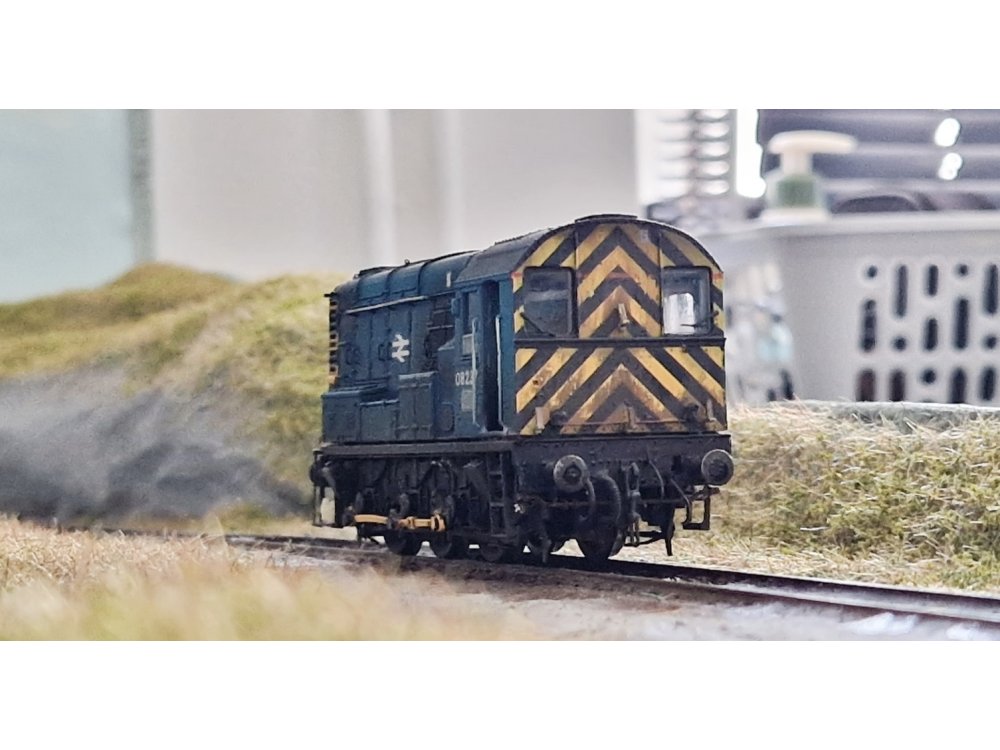
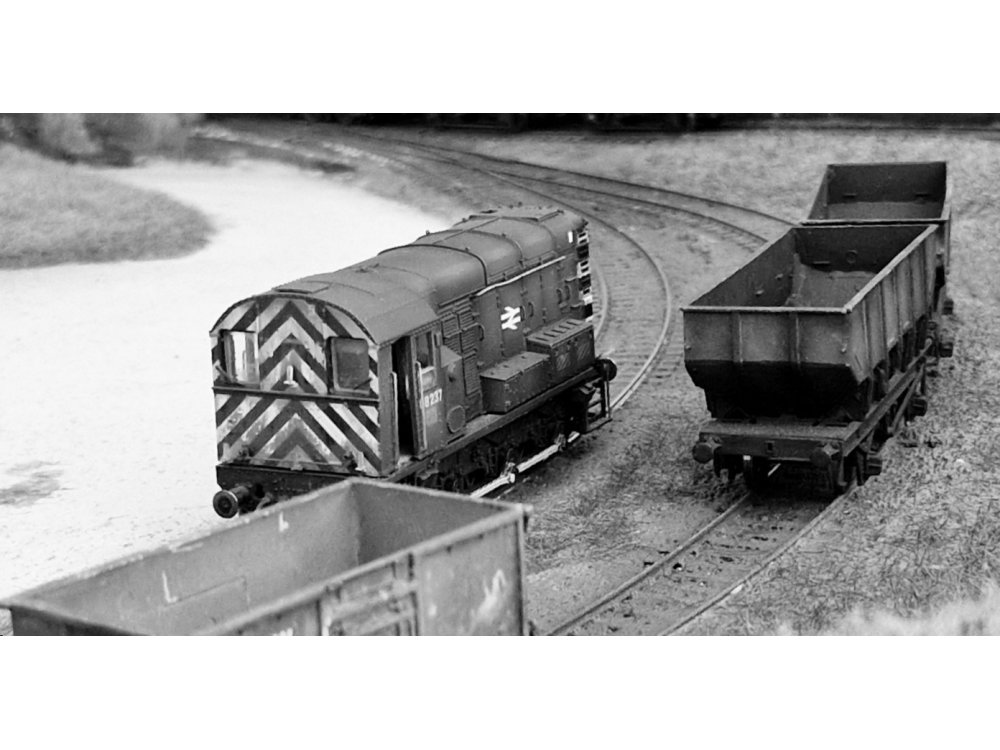
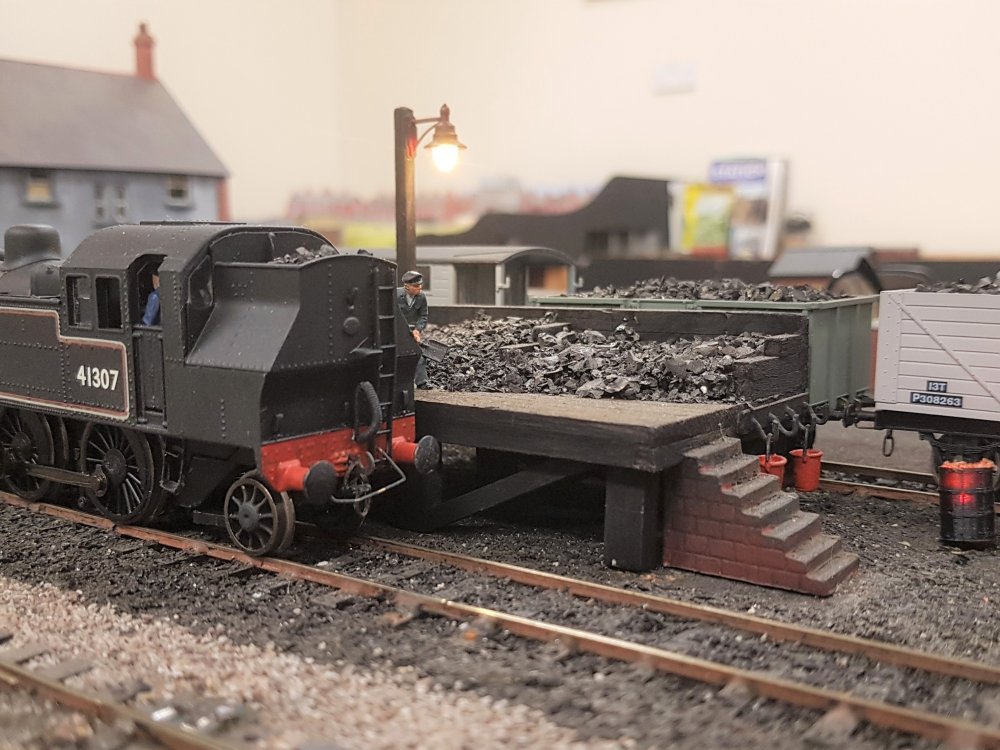
Spriggs Lane is a fictional station in the West of Cardiff, somewhere off the Vale of Glamorgan line. It has similar geography to Dingle Road on the Penarth Branch, but also has an adjacent Servicing Point dating from the days of steam.
The Spriggs Lane branch is blessed with a triangular junction onto the main line, so it is a convenient Canton depot outbase and sees a wide variety of mainly freight locos. The passenger service has been reduced to a captive shuttle diagram running into the old Bay platform at Cardiff Central, but owing to its close proximity to Cardiff it is a favourite service to send units out on proving runs post maintenance - so anything on depot can and does turn up on the service.
Set in the late 1980s / early 1990s a rich variety of liveries from BR blue through to sectorisation can be seen. The Sprinters and Pacers are starting to displace the 1st generation DMUs but can still be seen alongside them.
Stock on the layout is all contemporary with the early 1990s, super-detailed using the techniques of the time, hopefully demonstrating that a pleasing result can still be had on a budget.
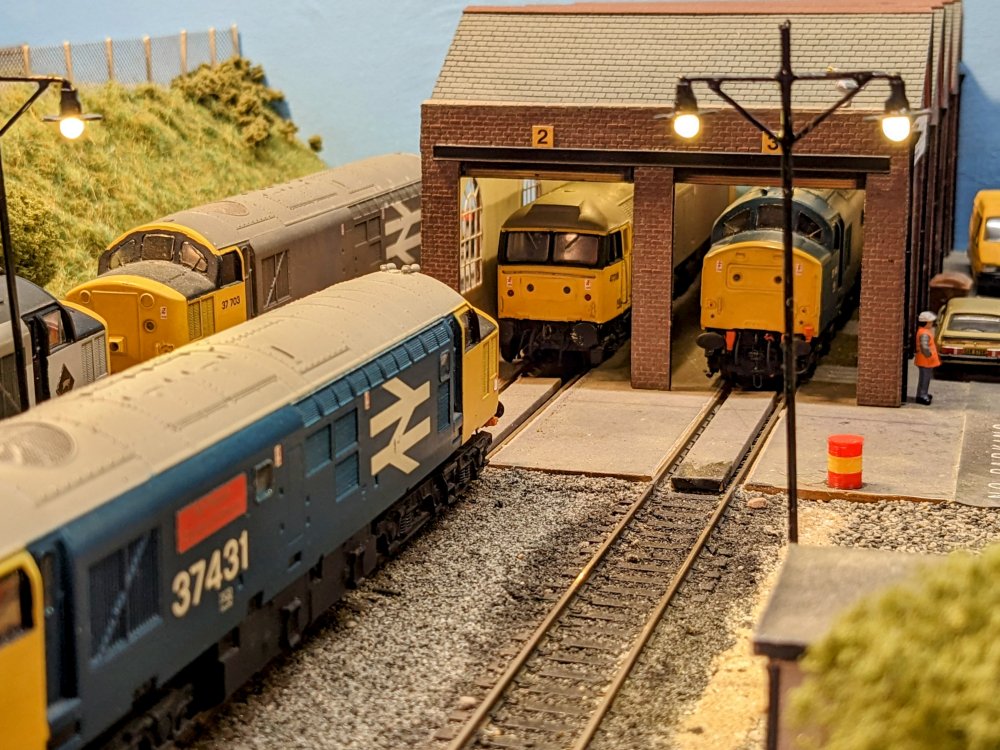
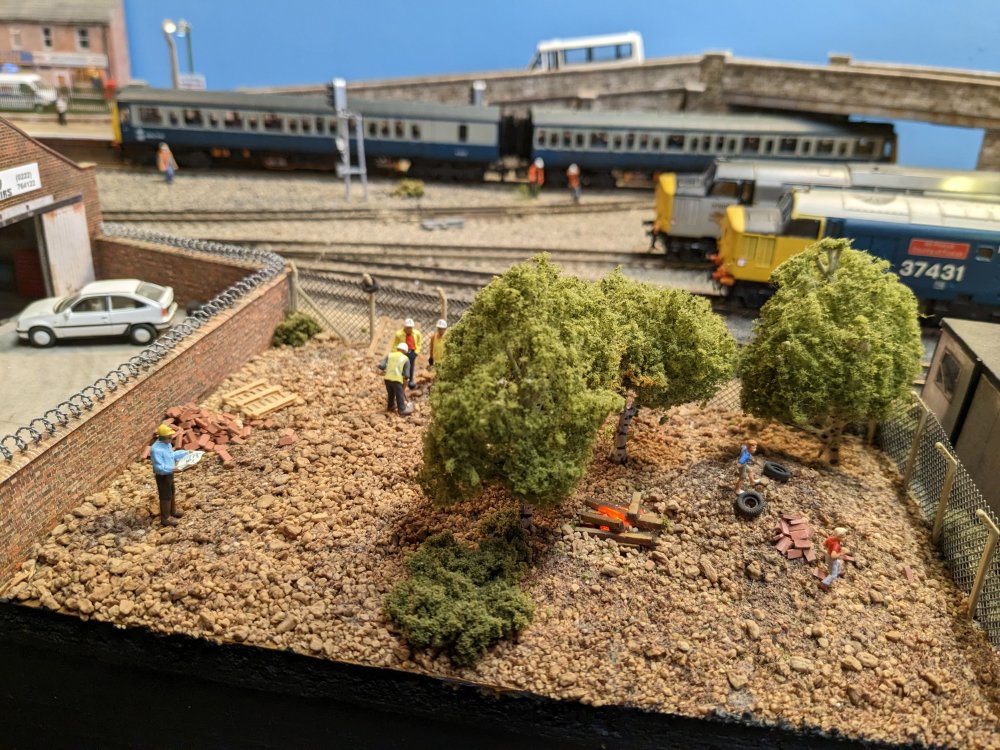
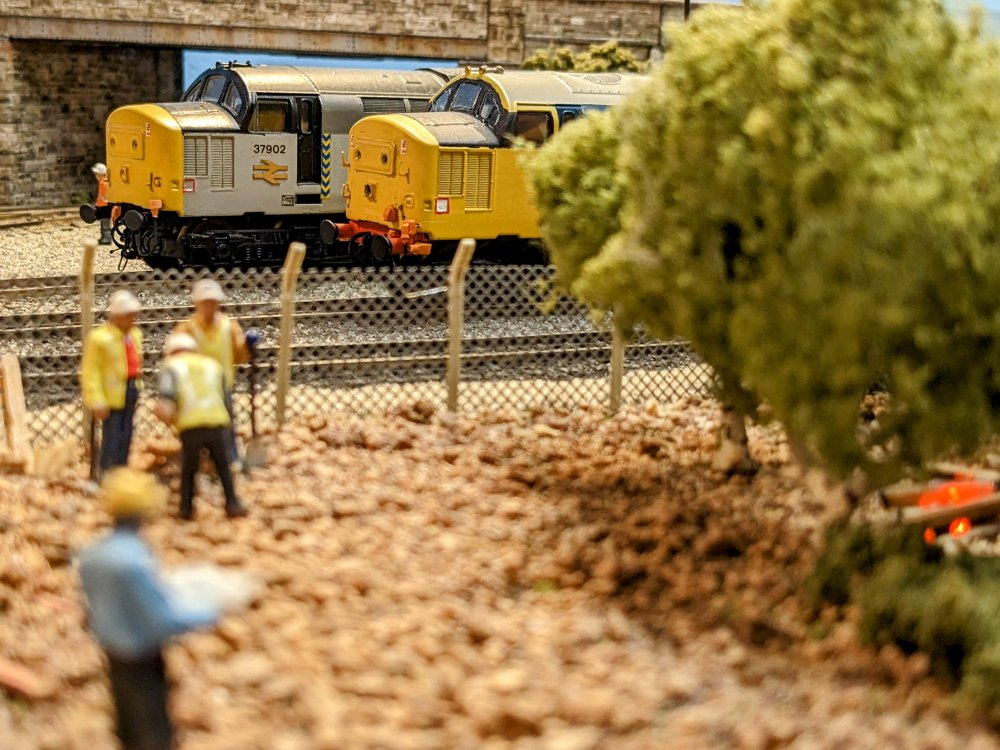
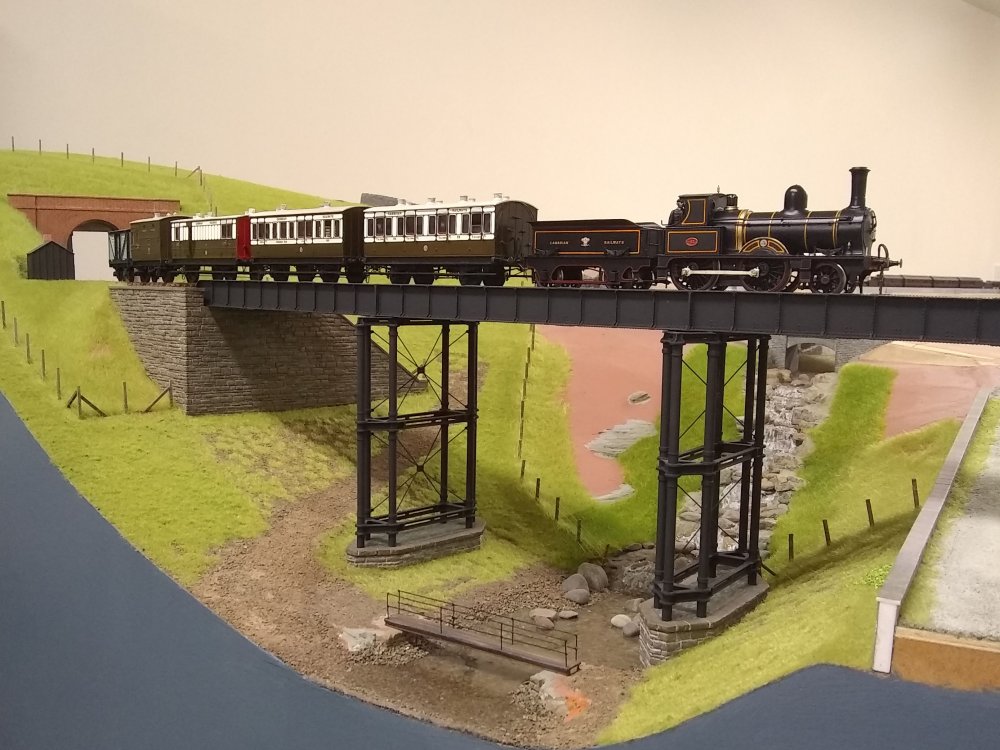
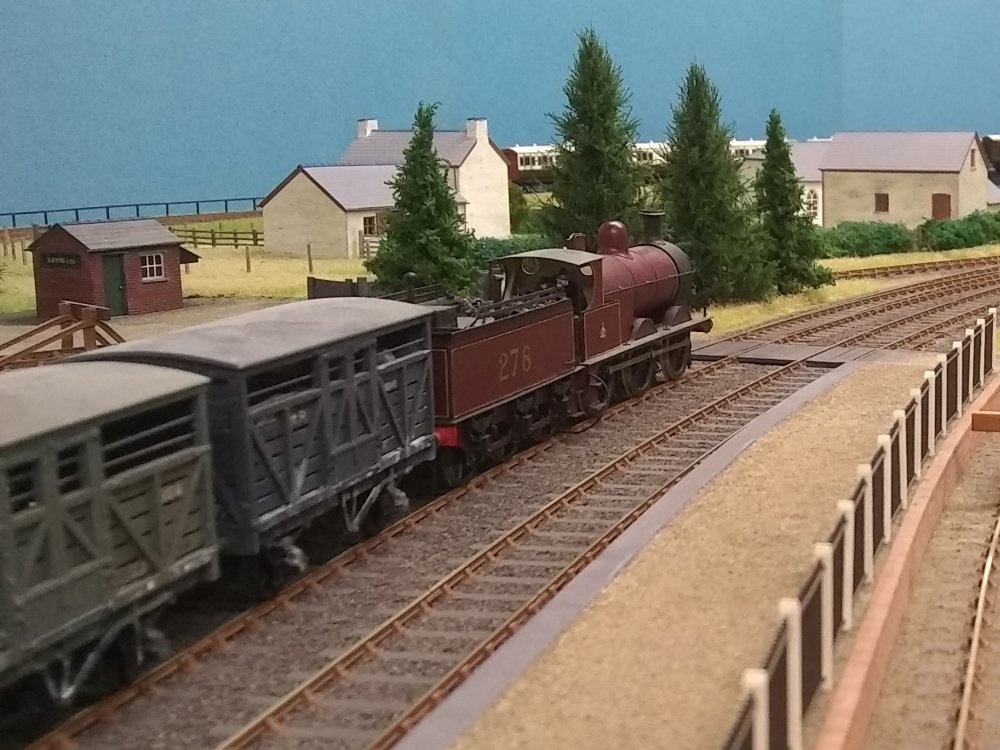
Three Cocks Junction was a station on the Cambrian Railways Mid Wales Section at the junction with the Midland Railway line from Hereford to Brecon and Swansea. The period is c.1904 which allows for a variety of stock in the most attractive liveries of the time. The model attempts to capture the rural and rather remote setting, typical of such Cambrian junction stations.
All of the Cambrian locomotive and coaching stock is built from my own kits under the name 'Camkits' the majority of the freight stock is scratchbuilt from plastic sheet and section. Much of the Midland stock was acquired when I and a colleague purchased the 'Ambergate' layout from John Webb many years ago, additional stock is built mainly from Slaters kits.
Trackwork is handbuilt using Exactoscale chairs and control is analogue using Tortoise point motors and two controllers. Scenery is largely static grass on cardboard 'egg crate' formwork - still a bit to do!!! The station area is fairly true to the prototype, apart from one additional siding but now nothing remains, with the Station Building having been demolished about 20yrs ago; the site is now an industrial estate and along the Hereford line now stand a large garden centre.
Going south towards Brecon lies the Stationmasters House, which still exists. Further on is the hamlet of Pontithel and the Chemical Works, all that now remains of the works is the weighbridge hut but the works managers house and the adjacent cottage still exist.
North towards Llanidloes there is even more modellers license although most of the structures are based on actual buildings along the line of the surrounding area. The chapel is that at Cwmbach, Glasbury and the mill and cottage are based on that at Llowes. The viaduct, designed by Benjamin Piercy still exists and now takes a minor road, the following portal is the south end of Rhayader tunnel.
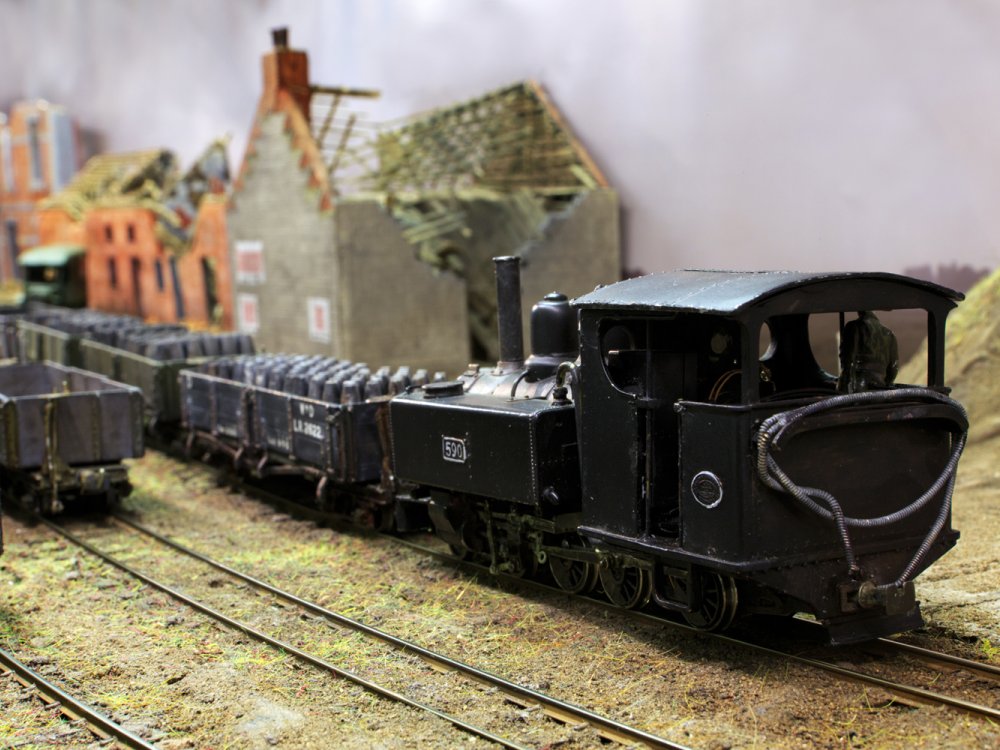
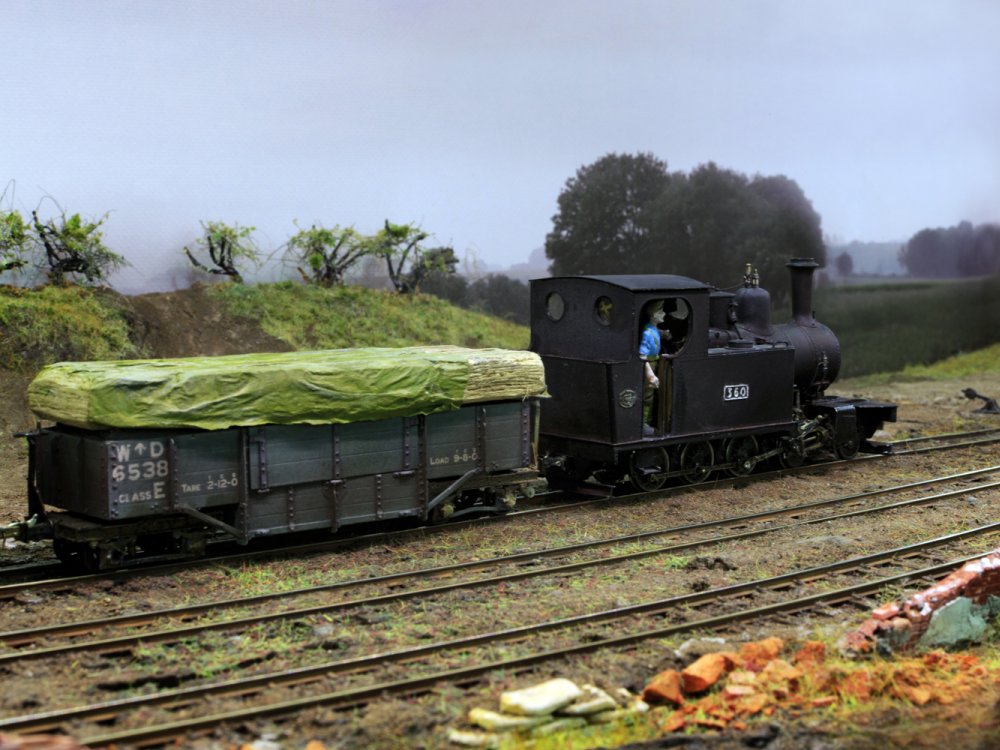
Up the Line is modelled at 7mm/ft running on 16.5mm track representing the extensive system of 60cm gauge light railways that were developed to bridge the gap between standard gauge railheads and the front line during the First World War.
While not based on a particular location I have recreated many contemporary photographs particularly from the area around Arras to build a very convincing scene. The model represents a transfer yard about five miles from the main railhead from which steam locos bring long trains of loaded wagons to be split up into smaller units to be taken forward by petrol engines or 'tractors' as they were known to the front line or artillery batteries one or two miles away.
The empty wagons are then returned to the yard to be taken back to be refilled. In this way huge amounts of vital stores were moved far more efficiently than motor or animal transport could manage over the poor and over crowded roads. The layout is operated by DCC and most locos are sound fitted which is augmented by a full stereo sound track. Everything is either scratch or kit built with many modern techniques such as 3D printing, plotter cutting, home etching and photographic back scenes being used. After the war much equipment was disposed of to light railways all over the world, some of it still being in use on preserved lines today.